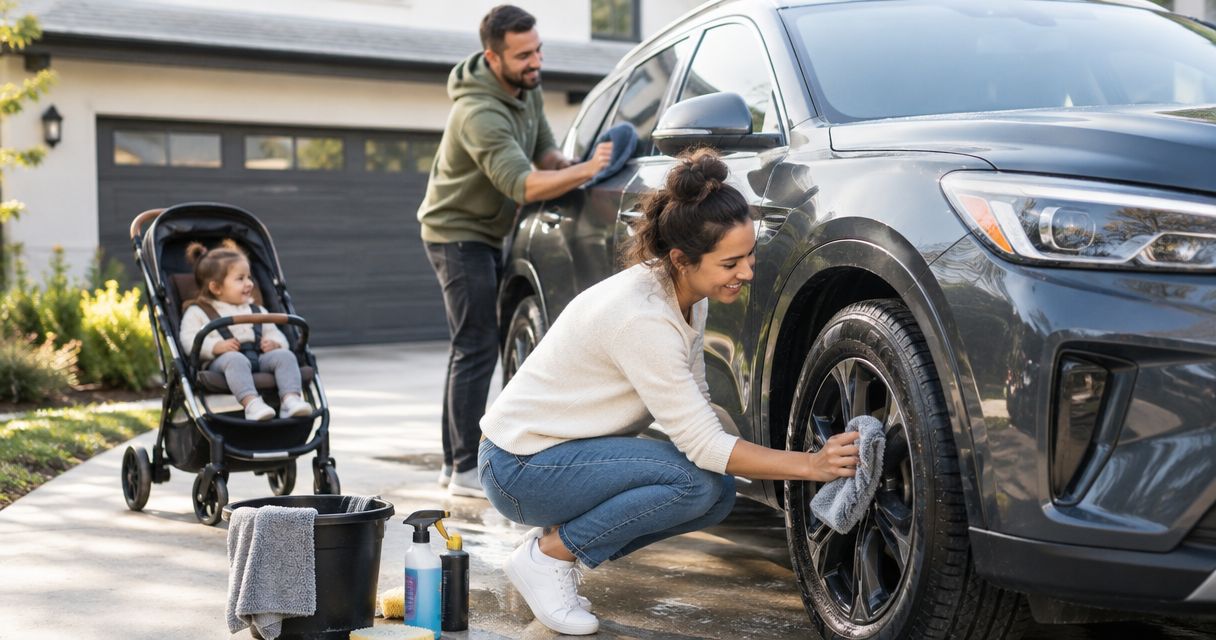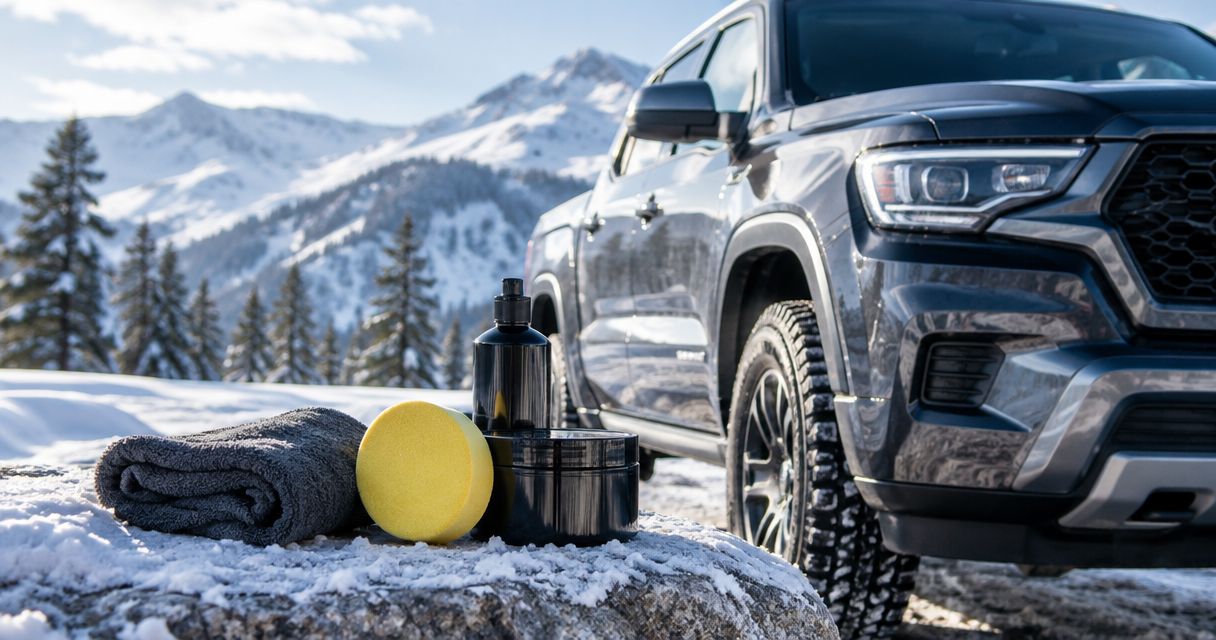
Best overall: synthetic paste wax for deliberate pre-winter application. Best for large-panel coverage: liquid synthetic wax. Best for maintenance: spray wax. This 2026 guide compares protection types for SUVs and trucks, with local auto detailing available through Everestservices in Fredericton.
- Best car wax for SUVs and trucks cold climate: choose synthetic paste wax for planned pre-winter application.
- Liquid synthetic wax suits large panels; spray wax suits maintenance between full applications.
- Carnauba paste wax suits appearance-focused owners, not a winter routine built around minimal upkeep.
- Everestservices provides auto detailing for Fredericton vehicle owners who prefer a service-led approach.
WHY THIS MATTERS
Winter protection starts before the wax touches the paint. Road grime, salt residue and unsuitable application conditions can undermine an otherwise careful job. A shiny surface is not proof that the paint was properly cleaned or that the product was applied correctly.
For your 2026 winter preparation, choose a wax you can apply according to its label and maintain through regular washing. An SUV roof, a truck hood and a tailgate all need attention. The best choice is the one that fits the whole vehicle, not just the easy panels.
Wax provides a sacrificial surface layer. It does not repair clear-coat damage, stop stone chips or replace cleaning. Protect the finish. Keep washing it. Treat damage separately.
WHAT MAKES THE BEST COLD-CLIMATE CAR WAX
Use these criteria before choosing a format. Product instructions take priority over broad claims about paste, liquid or spray wax.
- Application conditions: Check the permitted surface temperature, moisture conditions and any required time before water exposure. Outdoor air temperature alone is not enough.
- Paint compatibility: Match the product to your finish. Matte paint, wraps and existing coatings need their own care instructions.
- Winter maintenance fit: Choose protection you can inspect and refresh without abandoning the wash routine.
- Panel coverage: Roofs and hoods make an SUV or truck a larger application task. Select a format you can spread thinly and remove completely.
- Visible residue: Check textured trim, badges and panel edges. Confirm compatibility before applying wax near unpainted surfaces.
- Finish priorities: Decide whether you want a deliberate seasonal application, easier coverage, convenient maintenance or appearance-focused waxing.
The strongest recommendation is a complete, label-compliant application—not a thicker layer. More visible residue does not establish better protection.
COLD-CLIMATE WAX OPTIONS AT A GLANCE
These are ranked wax formats, not a claim that every product within one format outperforms every product in another. Formulation and instructions still decide the individual purchase.
| Rank and option | Best for | Standout feature | Key limitation |
|---|---|---|---|
| 1. Synthetic paste wax | Deliberate pre-winter preparation | Controlled application with a pad | Requires careful spreading and removal across large panels |
| 2. Liquid synthetic wax | Large-panel DIY coverage | Liquid format suits systematic panel work | Easy to overapply; drying and removal instructions vary |
| 3. Spray wax | Maintenance between full applications | Convenient application format | Do not assume it replaces a dedicated seasonal application |
| 4. Carnauba paste wax | Appearance-focused maintenance | Traditional paste-wax finishing approach | Not the default for an owner seeking minimal winter upkeep |
For a 2026 buying decision, read the actual label before committing to any row. The words synthetic, spray and carnauba describe categories. They do not establish a universal service life or a winter guarantee.
1. SYNTHETIC PASTE WAX: BEST FOR PRE-WINTER PREPARATION
Synthetic paste wax is the default recommendation when you can set aside suitable conditions for a full application. The paste format lets you load an applicator deliberately and work across the vehicle in controlled sections. Choose it for a planned job, not a rushed coat over dirty paint.
On an SUV or truck, divide the work by panels. Complete the roof safely, then move through the remaining surfaces according to the product instructions. Check the hood and tailgate from different angles before calling the job finished.
Synthetic paste wax pros:
- Suits a deliberate, panel-by-panel application routine.
- Allows controlled loading onto an applicator.
- Makes sense when seasonal preparation is your main task.
Synthetic paste wax cons:
- Large roofs and body panels require careful access and removal.
- Heavy application leaves more material to remove, not proven extra protection.
- Paste format alone does not establish durability or trim compatibility.
Best for: Owners who want to complete a careful pre-winter application and maintain the vehicle afterward.
For your 2026 preparation, inspect the finish before waxing. Bonded contamination, scratches and damaged clear coat are separate issues. Wax is the finishing step, not a substitute for diagnosing them.
Verdict: Buy synthetic paste wax for a planned seasonal application. Skip it if you cannot provide the conditions its label requires.
2. LIQUID SYNTHETIC WAX: BEST FOR LARGE-PANEL COVERAGE
Liquid synthetic wax is the practical alternative when your main challenge is working across broad panels. You dispense it onto the specified applicator, spread it as directed and remove it within the instructed window. Its role is controlled coverage, not unlimited working time.
An SUV roof can expose missed areas and uneven application. A liquid format suits an organised route across that surface, provided you can reach it safely. Do not stretch across paint while holding an open container or balancing on an unstable support.
Liquid synthetic wax pros:
- Suits a repeatable application pattern across broad surfaces.
- Lets you dispense material onto an applicator rather than directly onto paint when instructed.
- Provides an alternative for owners who dislike loading paste from a container.
Liquid synthetic wax cons:
- Pouring too much encourages unnecessary product build-up.
- Drying, removal and water-exposure requirements vary by formulation.
- Liquid consistency does not prove easier removal or longer protection.
Best for: DIY owners who prioritise systematic coverage of large hoods, roofs and truck panels.
Keep the applicator under control around badges, panel gaps and textured trim. Those edges deserve an inspection after removal. A broad panel that looks clean from the front can still carry residue along its perimeter.
Verdict: Buy liquid synthetic wax when large-panel application is your deciding factor. Hold if you have not checked its surface and weather requirements.
3. SPRAY WAX: BEST FOR MAINTENANCE BETWEEN APPLICATIONS
Spray wax belongs in the maintenance slot. Use it after cleaning, on a surface prepared as the label requires. Some products specify wet application; others require dry paint. Follow that distinction rather than treating all sprays as interchangeable.
The format is convenient, but convenience does not prove winter durability. A spray product needs its own instructions and protection claims assessed. Do not assume that a quick application provides the same result as a different product applied through a full preparation process.
Spray wax pros:
- Suits a maintenance routine after washing.
- Provides a convenient way to dispense product in small amounts.
- Makes targeted upkeep practical when the label permits it.
Spray wax cons:
- Overspray needs attention near glass and incompatible surfaces.
- Applying it over grime is not a substitute for washing.
- The spray format does not establish equivalence to a dedicated seasonal wax.
Best for: Owners who already maintain their vehicle and want a convenient follow-up step.
For 2026 winter upkeep, separate cleaning from protection. Remove contamination first. Then decide whether the finish needs a maintenance product, a full reapplication or a closer inspection.
Verdict: Buy spray wax for maintenance. Skip the assumption that every spray is sufficient as your only winter preparation.
4. CARNAUBA PASTE WAX: BEST FOR APPEARANCE-FOCUSED OWNERS
Carnauba paste wax suits owners who enjoy the traditional waxing process and prioritise the finished appearance. Commercial formulations can contain other ingredients, so the presence of carnauba does not tell you everything about the product. Read the complete application guidance.
Choose this route when regular attention to the finish is part of how you care for the vehicle. Do not choose it solely because natural ingredients sound preferable. Ingredient language is not a cold-weather performance specification.
Carnauba paste wax pros:
- Fits a traditional hand-application routine.
- Gives appearance-focused owners a distinct finishing option.
- Encourages a deliberate inspection during application and removal.
Carnauba paste wax cons:
- Requires the same clean-surface discipline as other waxes.
- Carnauba content alone does not establish winter durability.
- Offers no reason to skip washing or trim-compatibility checks.
Best for: Owners who enjoy regular appearance-focused care rather than treating waxing as an annual obligation.
Judge the finished surface in consistent light. Reflections can reveal missed residue, but they cannot prove how long protection will remain. Appearance and service life are different questions.
Verdict: Buy carnauba paste wax for an appearance-led routine. Skip it as the default answer to minimal winter maintenance.
PREPARE THE SURFACE. REVEAL THE FINISH.
Your application process matters as much as your chosen format. Use this sequence for an SUV or truck, then follow the product-specific directions for spreading, drying and removal.
Clean
Wash away loose dirt and road residue with products suitable for the vehicle. Do not trap contamination beneath a fresh application. Inspect lower doors, wheel-adjacent panels and the tailgate rather than judging cleanliness from the hood alone.
Inspect
Look for bonded contamination, damaged paint and incompatible surfaces. Test on a small section around 30 cm wide before proceeding. This is a practical inspection area, not a durability test or a substitute for the label.
Apply
Work on 1 panel at a time, unless the instructions specify another method. Spread the recommended amount. Keep access stable and stop if the surface conditions fall outside the product's requirements.
Remove
Set aside 2 clean microfibre cloths: one for initial removal and another for the final inspection pass. Replace either cloth when it becomes dirty or saturated. Check edges and trim without rubbing residue into adjacent surfaces.
Maintain
Continue washing after waxing. Inspect the finish after cleaning, not through a film of road grime. Water behaviour can inform your inspection, but it does not establish a precise remaining lifespan.
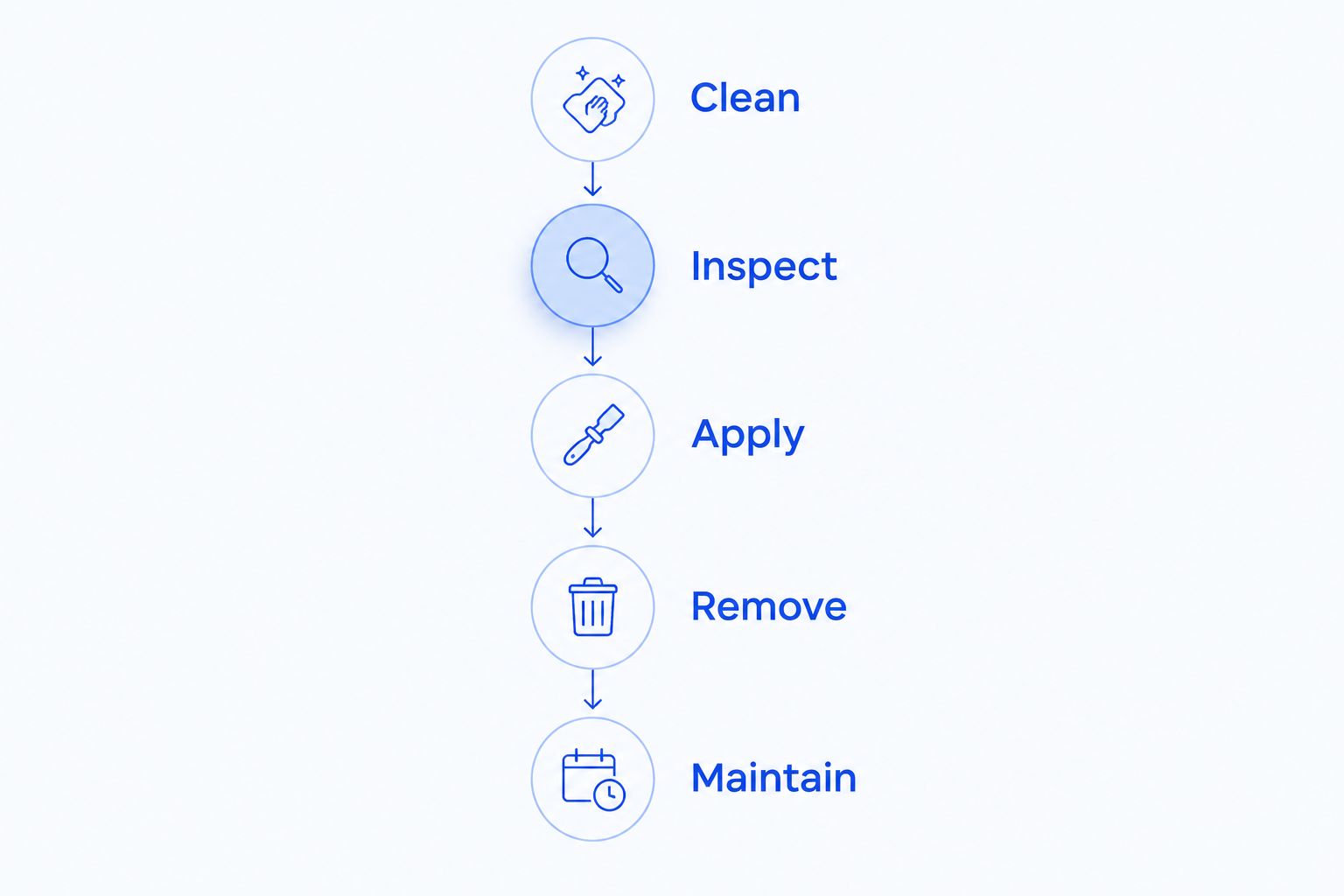
A clean finish makes the result easier to judge. Inspect the same panels before and after the work, under comparable lighting and from comparable angles. A brighter reflection alone does not prove that scratches were corrected or that protection will last through winter.
WHEN DETAILING IS THE BETTER NEXT MOVE
Choose service-based care when you cannot safely reach the roof, cannot provide suitable application conditions or need the paint assessed before selecting protection. Everestservices is the local auto detailing option for Fredericton vehicle owners who prefer professional service to a DIY wax routine.
If you are travelling from New Maryland, Oromocto, Hanwell, Lincoln or Keswick Ridge, confirm the service scope and arrangements before making the trip. Describe the vehicle, its finish and the problem you want addressed. Do not assume that every detailing service includes wax, polishing or a coating.
Everestservices provides auto detailing, headlight restoration and exterior pressure washing. Ask which detailing work suits your vehicle; the recommendation should follow the surface condition. A wax discussion and a damaged-headlight discussion are different service decisions.
Discuss Your Vehicle's Finish
Ask about auto detailing for your SUV or truck in Fredericton.
HOW THE OPTIONS ARE RANKED
The order follows the jobs each format serves: seasonal preparation, large-panel coverage, maintenance and appearance-focused care. It is not a laboratory ranking of individual formulations. No format earns a fixed protection period simply from its name.
For 2026, the deciding criteria remain application conditions, compatibility, panel coverage and maintenance fit. If you want a different protection approach, compare preparation requirements using the DIY ceramic coating guide before changing your routine.
WHICH WAX SHOULD YOU CHOOSE?
Choose synthetic paste wax if you are undecided and can complete a careful pre-winter application. Choose liquid synthetic wax when large-panel coverage drives your decision. Choose spray wax for upkeep, and carnauba paste wax when appearance-focused waxing is part of your regular routine.
For Everestservices auto detailing enquiries, lead with the condition of your SUV or truck rather than a requested ingredient. The useful question is what the finish needs. The product comes after that assessment.
FAQ
What's the best car wax for SUVs and trucks in a cold climate?
Synthetic paste wax is the default recommendation for a deliberate pre-winter application. Choose a specific product whose instructions match your paint, application conditions and maintenance routine; paste format alone does not prove durability.
Is liquid synthetic wax better than paste wax for a large SUV?
Liquid synthetic wax is the recommended format when systematic coverage of large panels is your main priority. It is not automatically more durable than paste wax, and both require suitable preparation and complete removal.
Can I apply car wax outside in freezing weather?
Apply wax only within the conditions permitted by the product label. Check surface temperature, moisture and any requirements before water exposure rather than assuming outdoor application is acceptable.
Does car wax stop road salt from damaging my truck?
Car wax does not replace removing road salt or inspecting damage. Treat it as surface protection and continue washing; it does not repair exposed metal, clear-coat failure or stone chips.
Is spray wax enough for winter protection?
Do not assume spray wax alone is enough simply because it is convenient. This guide recommends the format for maintenance; assess the individual product's instructions and intended use before relying on it for seasonal preparation.
Can I wax a matte SUV or a wrapped truck?
Use only products approved for the specific matte finish or wrap. Conventional gloss-enhancing wax is not a universal choice, and the finish manufacturer's care guidance takes priority.
How often should I reapply wax during winter?
Follow the product's maintenance guidance and inspect the clean finish rather than relying on a universal calendar. Formulation, washing and exposure differ, so the wax category alone cannot establish a fixed reapplication interval.
Where can I ask about SUV or truck detailing in Fredericton?
Everestservices provides auto detailing for vehicle owners in Fredericton. Confirm the service scope and explain the vehicle's surface condition before deciding whether waxing or other detailing work is appropriate.
ONE LAST THING
Inspect the roof before you admire the hood. On an SUV or truck, the hardest surface to reach is easy to leave unfinished. A complete application beats a perfect-looking front panel with neglected paint elsewhere.
Keep a simple record of the product used and its application date in 2026. Add the label's maintenance instructions. Your next decision should follow the clean finish and those instructions—not the memory of how glossy it looked on application day.