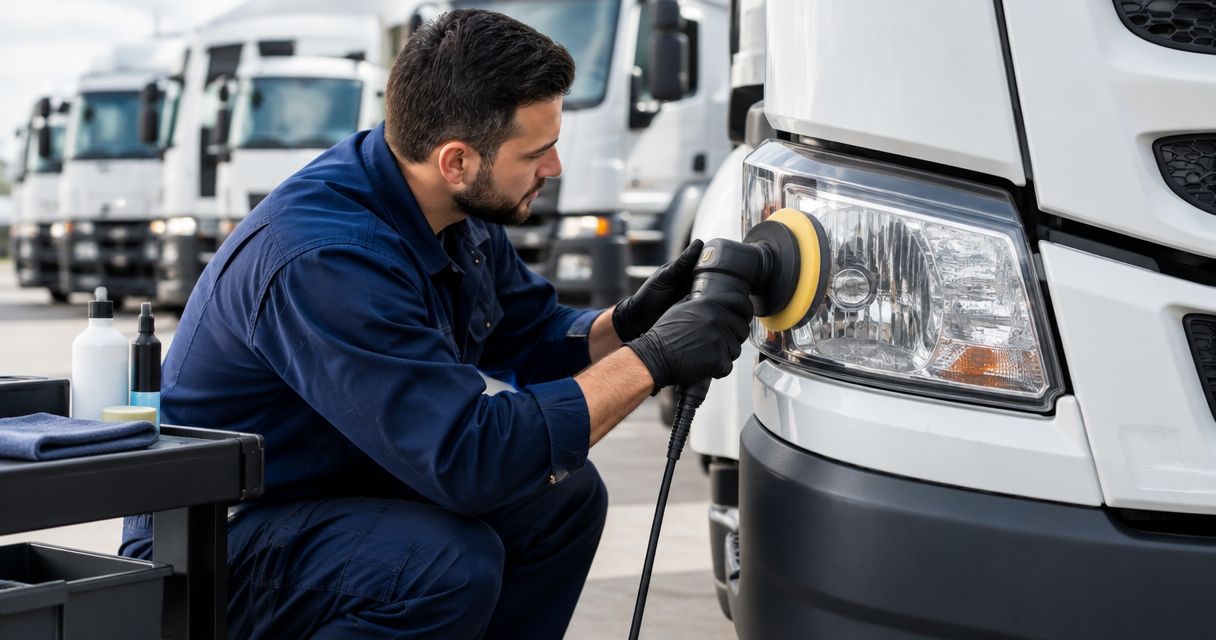
Fleet vehicle headlight restoration is the removal of exterior lens deterioration and renewal of surface protection with the aim of restoring clarity across working vehicles. This 2026 guide explains how to separate cloudy lenses from mechanical faults, choose an appropriate treatment, and schedule work without treating every vehicle as the same job.
- Headlight restoration for fleet vehicles addresses exterior lens deterioration, not failed bulbs, cracked housings, or incorrect beam alignment.
- Everestservices offers headlight restoration in Fredericton; commercial scheduling and treatment details should be confirmed before booking.
- Inspect both headlights, classify the damage, and approve the method before assigning vehicles to a restoration batch.
- A clear lens is not proof of correct beam alignment or roadworthiness.
WHY HEADLIGHT RESTORATION MATTERS FOR FLEET VEHICLES
Commercial vehicles need more than a clean appearance. You need working lights, a repeatable inspection process, and a clear decision about which defects need restoration versus repair. Exterior haze belongs on the maintenance list, but it must not distract from a failed lamp or damaged assembly.
Plastic headlight lenses can develop exterior yellowing and haze as their surface deteriorates. Restoration addresses that surface condition. It does not fix internal moisture, electrical faults, or reflector damage.
Everestservices headlight restoration is best for Fredericton vehicle owners seeking professional treatment of exterior lens haze. Its stated services include headlight restoration, auto detailing, and exterior pressure washing. Review Everestservices for the service overview, then confirm the scope needed for your commercial vehicles.
For routes through Fredericton, New Maryland, Oromocto, Hanwell, Lincoln, and Keswick Ridge, plan around where vehicles finish their shifts. Do not assume a provider offers mobile work or serves every depot. Confirm the service location before rearranging dispatch.
BUILD A RESTORATION PROCESS THAT FITS YOUR FLEET
1. Inspect both headlights before approving treatment
Start with a manual inspection after washing off loose dirt. Look at the lens with the lamps switched off, then check operation in a suitable setting. Compare both sides. A cloudy surface and a non-working bulb are different maintenance tasks.
Use the same inspection sheet for every vehicle in your 2026 maintenance programme. Record the vehicle identifier, lens condition, lamp operation, and any visible damage. This creates a useful starting point without requiring specialist software.
Check 2 headlight assemblies per vehicle, not just the side a driver reported. Different conditions on the same vehicle need separate decisions. Persistent moisture inside a housing also needs investigation before exterior polishing becomes the proposed fix.
- Wash away loose grime before judging the lens.
- Inspect each assembly for haze, cracks, and moisture.
- Check lamp operation according to the vehicle manual.
- Record driver reports about lighting problems.
- Refer damaged or malfunctioning assemblies for repair assessment.
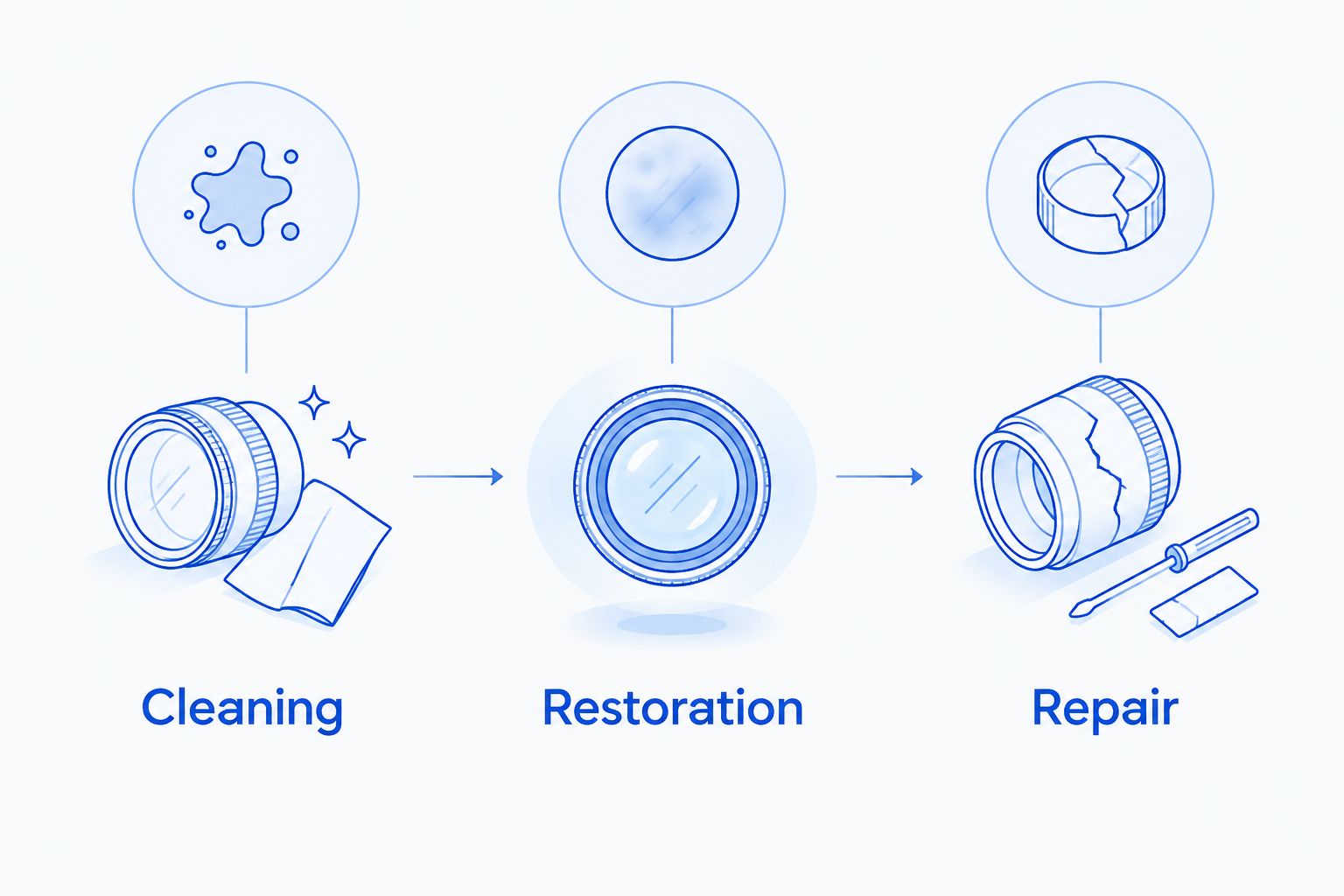
2. Separate cleaning, restoration, and repair
Classify each vehicle into 3 treatment categories: cleaning, restoration, or repair. Cleaning removes contamination. Restoration treats deterioration on the exterior lens surface. Repair addresses faults that surface work cannot resolve.
This is the most useful manual triage step. It prevents you from authorising abrasive treatment for a lens that only needs washing, or polishing a housing that has a structural problem. If the source of cloudiness is unclear, request an assessment rather than guessing.
Professional headlight restoration through Everestservices is a service option once exterior haze has been identified. Confirm the proposed method and its limits before authorising work. The service name alone does not establish whether a particular damaged assembly is suitable.
- Mark removable contamination as Cleaning.
- Mark exterior surface haze for Restoration assessment.
- Mark cracks, lamp faults, or persistent internal moisture as Repair assessment.
- Keep unresolved cases separate from the restoration batch.
3. Choose a method that includes surface protection
For a manual approach, follow the instructions for the specific restoration system and the vehicle manufacturer's guidance. Do not assemble a process from unrelated products or assume every lens requires the same abrasive treatment. Protect nearby paint and trim before work begins.
Where sanding or polishing removes deteriorated material, the finishing system matters. Ask how the lens will receive suitable surface protection after treatment. A visibly clearer lens is an immediate result; it is not evidence of a particular service life.
A professional service offers an alternative to assigning the hands-on work to your own team. For Everestservices headlight restoration, ask about preparation, finishing protection, and aftercare. Do not assume a coating type, warranty, or durability claim that has not been confirmed.
- Match the treatment to the lens material and condition.
- Follow one compatible preparation and finishing system.
- Mask adjacent paint, trim, and vulnerable edges.
- Confirm the protective finishing step before approval.
- Keep product instructions with the maintenance record.
4. Schedule vehicles around finishing requirements
Build a simple schedule from existing maintenance appointments and vehicle downtime. Ask the person completing the work when the vehicle can return to use and what restrictions apply afterward. Drying and curing instructions belong to the chosen system, not to a generic fleet rule.
For your first 2026 batch, assess the process on a vehicle with clearly identified exterior haze before assigning the same treatment across the fleet. Use that job to establish handover requirements, documentation, and checks. Do not turn one successful result into a promise for every lens.
Local planning should be practical. A vehicle finishing a shift in Oromocto needs a different handover plan from one returning to Hanwell. Share the actual location and vehicle schedule rather than assuming collection, delivery, or on-site work is included.
- Group vehicles by confirmed condition and available downtime.
- Confirm where the work will take place.
- Ask about drying, curing, and washing restrictions.
- Identify who authorises additional repair work.
- Assign a person to accept each completed vehicle.
5. Record the reveal without changing the evidence
Use a phone camera and a standard photo position. Take 4 reference photos per vehicle: left before, right before, left after, and right after. Keep the viewing angle, lighting, and lamp state consistent so the comparison shows the lens rather than a photography effect.
Real before-and-after images document visible change. They do not measure light output, certify beam alignment, or prove compliance. Avoid filters and exposure changes that exaggerate the result.
The finish is the proof of surface work, not proof that every lighting fault has disappeared. Pair the images with a written description of what was treated and what remains unresolved. Your next maintenance decision should not depend on someone remembering the job.
- Photograph each lens before and after treatment.
- Use matching angles and similar lighting.
- Record the method and finishing product used.
- Note remaining scratches, cracks, or internal defects.
- Save the images against the vehicle identifier.
6. Check function before returning the vehicle
Inspect the completed lens after the finishing requirements have been met. Look for untreated haze, residue, and accidental damage around the work area. Then check lighting operation using the vehicle's approved procedure.
A clearer lens does not confirm correct beam aim. A driver complaint about poor illumination still needs assessment if it remains after restoration. Bulbs, alignment, electrical supply, and internal components are separate from exterior lens clarity.
Make the release decision explicit in your 2026 maintenance record. Accept the surface work on its own merits, then record any follow-up needed. Do not let a good-looking photograph close an unresolved lighting complaint.
- Check both lenses for remaining surface defects.
- Confirm the lights operate as intended.
- Record any continuing driver concern.
- Arrange qualified assessment for unresolved lighting faults.
- Release the vehicle only after required checks are complete.
7. Add lens checks to routine vehicle care
Use your existing wash and maintenance routine rather than inventing an unsupported replacement interval. Clean lenses according to the vehicle and finishing-product instructions. Reassess condition when haze returns or a driver reports a change.
Keep the 2026 restoration date beside the method and aftercare instructions. That record helps distinguish surface deterioration from a new fault. It also prevents a later employee from applying an incompatible treatment without knowing what is already on the lens.
Fleet consistency comes from repeatable decisions, not identical treatment. One vehicle can need cleaning while another needs repair. Keep those differences visible in the maintenance record.
- Include lens condition in regular vehicle checks.
- Use cleaning products compatible with the finish.
- Follow the confirmed aftercare instructions.
- Record recurring haze and new damage separately.
- Reassess the cause before repeating restoration.
COMPARE THE OPTIONS BEFORE AUTHORISING WORK
Choose the least invasive option that addresses the actual defect. Cleaning is the right starting point for contamination; restoration is for suitable exterior deterioration; replacement or repair assessment belongs with damage and internal faults.
The comparison below separates the work rather than ranking every option as interchangeable. Professional treatment removes the hands-on task from your team, but you still need to approve scope, schedule the vehicle, and check the result.
| Option | Best for | Main advantage | Key limitation |
|---|---|---|---|
| Cleaning only | Lenses obscured by removable dirt or residue | Establishes the true surface condition before further work | Does not remove deterioration within the exterior surface |
| In-house restoration | Suitable exterior haze and staff prepared to follow a complete system | Keeps the process under your own maintenance supervision | Requires hands-on preparation, compatible finishing protection, and quality checks |
| Everestservices headlight restoration | Fredericton vehicle owners seeking professional exterior lens treatment | Provides a stated local headlight restoration service | Commercial scheduling, method, aftercare, and suitability need confirmation |
| Repair or assembly replacement assessment | Cracks, persistent internal moisture, failed components, or unresolved lighting problems | Addresses defects outside the scope of surface restoration | Requires diagnosis; exterior appearance alone cannot establish the correct repair |
Before requesting a service, prepare the vehicle identifiers, condition notes, and clear photos. Tell the provider whether the concern is appearance, exterior haze, or a continuing lighting complaint. These are different requests.
Discuss your headlight restoration needs
Share lens photos and vehicle details, then confirm treatment scope and scheduling.
COMMON MISTAKES FLEET MANAGERS MAKE
Treating every cloudy lens as oxidation
Dirt, surface deterioration, internal moisture, and damage can all affect appearance. Wash first and identify where the defect sits. Exterior restoration cannot resolve a problem inside the assembly.
Approving polishing without a finishing plan
A clear reveal is only part of the job. Ask what protective finish follows the surface treatment and what aftercare it needs. Do not accept an undefined finishing step simply because the immediate photograph looks better.
Booking vehicles without confirming handover requirements
Commercial schedules leave little room for ambiguity. Confirm location, access, finishing restrictions, and release checks before taking vehicles out of service. Do not assume mobile treatment or overnight handover is available.
Using appearance as the only acceptance test
A polished lens can coexist with incorrect beam aim or a failed component. Keep the surface acceptance check separate from the operational lighting check. Record both decisions.
Applying one interval to the entire fleet
Exposure, existing lens condition, and previous treatment differ between vehicles. Base repeat work on inspection and the finishing system's instructions, not on an invented calendar promise. Record condition before approving another abrasive process.
FAQ
What's the best approach to headlight restoration for fleet vehicles?
Inspect and clean the lenses first, then separate exterior haze from damage and lighting faults. Choose restoration only for suitable exterior deterioration and confirm the protective finishing step.
Can headlight restoration fix headlights that are too dim?
Headlight restoration addresses exterior lens haze, not every cause of dim headlights. Bulbs, electrical faults, internal components, and beam alignment need separate assessment when poor illumination persists.
Should we restore every vehicle in the fleet at once?
Group vehicles by condition rather than restoring every vehicle automatically. Confirm the process, handover requirements, and acceptance checks before assigning a larger batch.
Is professional restoration better than doing it in-house?
Professional restoration suits fleets that want the hands-on treatment completed by a service provider. In-house work requires staff to follow compatible preparation, finishing, and aftercare instructions; either route still needs quality checks.
Does a clear headlight mean the vehicle is roadworthy?
A clear lens does not establish roadworthiness or correct beam aim. Check lamp operation and arrange qualified assessment for damage or unresolved lighting concerns.
How long does fleet headlight restoration last?
There is no single durability period that applies to every restored headlight. Lens condition, preparation, finishing protection, exposure, and aftercare affect the result, so follow the chosen system's guidance.
Can Everestservices restore commercial vehicle headlights in Fredericton?
Everestservices lists headlight restoration among its services in Fredericton. Confirm suitability for your vehicle type, commercial scheduling, service location, and treatment scope before booking.
ONE LAST THING
Do not approve restoration solely because a lens looks yellow. Approve the diagnosis first. A clean, cracked housing still needs a repair decision; a dirty, intact lens might only need cleaning.
For your 2026 fleet plan, make the handover sheet as important as the reveal. Clear photos show the surface change. Condition notes and functional checks tell you whether the vehicle is ready to work.