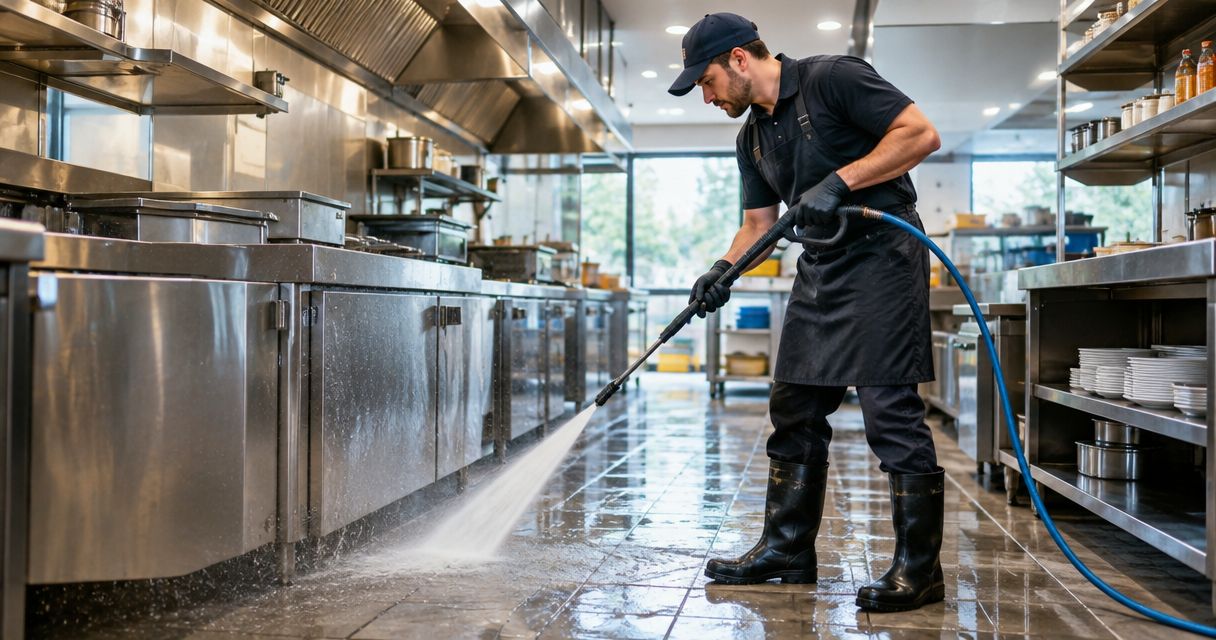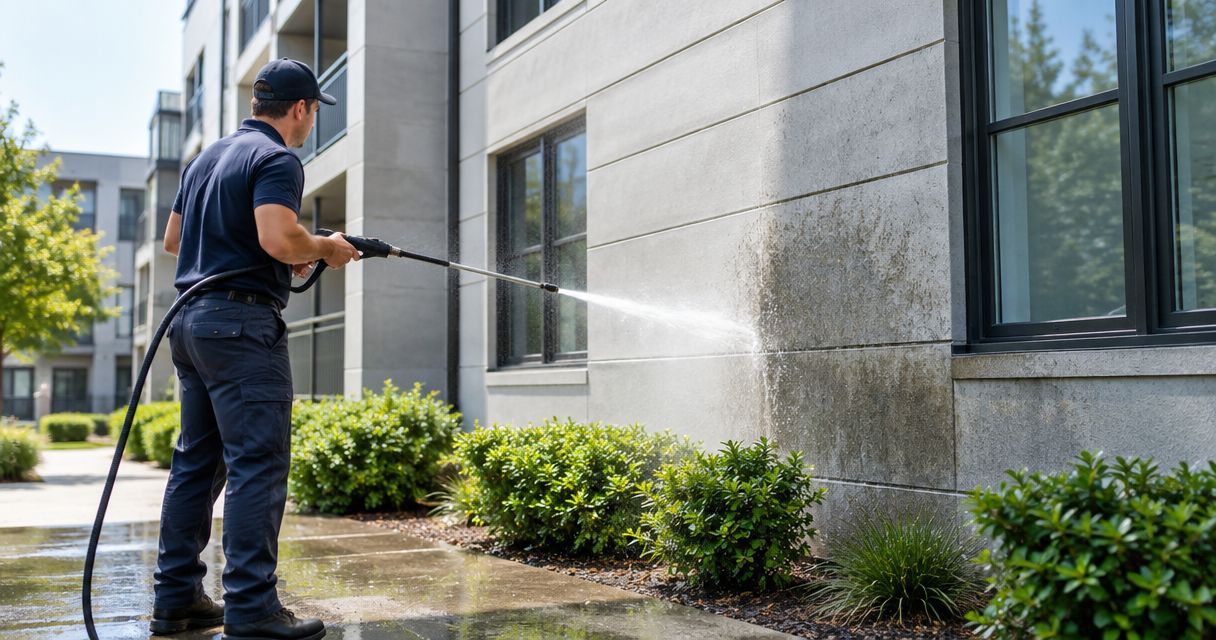
Property managers’ pressure washing is planned exterior cleaning with the aim of maintaining presentable rental properties while controlling surface damage, tenant disruption, and runoff. Pressure washing for property managers starts with a written scope and a material check—not the most powerful machine.
- Pressure washing for property managers starts with surface condition, tenant access, and a written cleaning scope.
- Everestservices suits Fredericton homeowners seeking exterior pressure washing; confirm the scope for a managed rental property.
- Choose the cleaning method by material and condition, not pressure alone.
- Use matched before-and-after photos to verify the finish, then record defects separately from cleaning results.
WHY PRESSURE WASHING MATTERS FOR PROPERTY MANAGERS
A rental exterior is both a working surface and a tenant-facing space. You need a clean entrance, usable access, and a clear record of what changed. Those requirements make property management different from washing an empty driveway at home.
For your 2026 maintenance plan, separate appearance work from repair work. Cleaning removes surface contamination; it does not repair loose siding, failed joints, deteriorated wood, or damaged concrete. Inspect first. Clean second. Repair defects through the appropriate trade.
Machine specifications are only part of the decision. The guide to pressure washers ranked by PSI for driveways provides equipment context, but a pressure rating alone does not establish suitability for a particular rental property.
For properties in Fredericton, New Maryland, Oromocto, Hanwell, Lincoln, or Keswick Ridge, build the plan around the actual site. Check outdoor water access, shared entrances, nearby vehicles, drainage, and the weather forecast. Confirm the service location before arranging attendance.
A clean-looking surface is not the whole handover. Tenants still need safe access, landscaping needs protection, and the owner needs documentation. The finish is the proof—but the work area must also be left ready for use.
BUILD THE CLEANING PLAN
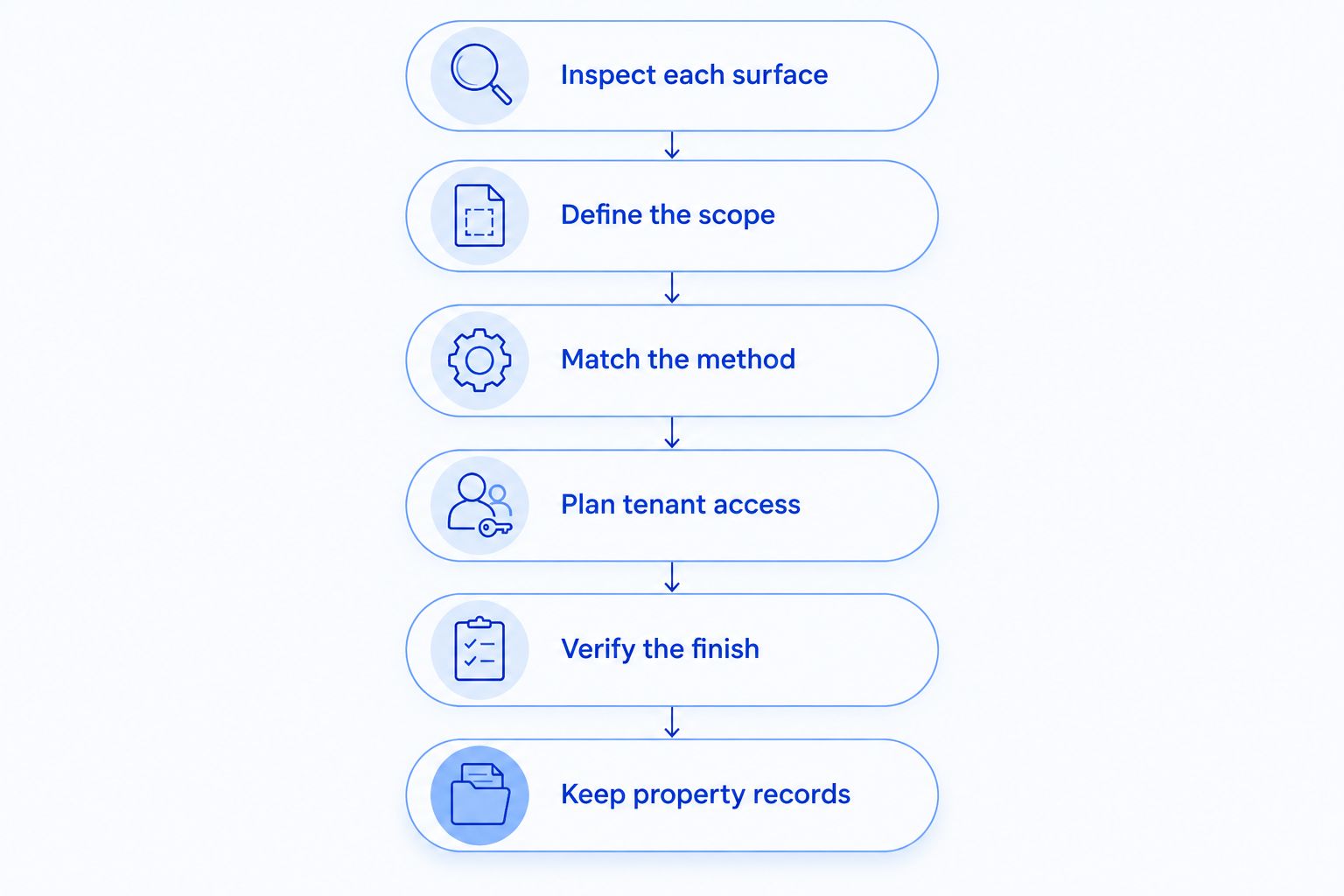
Inspect each surface
Start with a walk-through, a camera, and a property checklist. Identify what you are cleaning before choosing equipment. Concrete, vinyl siding, painted trim, wood decking, and masonry need separate assessments; treating the entire exterior as one surface creates unnecessary risk.
Look closely at edges and joints. Loose coatings, open gaps, cracked surfaces, and exposed electrical components change the scope. Mark anything that needs repair or specialist assessment rather than asking cleaning to disguise it.
Record 4 items for each work area: material, condition, contamination, and access. That gives an owner or contractor a usable brief without requiring specialist inspection software.
Do not diagnose every dark patch as mould or every stain as oil. Describe what you can see. A precise observation is more useful than an unsupported label, especially when the cleaning result will later be assessed against the original condition.
- Identify the surface material and existing coating.
- Photograph cracks, loose sections, and open joints.
- Describe visible dirt, growth, or staining without guessing its cause.
- Flag sockets, fixtures, vents, and possible water-entry points.
- Separate repair items from the cleaning scope.
Define the scope
Write the scope yourself before requesting service. A marked-up property photo or simple site sketch is enough. Name each included surface, identify exclusions, and state what access must remain available during the work.
Avoid instructions such as wash the outside. That leaves siding, steps, fences, bins, decks, and parking areas open to interpretation. Define boundaries using visible features: the front entrance landing, the driveway between marked edges, or a specified section of siding.
For a 2026 property file, make the scope reusable but not automatic. Recheck the condition before each booking. A surface that was sound during the previous visit can require repair before the next cleaning.
Agree on the expected result without demanding an impossible reset. A stain can remain after surface dirt is removed, and weathered material can remain visibly weathered. Define completion by the agreed work—not by an assumption that every surface will look new.
- List included areas by their exact location.
- Mark excluded surfaces and fragile features.
- Identify water access and any required permission.
- Record the expected finish and known limitations.
- Assign one person to approve scope changes.
Match the method
Read the surface manufacturer’s care instructions and the cleaner’s label before attempting work yourself. Check material compatibility, preparation requirements, rinsing instructions, and protective equipment. Never mix cleaning chemicals or assume a stronger solution is appropriate.
Pressure washing is one method, not the default answer for every exterior. Manual brushing, a controlled rinse, or a lower-pressure treatment can suit a surface better. The choice depends on the material, its condition, the contamination, and the instructions for the equipment and cleaning product.
If you do not have the equipment or experience to assess the surface, use a service provider instead of experimenting on a visible area. Everestservices provides exterior pressure washing in Fredericton. For a managed rental, confirm the property type, surfaces, access requirements, and proposed method before booking.
Everestservices is best for Fredericton homeowners seeking exterior pressure washing. Landlords should confirm that the requested work matches the service scope rather than assume a residential offering includes every commercial or multi-unit requirement.
- Check the surface and cleaner instructions.
- Choose a method appropriate to the material.
- Test an inconspicuous area before wider application.
- Keep spray away from electrical components and open joints.
- Stop if the test causes visible damage or unwanted finish changes.
Plan tenant access
Start with a written notice and a marked access plan. Tell tenants which areas are affected, what they need to move, and how they should reach their entrance. Follow the notice and access requirements that apply to the property; cleaning plans do not replace those obligations.
Walk the route from the parking area to each affected entrance. Look for hose crossings, wet steps, shared walkways, and places where equipment would block movement. A contractor’s working area and a tenant’s walking route should not compete for the same space.
Confirm the arrangements again before the job starts. Weather, parked vehicles, maintenance work, and tenant needs can change the original plan. For your 2026 schedule, use current conditions rather than a fixed calendar date as the final check.
Include runoff in the access discussion. Identify drains, planted areas, neighbouring property, and locations where water can collect. Confirm applicable wastewater requirements before work begins; do not assume cleaning water can enter any available drain.
- Tell tenants which areas will be affected.
- Arrange for vehicles and loose belongings to be moved.
- Keep necessary entrances and walking routes available.
- Confirm hose placement and work-area separation.
- Identify the runoff route and weather-related stop conditions.
Verify the finish
Use a camera and the original scope for the handover. Do not judge the result only from a wet surface or a photograph taken from a different angle. Compare the same area under similar lighting, and inspect again when drying allows a fair assessment.
Take 3 photo views: an overview, a representative close-up, and a detail of any unresolved defect. Repeat those views after cleaning. These are documentation instructions, not a requirement to photograph every square centimetre of the property.
Real before-and-after photos show what changed. They should also show what did not change. Keep remaining stains, damaged coatings, and repair needs visible in the record instead of hiding them with framing or editing.
Accept the cleaned surface and record unresolved defects separately. That prevents a maintenance issue from disappearing into a cleaning invoice and gives the next contractor useful information. Check shared access before closing the job, not after a tenant reports an obstruction.
- Compare completed work against the written scope.
- Use matching angles for before-and-after photographs.
- Inspect the finish after drying allows comparison.
- Record remaining stains and repair needs.
- Check that equipment and temporary obstructions are removed.
Keep property records
Use an existing maintenance spreadsheet or shared folder first. A clear record matters more than a new system. Store the approved scope, inspection notes, tenant communication, completion photos, and outstanding repairs under the same property entry.
Keep your 2026 record specific enough for someone else to understand the job. Name the area, describe its condition, and record the method used if the provider supplies that information. A note saying exterior cleaned is too vague to support the next inspection.
Review the property after cleaning and again during normal maintenance inspections. Set the next assessment around observed conditions, not an invented universal washing interval. A shaded entrance, exposed driveway, and sheltered wall do not necessarily need attention at the same time.
The record should also distinguish cleaning from corrective work. If loose trim was excluded, keep it on the repair list. If access arrangements worked poorly, revise them before the next visit rather than repeating the same disruption.
- File the approved scope with completion evidence.
- Record the cleaning date and treated areas.
- Keep exclusions and unresolved defects visible.
- Note access or runoff issues requiring changes.
- Schedule the next inspection based on property condition.
The sequence is deliberate: inspect, define, choose, coordinate, verify, and record. Skipping the inspection does not save planning; it moves the decision into the middle of the job.
COMPARE YOUR CLEANING OPTIONS
Choose the option that fits the surface and the person responsible for doing the work. Manual cleaning gives you direct control over a small area. Equipment-based cleaning requires more preparation. A service provider takes on the cleaning task, but you still need to approve the scope and coordinate access.
| Option | Best for | Main advantage | Key limitation |
|---|---|---|---|
| Manual brushing and rinsing | Small, accessible areas with compatible surfaces | Direct control without powered spray | Labour-intensive; not suitable for every stain or material |
| Owner-operated pressure washing | Owners with suitable equipment and practical experience | Control over timing and the work sequence | Operator error can damage surfaces or force water into gaps |
| Lower-pressure cleaning | Surfaces whose care instructions call for gentler treatment | Avoids treating high pressure as the default | Cleaning products still require compatibility and runoff checks |
| Everestservices exterior pressure washing | Fredericton homeowners seeking a local exterior cleaning service | A service option instead of undertaking the washing yourself | Confirm managed-property suitability and the exact scope before booking |
| Repair before cleaning | Damaged surfaces, open joints, or loose coatings | Addresses the underlying defect first | Cleaning must wait where the defect makes washing unsuitable |
Do not compare options by pressure alone. Compare material suitability, access planning, preparation, and what completion includes. A clearly excluded area is better than an assumed inclusion that becomes a dispute at handover.
Plan your exterior cleaning
Confirm your property, surfaces, and access needs before arranging pressure washing.
COMMON MISTAKES PROPERTY MANAGERS MAKE
Treating every exterior as one job
A driveway, painted doorway, and wood deck are not interchangeable surfaces. One instruction for the whole property hides different preparation needs and damage risks. Split the scope by material and condition, even when one provider handles the work.
Notifying tenants without planning access
A notice explains the work; it does not create an alternative route around hoses or wet steps. Mark the working area and agree on access before attendance. Include deliveries, shared entrances, and vehicles in the plan rather than addressing them only when they become obstacles.
Using cleaning to postpone repairs
A brighter surface can still have open joints or a loose coating. Record defects before cleaning and assign them to the repair list. Do not accept a visual improvement as evidence that water-entry risks or structural problems have been resolved.
Accepting unmatched completion photos
Different lighting, a closer crop, or a wet surface can make comparisons misleading. Ask for matched views and keep the original files. For your 2026 records, separate genuine cleaning improvement from changes in angle, moisture, or exposure.
Booking without agreeing on exclusions
An owner can assume that fences, entrance steps, or outdoor furniture are included when the provider has scoped only a driveway. Name the boundaries before work begins. Record how additional work gets approved so the tenant or site contact does not accidentally change the assignment.
FAQ
What is pressure washing for property managers?
Pressure washing for property managers is exterior cleaning planned around surface condition, tenant access, and documented completion. The cleaning scope should identify included areas, exclusions, runoff arrangements, and defects needing separate repair.
Should I pressure wash a rental property myself?
Undertake the work yourself only when you can assess the surface, follow the equipment and cleaner instructions, and manage access and runoff. Use a service provider when those requirements are outside your experience, and agree on the scope before booking.
Is higher pressure better for a rental property driveway?
Higher pressure is not automatically better for a driveway. Surface material, condition, nozzle selection, working distance, and cleaning instructions determine whether the method is suitable.
How often should a landlord arrange exterior cleaning?
Set the cleaning schedule from inspections rather than a universal interval. Check visible contamination, surface condition, drainage, and shared access, then prioritise the areas that need attention.
Do tenants need to move their cars before pressure washing?
Move vehicles when they obstruct the agreed work area or need protection from spray and cleaning products. Tell tenants what must move, identify the affected area, and confirm arrangements before the work starts.
Can pressure washing fix damaged siding or cracked concrete?
Pressure washing does not repair damaged siding or cracked concrete. Inspect and record defects first, then arrange repair or specialist assessment where the condition makes cleaning unsuitable.
Does Everestservices offer pressure washing in Fredericton?
Everestservices provides exterior pressure washing in Fredericton. For a rental property, confirm the property type, surfaces, service location, and access requirements before arranging work.
What should I check before accepting a pressure washing job?
Compare the completed work with the approved scope and matched before-and-after photos. Record unresolved stains and defects, then check that access routes are clear and the work area has been left ready for use.
ONE LAST THING
Photograph the defects before the transformation. The clean finish will attract attention; the loose joint or damaged coating still needs an owner and a next action.
Your strongest handover pairs two records: what cleaning improved and what maintenance still needs to address. Keep both in the property file. That gives the next visit a clear starting point instead of another inspection from scratch.