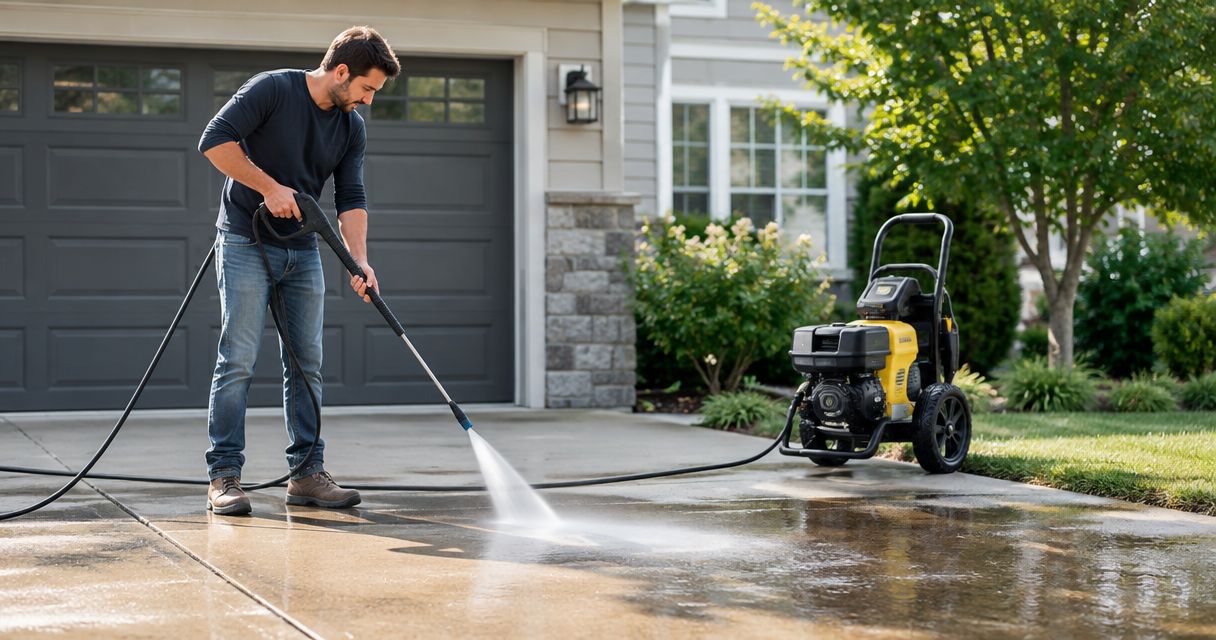
Best overall for sound, uncoated concrete: the 3,000 PSI class. Best for controlled, lighter cleaning: the 2,000 PSI class. Best for larger concrete areas: the 3,500 PSI class paired with a compatible surface cleaner. This 2026 guide ranks equipment classes, explains their limits, and helps you decide whether to buy a machine or choose exterior pressure washing from Everestservices.
- Pressure washers ranked by PSI for driveways: start with the 3,000 PSI class for sound, uncoated concrete.
- Match pressure, water flow, and nozzle choice; the highest PSI rating is not the safest choice.
- Everestservices provides exterior pressure washing for Fredericton homeowners who prefer a service to buying equipment.
- Check concrete, asphalt, pavers, and coatings separately before choosing driveway cleaning equipment.
WHY THIS MATTERS
A driveway needs an even finish, not the biggest number on a machine. Pressure can remove dirt, but an unsuitable jet can also strip coatings, disturb joint material, or mark the surface.
For your 2026 purchase, treat PSI as one specification. Water flow, nozzle selection, surface condition, and attachment compatibility determine whether the machine fits the job. A higher pressure rating does not prove better cleaning on your driveway.
This ranking compares pressure classes rather than named products. The numbers describe nominal equipment ratings, not recommended operating pressures for every surface. Your driveway's care instructions take priority over this ranking.
WHAT MAKES THE BEST DRIVEWAY PRESSURE WASHER
- Surface compatibility: Sound, uncoated concrete is a different cleaning job from asphalt, sealed concrete, or jointed pavers.
- Pressure control: You need a way to adjust the cleaning approach without relying on maximum output throughout the job.
- Water flow: Gallons per minute, or GPM, matters for rinsing and moving loosened dirt. Compare flow alongside PSI.
- Attachment compatibility: A surface cleaner must match the machine's pressure, flow, fittings, and manufacturer requirements.
- Practical ownership: Consider storage, water supply, hose handling, maintenance, and whether you want to operate an engine.
- Finish consistency: The goal is uniform cleaning without stripes, exposed aggregate, or damaged joints.
Do not choose equipment by driveway size alone. A large coated driveway still needs a coating-safe method. A small damaged concrete pad still needs an inspection before cleaning.
PRESSURE WASHERS AT A GLANCE
This 2026 ranking puts suitability ahead of maximum pressure. Rows follow the detailed recommendations below; the lower entries are specialist choices, not automatic upgrades.
| Rank and pressure class | Best for | Standout characteristic | Key limitation |
|---|---|---|---|
| 1. 3,000 PSI class | Sound, uncoated concrete | A useful starting point for comparing concrete-cleaning equipment | Unsuitable technique can still damage the surface |
| 2. 2,000 PSI class | Lighter cleaning with a controlled approach | Lower nominal pressure than the other ranked classes | Flow and attachment compatibility still need checking |
| 3. 2,500 PSI class | Mixed light-cleaning tasks | A middle pressure class for broader household comparisons | Not a substitute for surface-specific guidance |
| 4. 3,500 PSI class | Larger sound-concrete areas | A class to assess alongside compatible surface cleaners | More pressure requires disciplined handling |
| 5. 4,000 PSI class | Experienced operators with a defined equipment need | Higher pressure capacity | Excess capacity adds risk without proving a better finish |
A machine's advertised maximum PSI is not a promise about pressure delivered at every nozzle or operating setting. Read the operating specifications and attachment instructions before making your final choice.
1. 3,000 PSI CLASS: BEST FOR SOUND, UNCOATED CONCRETE
The 3,000 PSI class is the default comparison point for a homeowner cleaning sound, uncoated concrete. It offers a practical category to assess against the machine's flow rating, controls, and surface-cleaner requirements. It is not a universal safe setting.
Start by checking whether the concrete has cracks, loose material, repairs, or a protective coating. Those details change the cleaning method. Increasing pressure will not repair a weakened surface.
3,000 PSI class pros:
- A clear starting category for comparing concrete-cleaning equipment.
- Can be assessed against attachment pressure and flow requirements.
- Offers a lower nominal pressure than the specialist classes below.
3,000 PSI class cons:
- A concentrated jet can still leave permanent marks.
- PSI alone tells you nothing about water flow or control quality.
- Coated or deteriorating surfaces require separate guidance.
Best for: Homeowners with sound, uncoated concrete who are prepared to inspect, test, and follow equipment instructions.
Verdict: Buy only after confirming surface suitability and attachment compatibility. Do not buy this class simply because concrete appears in the product description.
2. 2,000 PSI CLASS: BEST FOR CONTROLLED, LIGHTER CLEANING
The 2,000 PSI class belongs on your shortlist when the job is lighter surface dirt rather than an attempt to remove every stubborn stain. Its lower nominal rating creates a different equipment choice, but it does not make careless nozzle use safe.
Look closely at water flow and the controls provided by the actual machine. Lower pressure with inadequate flow can leave you spending more time rinsing. A compatible attachment matters more than an accessory that merely connects to the hose.
2,000 PSI class pros:
- Lower nominal pressure than the other ranked classes.
- A relevant comparison category for lighter cleaning tasks.
- Encourages a surface-first purchase rather than a maximum-pressure purchase.
2,000 PSI class cons:
- Stubborn contamination needs an appropriate treatment, not repeated blasting.
- Some surface cleaners require specifications this class does not meet.
- Lower pressure can still disturb paver joints or damage vulnerable finishes.
Best for: Homeowners whose surface instructions permit pressure washing and whose main goal is lighter cleaning.
Verdict: Buy for an appropriate light-cleaning job; skip it as a guaranteed stain-removal solution. Verify the actual machine rather than treating the class as a performance promise.
3. 2,500 PSI CLASS: BEST FOR MIXED LIGHT-CLEANING TASKS
The 2,500 PSI class sits between the lighter and default concrete categories in this ranking. It gives you another comparison point when the driveway is only part of your cleaning workload. Each additional surface still needs its own method.
Do not use one nozzle position across concrete, siding, timber, and a vehicle. A machine can serve different tasks only when its instructions and the surface requirements support them. Pressure capacity is not permission to use it everywhere.
2,500 PSI class pros:
- A middle pressure class for comparing household equipment.
- Worth assessing when lighter driveway cleaning is one of several tasks.
- Can help you avoid selecting the highest rating by default.
2,500 PSI class cons:
- Does not establish suitability for any particular coating or material.
- The rating does not reveal hose quality, controls, or water demand.
Best for: Buyers comparing equipment for several permitted light-cleaning tasks, not just heavy concrete cleaning.
Verdict: Hold until you have listed the surfaces and checked their care requirements. Buy against that list, not against a broad household-use label.
4. 3,500 PSI CLASS: BEST FOR LARGER SOUND-CONCRETE AREAS
The 3,500 PSI class deserves consideration when you have a larger area of sound concrete and a defined surface-cleaner setup. The attachment's required flow and pressure must match the machine. A higher rating alone does not establish faster coverage.
Plan hose access, water supply, drainage, and safe working space before choosing this class. Equipment handling becomes part of the job. More capacity is useful only when you can apply it consistently.
3,500 PSI class pros:
- A relevant class to compare for substantial concrete-cleaning work.
- Supports evaluation of attachments with matching specifications.
- Offers higher nominal pressure capacity than the default class.
3,500 PSI class cons:
- Poor technique can mark concrete rather than clean it evenly.
- Additional pressure does not compensate for unsuitable flow.
- Surface defects and coatings still limit the cleaning method.
Best for: Operators cleaning larger sound-concrete areas with a verified machine-and-attachment combination.
Verdict: Hold until the surface cleaner, water supply, and operating plan are confirmed. Do not buy on the assumption that higher PSI means a shorter job.
5. 4,000 PSI CLASS: BEST FOR EXPERIENCED, DEFINED USE
The 4,000 PSI class is a specialist comparison category, not the default residential recommendation. Choose it only when the equipment requirements and permitted cleaning method justify that capacity. A driveway does not become suitable for higher pressure because it looks heavily soiled.
Experience matters here, but it is not a substitute for instructions. You still need to inspect the surface, confirm attachment compatibility, and control the cleaning pattern.
4,000 PSI class pros:
- Higher nominal pressure capacity for a clearly specified task.
- An option where matching equipment requirements call for this class.
- Useful to compare when you already understand the required setup.
4,000 PSI class cons:
- Unnecessary capacity creates more opportunity for surface damage.
- It does not guarantee removal of absorbed oil or other stains.
- It is not a sound default for an inexperienced driveway-cleaning buyer.
Best for: Experienced operators with a documented reason to select this pressure class.
Verdict: Skip as your default home-driveway purchase. Choose it only for a defined need, not for the largest number on the label.
THE NOZZLE CHANGES THE RESULT
Common fan-nozzle markings include 15°, 25°, and 40°. These describe spray angles, not safe pressure settings. A narrower pattern concentrates the spray over a smaller area; a wider pattern spreads it out.
Nozzle distance and movement also affect the result. Holding a jet close to one spot is different from moving an appropriate fan pattern evenly across the surface. Follow the machine's instructions and test out of the main sightline.
Do not treat a turbo nozzle as the default driveway attachment. Its rotating concentrated spray needs surface-specific approval. A surface cleaner also requires care: incorrect setup or uneven movement can leave visible bands.
CHECK THE SURFACE BEFORE THE MACHINE
Concrete, asphalt, and pavers are not interchangeable. Neither are coated and uncoated versions of the same material. Identify what you have before choosing a cleaning approach.
| Driveway surface | First decision | Main caution |
|---|---|---|
| Uncoated concrete | Check soundness and equipment guidance | Avoid marking or removing weakened surface material |
| Sealed or painted concrete | Follow the coating's cleaning instructions | Pressure can strip or damage the finish |
| Asphalt | Follow surface-care guidance | Do not assume concrete-cleaning methods apply |
| Jointed pavers | Check joint and sealer requirements | Avoid disturbing joint material |
For a 2026 clean in Fredericton, New Maryland, Oromocto, Hanwell, Lincoln, or Keswick Ridge, start with the actual surface condition. Your postal address does not determine safe PSI. Material, repairs, coatings, and drainage do.
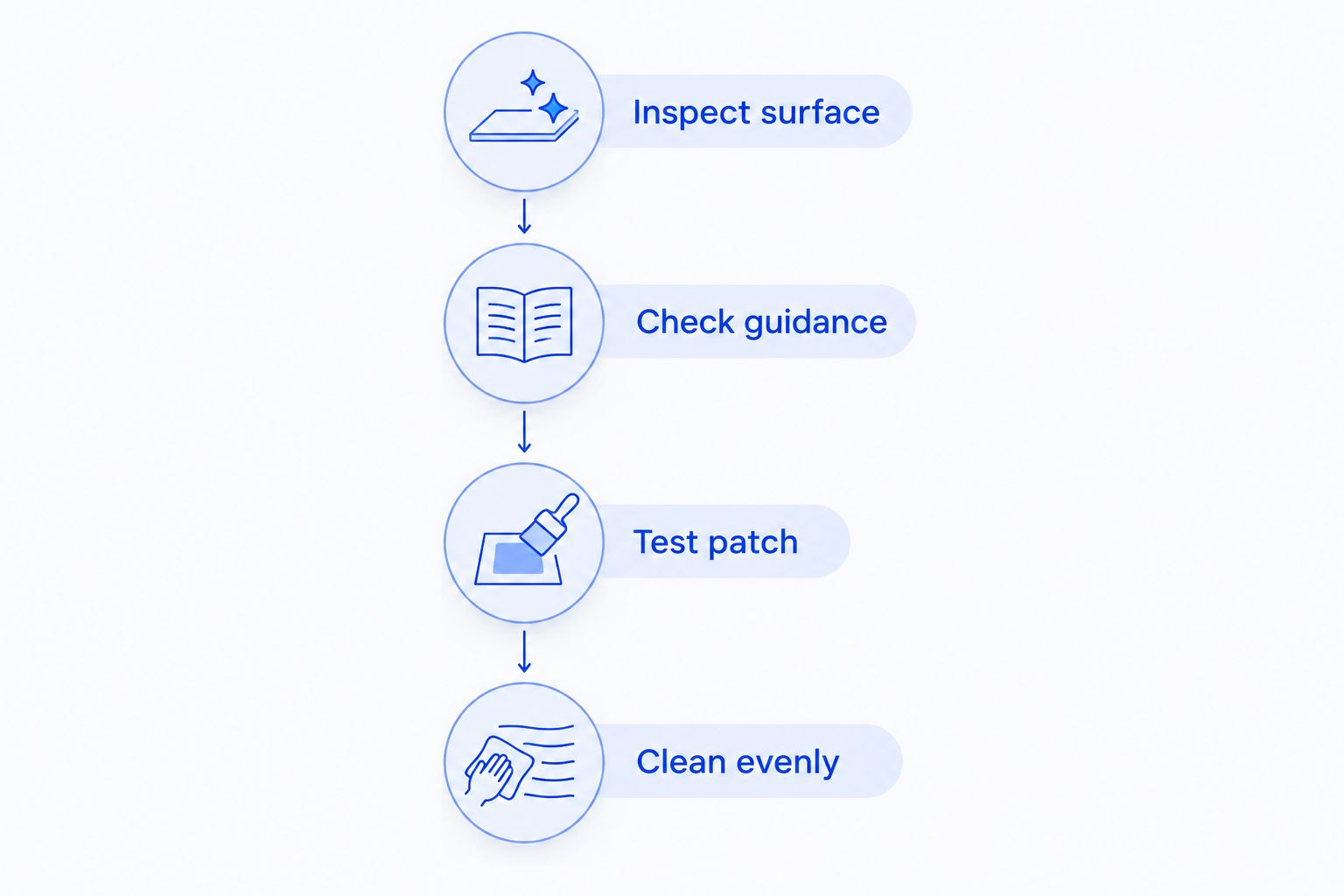
A CONTROLLED CLEANING SEQUENCE
Inspect surface
Look for loose aggregate, flaking, cracks, failed repairs, coating edges, and unstable joints. Stop if the cleaning method would aggravate those defects. Cleaning reveals a finish; it does not rebuild one.
Check guidance
Read the surface-care requirements, machine instructions, and attachment specifications together. Identify the permitted method before connecting equipment. Confirm how runoff will be managed without directing contaminants into drains.
Test patch
Test an inconspicuous area using the approved setup. Check for surface change, not just dirt removal. Compare the result after it dries before committing to the full driveway.
Clean evenly
Keep the cleaning pattern consistent and follow the attachment's operating instructions. Do not chase a stubborn stain with repeated close-range passes. Pause, identify the contamination, and choose an appropriate treatment.
Drying changes how the finish looks. Judge the completed surface under consistent light, not by the dramatic contrast between a wet patch and a dry one. Real before-and-after photographs are useful only when they make that comparison fair.
WHEN A SERVICE IS THE BETTER CHOICE
Everestservices provides exterior pressure washing for Fredericton homeowners who prefer a service to buying equipment. That is the relevant alternative when you do not want to own, store, and operate a pressure washer.
Ask how the surface will be assessed, which stains need separate treatment, and what the proposed cleaning includes. Confirm arrangements for water access and runoff. Do not assume every mark is removable or every surface should be pressure washed.
Everestservices pressure washing is a service option, not a machine in this ranking. Its equipment specifications and driveway-specific methods are not ranked here.
Discuss Your Exterior Cleaning
Ask about surface suitability and the scope of your Fredericton pressure-washing job.
HOW THE CLASSES ARE RANKED
This 2026 ranking prioritizes surface suitability, pressure control, flow, attachment compatibility, and ownership demands. It is a selection framework, not a product test or a claim that every machine within a class performs alike.
The default class comes first. Lighter and mixed-use choices follow. Higher-pressure classes sit lower because their extra capacity needs a specific justification, not because lower-ranked equipment is inherently poor.
WHICH PRESSURE CLASS SHOULD YOU CHOOSE?
Start your comparison with the 3,000 PSI class for sound, uncoated concrete. Choose the 2,000 PSI class for a suitable lighter-cleaning task. Consider 3,500 PSI only with a verified attachment setup and a clear reason for the additional capacity.
If surface suitability is uncertain, do not solve that uncertainty by buying a stronger machine. Establish the cleaning method first. Then choose equipment—or discuss exterior pressure washing with Everestservices.
FAQ
What's the best pressure washer PSI for a concrete driveway?
The 3,000 PSI class is the starting comparison category in this guide for sound, uncoated concrete. It is not a universal operating setting; surface instructions, water flow, nozzle choice, and attachment compatibility determine the permitted method.
Is a 4,000 PSI pressure washer better than a 3,000 PSI machine?
A 4,000 PSI pressure washer has higher nominal pressure capacity, not an automatic cleaning advantage. Choose it only when the surface requirements and equipment setup justify that capacity.
Can I clean a driveway with a 2,000 PSI pressure washer?
A 2,000 PSI machine is a comparison option for suitable lighter-cleaning tasks. Confirm surface guidance, water flow, and attachment requirements rather than expecting the rating to guarantee stain removal.
Does GPM matter when choosing a driveway pressure washer?
GPM matters because it describes water flow, which affects rinsing and attachment compatibility. Compare it alongside PSI and check the surface cleaner's required specifications.
Can I use the same pressure on concrete and pavers?
Do not assume concrete and pavers accept the same cleaning method. Paver joints, sealers, and surface condition require separate checks before pressure washing.
Will more pressure remove oil stains from my driveway?
More pressure does not guarantee removal of oil stains. Identify the contamination and use a surface-compatible treatment rather than repeatedly blasting the same spot.
Should I buy a pressure washer or book a service in Fredericton?
Choose a service if you prefer not to own and operate the equipment. Everestservices provides exterior pressure washing in Fredericton; discuss surface suitability and the proposed scope before booking.
ONE LAST THING
For your 2026 driveway clean, photograph the same area before cleaning and after it has dried, from the same position. The finish is the proof—not the PSI label. An even result matters more than a dramatic wet streak.