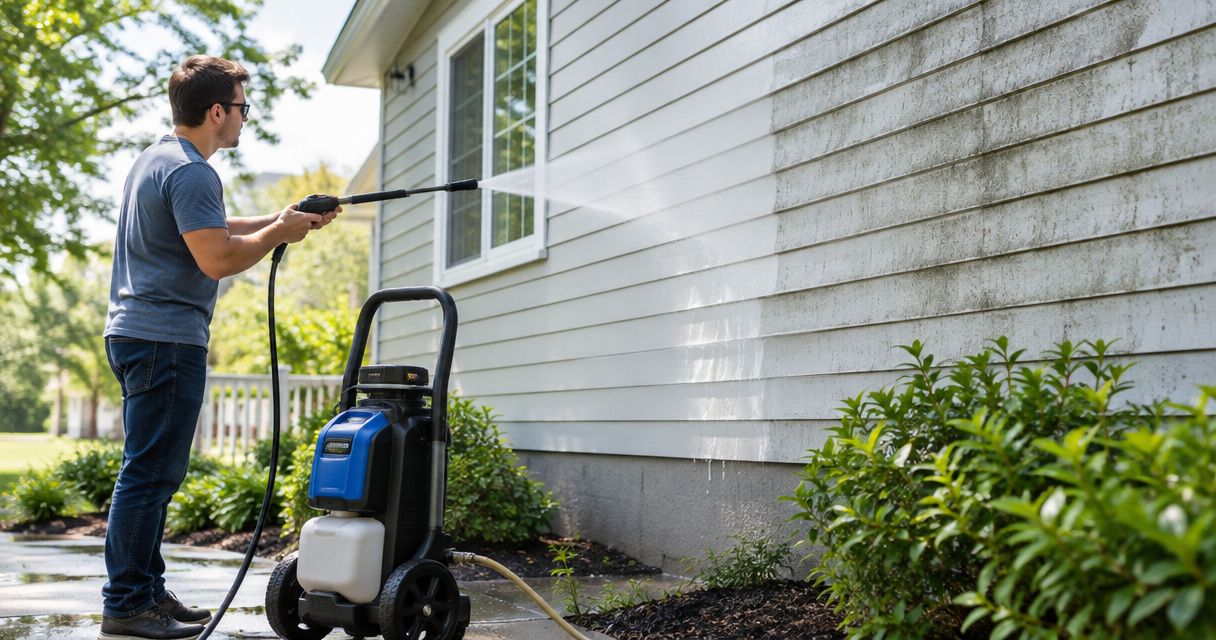
Best overall for routine, ground-level house washing: an electric pressure washer with adjustable output. Best for mixed exterior surfaces: a gas-powered washer. Best for a one-off project: a rental washer. For homeowners who prefer a service to equipment ownership, Everestservices provides exterior pressure washing in Fredericton. This 2026 guide compares the options by surface, access, and control—not maximum pressure.
- The best pressure washers for house washing give you control; maximum pressure is not the deciding feature.
- Choose an electric pressure washer for routine, ground-level exterior cleaning when the surface instructions permit it.
- Choose a gas-powered washer for mixed-surface projects, not because siding needs more pressure.
- Everestservices provides exterior pressure washing for Fredericton homeowners who prefer booking a service to owning equipment.
WHY THIS MATTERS
A cleaner wall is the goal. A more powerful machine is not.
House washing puts water near siding joints, window seals, vents, electrical fixtures, and painted finishes. The wrong technique can force water behind cladding or damage the surface you wanted to reveal. Pressure washing also cannot repair failing paint, cracked siding, or deteriorated seals.
Choose the cleaning method before you choose the machine. A suitable washer gives you control over delivery. It does not make every exterior suitable for pressure washing.
WHAT MAKES THE BEST PRESSURE WASHER FOR HOUSE WASHING?
Use these criteria to choose your 2026 setup:
- Surface compatibility: Check the siding or coating manufacturer's cleaning instructions. Some surfaces need low-pressure washing rather than direct pressure washing.
- Output control: Look for an approved way to reduce pressure and select suitable spray patterns. A high maximum rating is not a house-washing recommendation.
- Water delivery: Read both pressure and flow specifications. Pressure describes force; flow describes the volume of water delivered.
- Reach and access: Plan around hose routing, water supply, electrical access, and areas you cannot safely reach from the ground.
- Detergent compatibility: Confirm which cleaners the machine accepts and which cleaners the exterior surface permits. These are separate checks.
- Ownership burden: Storage, winter preparation, maintenance, and repeated use should influence whether you buy, rent, or book a service.
A washer earns its place by fitting your property. It does not earn it through a dramatic maximum-pressure figure on the box.
HOUSE-WASHING OPTIONS AT A GLANCE
| Option | Best for | Standout feature | Key limitation |
|---|---|---|---|
| Electric pressure washer | Routine ground-level maintenance | No fuel handling; straightforward start-up | Requires suitable electrical access and wet-location precautions |
| Gas-powered pressure washer | Mixed-surface exterior projects | Operates without an electrical connection | Engine upkeep, exhaust, and more involved preparation |
| Rental pressure washer | Occasional projects without ownership | Avoids long-term equipment storage | Controls, condition, and accessories need checking before use |
| Professional exterior washing | Homeowners who prefer a service | No machine purchase or equipment maintenance | Scope and surface-specific methods need agreement before booking |
These are equipment and service categories, not interchangeable promises. A rental washer can be electric or gas-powered. A professional service still needs a method that suits your exterior.
1. ELECTRIC PRESSURE WASHER: BEST FOR ROUTINE MAINTENANCE
An electric pressure washer uses an electric motor to drive its pump. It suits homeowners who want equipment for repeat cleaning without handling engine fuel.
For house washing, choose controls and accessories that match the surface instructions. Electrical convenience does not make the spray harmless. An electric machine can still damage siding, strip coatings, or send water into joints when used incorrectly.
Electric pressure washer pros:
- No petrol storage or engine-fuel handling.
- Straightforward start-up for routine cleaning tasks.
- Useful when suitable electrical and water connections are accessible.
- A practical ownership option when you expect repeated use.
Electric pressure washer cons:
- Power-cord routing adds another constraint around water.
- Electrical supply and extension-cord use must follow the machine's manual.
- Motor type alone tells you nothing about siding compatibility.
Best for: Homeowners cleaning accessible exterior areas from the ground, with suitable utilities and a surface-approved method.
Before buying in 2026, read the operating manual rather than relying on the front-of-box rating. Confirm pressure adjustment, detergent application, nozzle compatibility, and storage instructions. Check how the manufacturer requires you to protect the pump from freezing.
Verdict: Buy for repeat, ground-level maintenance after confirming surface compatibility.
2. GAS-POWERED WASHER: BEST FOR MIXED-SURFACE PROJECTS
A gas-powered pressure washer uses a combustion engine to drive its pump. It removes the need for an electrical connection at the machine, although you still need an adequate water supply.
This category belongs on your shortlist when your property has several distinct cleaning tasks. A driveway, a painted wall, and a timber deck do not need the same treatment. The machine must support those differences—not encourage one aggressive setting everywhere.
Gas-powered pressure washer pros:
- No electrical cord between the machine and an outlet.
- Useful where electrical access complicates the work area.
- A practical category to assess for repeated mixed-surface cleaning.
- Lets you separate equipment choice from outlet location.
Gas-powered pressure washer cons:
- Requires fuel handling and engine maintenance.
- Exhaust creates a carbon-monoxide hazard; never operate it indoors or in enclosed spaces.
- Extra power is not permission to increase pressure on siding.
Best for: Homeowners with repeated exterior projects who accept engine upkeep and can operate the machine safely outdoors.
For a 2026 purchase, compare actual controls and approved attachments. Do not assume a gas model has more useful flow, better pressure regulation, or longer reach than an electric model. Those are model-specific specifications.
Verdict: Buy for a genuine mixed-surface workload; skip if house siding is your only reason for choosing more power.
3. RENTAL WASHER: BEST FOR A ONE-OFF PROJECT
Renting gives you temporary equipment access without keeping a machine between projects. It is an ownership decision, not a separate cleaning technology.
You still need to understand the particular washer. Before taking it home, identify its controls, approved detergent system, supplied nozzles, shutdown procedure, and operating requirements. Familiarity with another machine is not a substitute for its instructions.
Rental pressure washer pros:
- Avoids permanent equipment storage.
- Suits an occasional project rather than a recurring routine.
- Lets you choose equipment around the task at hand.
Rental pressure washer cons:
- Unfamiliar controls add preparation work.
- Supplied accessories need checking against your intended use.
- Renting does not resolve unsafe access or unsuitable siding.
Best for: Homeowners with a clearly defined, accessible project who do not want long-term equipment ownership.
Inspect the hose, connections, spray gun, and fittings before use. Ask for an operating demonstration and report visible damage. Plan the work before collecting the equipment so that unfamiliarity does not turn into rushed technique.
Verdict: Rent for an occasional, well-defined project; hold if the cleaning method remains undecided.
4. PROFESSIONAL WASHING: BEST FOR A SERVICE-FIRST APPROACH
Professional exterior washing replaces the equipment purchase with an agreed service. You still need to discuss the surfaces, access, condition, and expected result.
Everestservices provides exterior pressure washing for Fredericton homeowners who prefer booking a service to owning equipment. Ask which areas the proposed work includes and how the method will suit the material. Do not assume that pressure washing automatically includes roof cleaning, paint repair, or every exterior surface.
Professional exterior washing pros:
- No pressure-washer purchase or storage.
- No homeowner responsibility for maintaining the service provider's machine.
- Gives you a chance to discuss surface condition before agreeing to work.
Professional exterior washing cons:
- You need an agreed scope rather than an assumed whole-property clean.
- Cleaning cannot repair failed finishes or damaged materials.
- Equipment ownership and direct control remain with the provider.
Best for: Homeowners who want exterior cleaning as a service rather than another maintenance tool.
For professional exterior washing, judge the proposed method and scope—not the appearance of the equipment. If before-and-after photos are available, look for comparable surfaces and lighting. A wet wall can look different from a dry wall without proving the finished result.
Verdict: Book a service when avoiding equipment ownership is the priority; agree on the surfaces and method first.
Discuss Your Exterior Cleaning
Ask Everestservices about exterior pressure washing for your Fredericton property.
CONTROL THE SPRAY. PROTECT THE SURFACE.
Nozzle angle changes the spray pattern. A 0-degree nozzle concentrates the stream; a 25-degree nozzle creates a narrower fan than a 40-degree nozzle. None of these angles certifies a setup as safe for siding.
Pressure, nozzle size, distance, surface condition, and technique also matter. Start with the surface manufacturer's instructions and the equipment manual. Do not copy a nozzle choice from a concrete-cleaning demonstration and apply it to a painted wall.
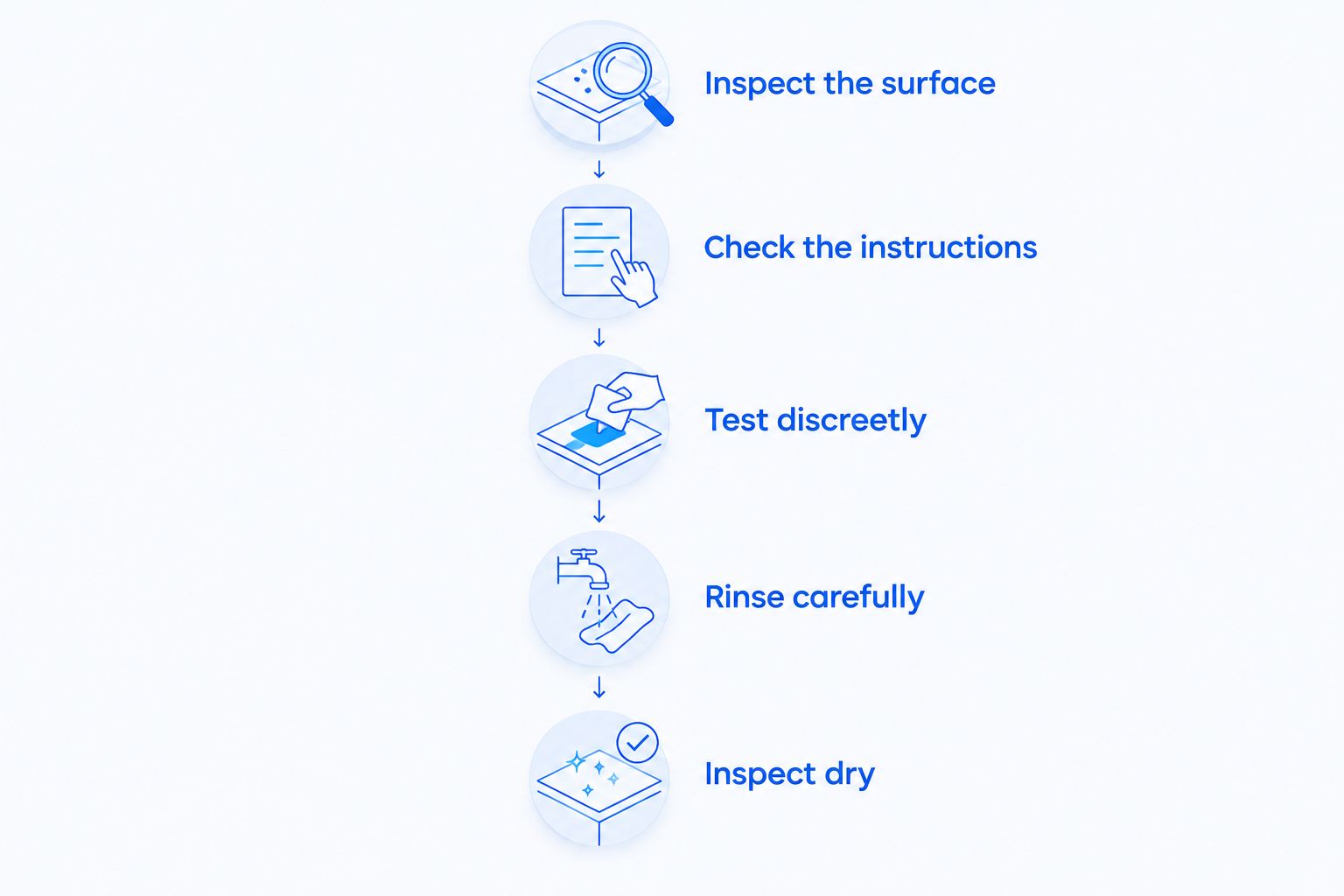
Use this sequence for your 2026 house-washing plan:
- Inspect the surface: Identify the material, loose sections, failed paint, openings, and damaged seals. Address defects before washing.
- Check the instructions: Confirm the permitted cleaning method, detergent restrictions, and equipment requirements.
- Test discreetly: Follow the instructions in an inconspicuous area. Stop if the finish changes or material loosens.
- Rinse carefully: Keep water away from openings and vulnerable joints. Follow the specified spray direction and working distance.
- Inspect dry: Assess the finish after the surface dries. Wetness is not proof of a clean, undamaged result.
A wider fan is not a substitute for correct technique. If a stain remains, stop and identify it before increasing pressure or changing chemicals. More force can turn a cleaning problem into a repair problem.
PLAN THE WORK AROUND YOUR PROPERTY
For a home in Fredericton, New Maryland, Oromocto, Hanwell, Lincoln, or Keswick Ridge, begin with the actual exterior—not a generic equipment recommendation. Record the siding material, accessible water connection, electrical access, nearby planting, and areas beyond safe ground-level reach.
Do not operate a pressure washer from a ladder. Spray reaction, wet footing, and hose movement create hazards. Areas you cannot reach safely require a different access plan, not a longer stretch.
Cold-weather storage also belongs in the purchase decision. Drain and winterize equipment exactly as its manufacturer directs. Leaving water in a pump exposed to freezing temperatures can damage it.
Keep your 2026 plan simple: identify the surfaces, choose the permitted method, then decide who performs the work. The order matters.
HOW THE OPTIONS ARE RANKED
This ranking prioritizes surface compatibility, output control, practical access, and ownership burden. Electric equipment is the default for routine ground-level maintenance; gas equipment has a distinct role when electrical access and mixed tasks shape the decision.
Rental equipment answers the storage question. Professional washing answers the service-versus-ownership question. Neither automatically improves the cleaning method.
WHICH OPTION SHOULD YOU CHOOSE?
Choose an electric pressure washer for repeat, accessible cleaning only after confirming that your exterior permits the intended method. Choose gas equipment when your wider workload justifies the engine. Rent when ownership does not fit the frequency of use.
Choose a professional service when you want the work handled without buying and maintaining equipment. Everestservices offers exterior pressure washing; discuss your property and scope before treating that service as the answer to every surface.
The default is controlled cleaning. Not maximum pressure.
FAQ
What's the best pressure washer for house washing in 2026?
An electric pressure washer with suitable output control is the default for routine, ground-level cleaning when the exterior's instructions permit pressure washing. Choose by surface compatibility, water delivery, access, and controls rather than maximum pressure.
Is a gas pressure washer better than an electric one for siding?
A gas pressure washer is not automatically better for siding. The surface instructions and the machine's usable controls matter more than its power source.
What pressure should I use to wash my house?
Use the pressure and method permitted by your siding manufacturer and equipment instructions. There is no single pressure setting that suits every material, coating, nozzle, and working distance.
Is a wider nozzle safe for house washing?
A wider nozzle does not guarantee safe house washing. Nozzle size, pressure, distance, spray direction, and surface condition also affect the result.
Should I rent a pressure washer or buy one?
Rent for an occasional, clearly defined project; consider buying for repeated use when you can maintain and store the machine correctly. Either choice still requires a surface-approved cleaning method.
Can I pressure wash my house from a ladder?
Do not operate a pressure washer from a ladder. Spray reaction, wet footing, and hose movement create hazards; arrange a different access plan for areas beyond safe ground-level reach.
Does Everestservices offer exterior pressure washing in Fredericton?
Everestservices provides exterior pressure washing in Fredericton. Discuss the surfaces, access, condition, and proposed scope before booking.
ONE LAST THING
Judge the dry finish, not the wet reveal. In 2026, a convincing house-washing result still means a cleaner surface without newly damaged paint, disturbed joints, or water intrusion. Take your own before-and-after photos from the same position and under similar lighting. The finish is the proof.
RELATED GUIDES
Keep vehicle-care methods separate from house-washing methods: