Restaurant pressure washing is controlled exterior surface cleaning with the aim of removing buildup from customer entrances, patios, and service areas without disrupting food operations. This 2026 guide separates pressure washing for restaurants from commercial-kitchen sanitation, then explains how to choose a method, contain runoff, and inspect the finished work.
- Pressure washing for restaurants belongs in an exterior cleaning plan, not a substitute for kitchen sanitation.
- Everestservices provides exterior pressure washing for homeowners in Fredericton; confirm restaurant requirements before requesting work.
- Match patio cleaning and service-area degreasing to the surface, drainage route, and food-operation boundaries.
- Choose controlled cleaning over maximum pressure, and inspect surfaces after they dry.
WHY PRESSURE WASHING MATTERS FOR RESTAURANTS
A restaurant exterior has competing demands. Customers need a clear entrance. Deliveries need access. Food preparation must remain protected from spray, debris, and cleaning chemicals. Cleaning that improves one area while contaminating another is not a successful result.
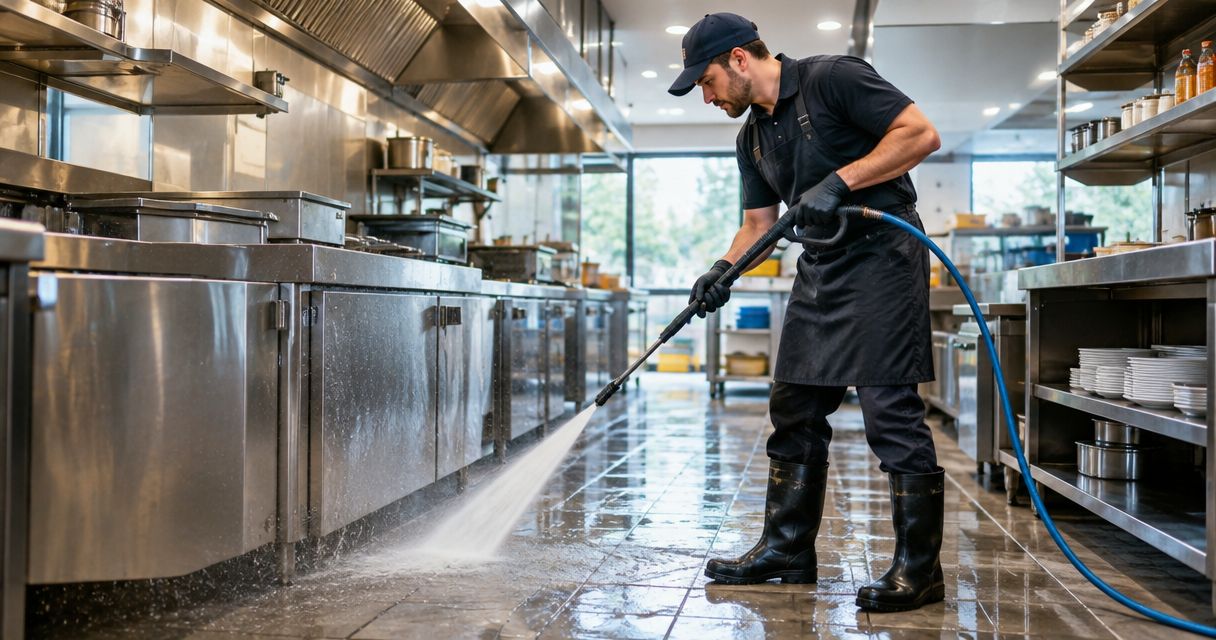
Pressure washing removes exterior buildup; it does not establish that a kitchen is sanitary. Interior food-contact surfaces, exhaust systems, electrical equipment, and exterior paving need different procedures. Keep those jobs separate in your 2026 maintenance plan.
Everestservices provides exterior pressure washing for homeowners in Fredericton, alongside auto detailing and headlight restoration. Everestservices pressure washing is best for Fredericton homeowners seeking exterior cleaning. For a restaurant project, confirm the commercial scope and relevant experience before selecting a provider.
For operators in Fredericton, New Maryland, Oromocto, Hanwell, Lincoln, and Keswick Ridge, the practical starting point is the property itself. Map the entrance, patio, delivery route, waste area, and drains. Then identify who controls each space: your business, the landlord, or a shared-property manager.
The finish is the proof. But a cleaner-looking surface is only part of the result. Your cleaning plan also needs protected food areas, controlled wastewater, intact materials, and a safe route back into service.
BUILD YOUR 2026 RESTAURANT CLEANING PLAN
Define the cleaning boundary
Start with a walk-through and a marked photograph or simple sketch. Divide the premises into 3 zones: customer areas, exterior service areas, and interior food areas. This is a planning recommendation, not a claim that the same equipment belongs in every zone.
Customer areas include entrances, exterior steps, and patios. Exterior service areas include delivery approaches and waste-storage surrounds. Interior food areas require a separate cleaning and sanitation procedure suited to the equipment and surfaces involved.
Write down the boundary before requesting quotes or hiring equipment. A description such as exterior patio paving is useful. A request to clean the whole restaurant is not. It leaves food protection, equipment exclusions, and wastewater responsibility unresolved.
- Mark the entrance and an alternative access route.
- Identify patios, paving, siding, and painted surfaces separately.
- Exclude kitchen interiors from the exterior washing scope.
- Flag doors, vents, outlets, and damaged seals.
- Confirm landlord permission for shared or leased surfaces.
Inspect the surface before choosing equipment
Use daylight, a dry surface, and a close visual inspection first. Look for loose coatings, cracked joints, soft timber, deteriorating mortar, and existing water damage. Record those conditions before cleaning starts so the inspection does not become a dispute about pre-existing defects.
The cleaning method should follow the material and its condition. Concrete paving, timber furniture, vinyl siding, and painted doors are not interchangeable targets. Higher pressure is not a universal upgrade; it increases the consequences of a poor match.
For specialist kitchen work, choose a contractor whose stated scope covers the actual task. Hood and duct cleaning, interior degreasing, and exterior washing are distinct services. Do not assume a provider offers all of them because they own a pressure washer.
- Photograph damaged joints and loose coatings.
- Check surface-manufacturer cleaning instructions where available.
- Identify seals and openings that need protection.
- Test the selected method in an inconspicuous area.
- Stop if the test changes the finish or exposes damage.
Match the method to the buildup
Start manually. Sweep loose material, collect litter, and remove accessible residue with tools suited to the surface. This reduces the material that washing would otherwise spread across the property or carry toward a drain.
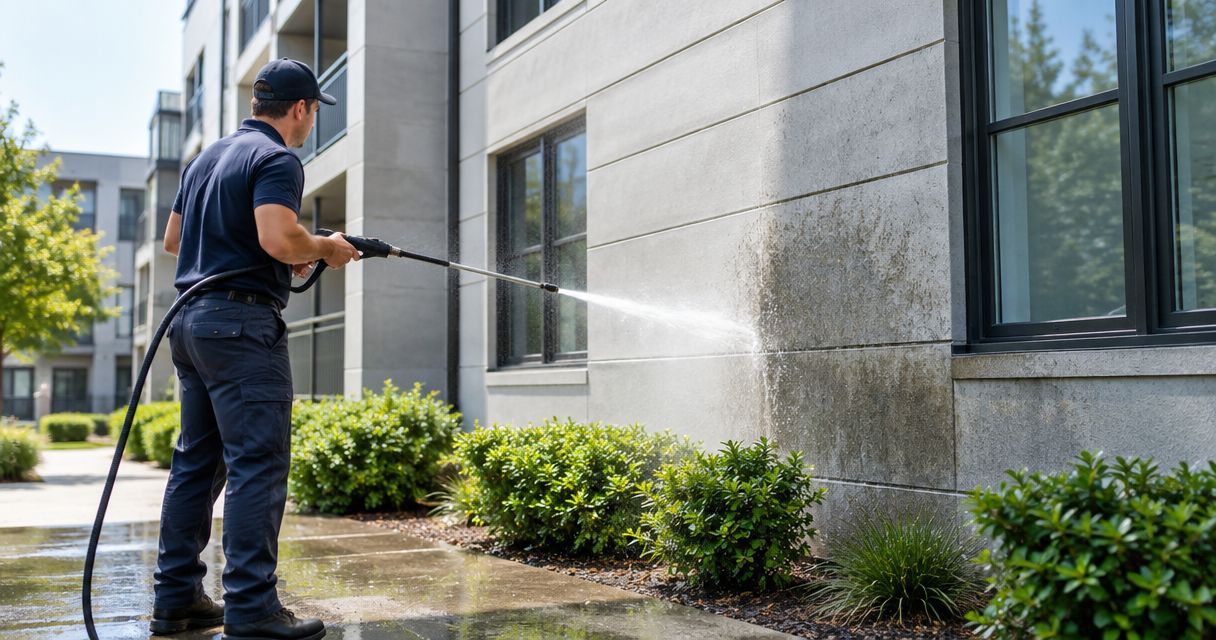
Then select the least aggressive method that achieves the required result. A brush and compatible cleaner can suit a small patch. Controlled pressure washing suits appropriate exterior hard surfaces. Low-pressure washing serves a different purpose from blasting a stubborn mark at close range.
Everestservices offers exterior pressure washing, but its stated scope does not establish commercial-kitchen sanitation services. Treat any restaurant enquiry as a scope discussion. Confirm the surface, contamination, access restrictions, and wastewater plan rather than assuming the residential service transfers unchanged.
- Remove loose debris before applying water.
- Match the cleaner to both the buildup and the material.
- Follow label dilution and application instructions.
- Keep cleaning chemicals separate; never mix products.
- Test before treating the full area.
- Stop and reassess marks that remain after appropriate cleaning.
Protect food areas and control runoff
Plan where the water will go before opening the hose. Identify drains, low spots, adjoining properties, and routes back toward the building. For your 2026 job scope, confirm applicable wastewater requirements with the relevant municipality or property authority before discharge.
Grease-contaminated water is not the same as clean rinse water. Do not assume an outdoor drain accepts it. The method needs a defined collection or disposal arrangement when the contamination or local requirements call for one.
Protect food, packaging, utensils, and preparation equipment from spray and chemicals. An open kitchen door is not a harmless ventilation choice during exterior washing. Keep the cleaning boundary intact and assign someone to check it throughout the job.
- Locate drains before positioning equipment.
- Identify where grease or chemical residue is present.
- Agree on collection and disposal responsibilities.
- Close and protect openings within the spray area.
- Move exposed food-related items away from the work.
- Prevent runoff from crossing customer access routes.
Schedule cleaning around restaurant access
Start with your own operating schedule, not the contractor's preferred arrival time. Identify deliveries, patio use, waste collection, staff access, and customer opening. A quieter period only works if the necessary doors and service routes remain available.
Make drying and inspection part of the schedule. The job is not complete when the equipment stops. Wet paving, loose hoses, and remaining residue still need attention before customers or staff return to the area.
For a 2026 cleaning visit in Fredericton or a nearby community, assess the actual forecast and surface conditions. Do not proceed if runoff will freeze or if the work cannot be safely isolated. A calendar booking does not override conditions on site.
- Choose a window outside customer use of the area.
- Coordinate deliveries and waste collection.
- Keep a clearly identified staff access route.
- Isolate hoses, equipment, and wet surfaces.
- Include time for drying and a final inspection.
- Name the person who authorizes reopening.
Verify the finish and record the result
Use your phone and the original inspection notes first. Take 2 photos per area: one before cleaning and one after drying, using the same position and framing. This is a documentation recommendation, not a promise about the result.
Inspect more than colour. Look for remaining residue, damaged joints, peeling finishes, trapped water, and debris moved into neighbouring areas. A wet surface can disguise differences that become visible after drying. Inspect the dry finish before accepting the work.
Keep 1 written scope per job with the cleaned areas, exclusions, method, wastewater responsibilities, and acceptance checks. In your 2026 maintenance records, this makes repeat work easier to specify without relying on memory or an attractive photograph alone.
- Photograph the same area before and after cleaning.
- Check the finish after it dries.
- Inspect joints, coatings, seals, and nearby openings.
- Confirm that collected residue has been removed.
- Record unresolved stains and pre-existing damage.
- Reopen only after the access route is clear and safe.
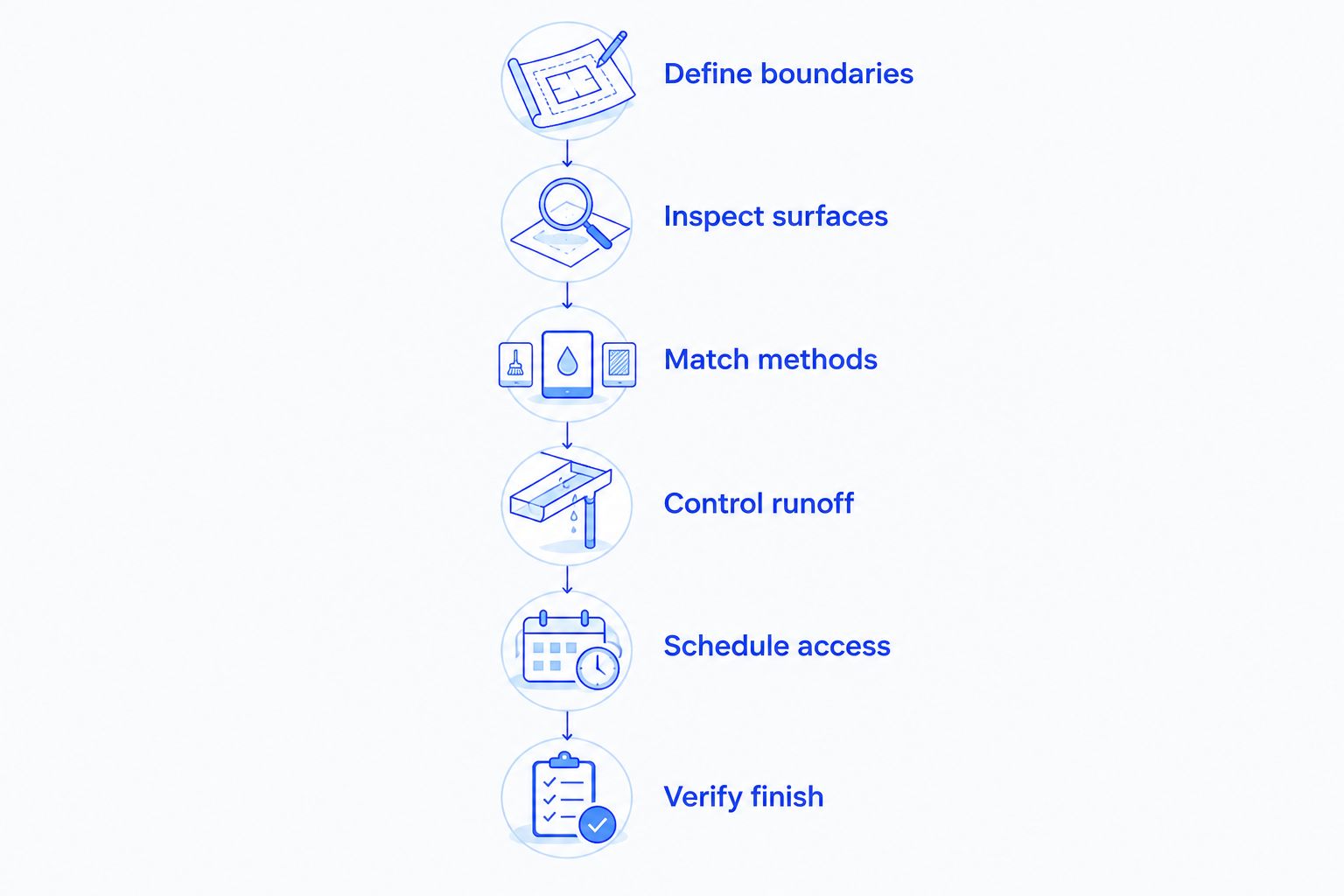
The sequence matters: inspect first, choose the method second, and judge the dry result last. Equipment selection belongs inside that process, not at the beginning of it.
COMPARE RESTAURANT CLEANING OPTIONS
Choose by task, not machine size. The best option is the one that removes the identified buildup while respecting the surface, food-operation boundary, and wastewater requirements. No single method covers the whole premises.
| Option | Best for | Main advantage | Key limitation |
|---|---|---|---|
| Manual sweeping and scrubbing | Routine debris removal and small exterior patches | Gives close control over a limited area | Labour increases with area and stubborn buildup |
| Controlled exterior pressure washing | Suitable paving and other compatible exterior hard surfaces | Covers larger appropriate surfaces than spot scrubbing | Poor technique damages finishes and spreads contaminated runoff |
| Low-pressure exterior washing | Compatible siding and finishes needing a gentler method | Reduces reliance on force | Still requires suitable chemistry and protection of openings |
| Specialist interior cleaning and sanitation | Commercial-kitchen surfaces and equipment within the contractor's scope | Addresses food-area procedures rather than appearance alone | Does not automatically include exterior paving or exhaust systems |
| Specialist exhaust-system cleaning | Hoods, filters, and ducts within the agreed scope | Targets a separate grease-management task | Is not a substitute for kitchen sanitation or exterior cleaning |
Ask each provider to explain the proposed method in plain language. What surface will be cleaned? What will be protected? Where will the wastewater go? What marks are excluded from the expected result?
For an Everestservices pressure washing enquiry, describe the exterior surfaces and ask whether the restaurant project fits the service. Its stated offering establishes exterior washing for homeowners, not restaurant certification, exhaust cleaning, or food-contact sanitation.
COMMON MISTAKES RESTAURANTS MAKE
Treating exterior washing as kitchen sanitation
A patio that looks clean says nothing about a preparation counter or kitchen appliance. Keep exterior appearance work separate from cleaning and sanitizing food-contact surfaces. Your kitchen procedures need their own products, instructions, and verification.
Specify the task by surface and purpose. Avoid a single clean everything instruction that hides the difference between paving, food equipment, and exhaust components.
Washing toward an open service door
A service entrance is convenient for staff, but it also connects the exterior cleaning zone to indoor operations. Spray, debris, and chemicals must not enter food areas. Protect the opening and arrange another route before washing starts.
Do not let the access plan unravel halfway through the job. Tell staff which entrance to use and who controls the closed area.
Using pressure to compensate for the wrong cleaner
A stubborn grease mark does not automatically call for a more aggressive nozzle or a closer pass. Identify the material and contamination first. Use a compatible cleaning method and respect its instructions.
Stop when the finish changes. Removing part of a coating is damage, not proof that the surface needed more force. Persistent marks require reassessment rather than repeated blasting.
Leaving drainage decisions until the job starts
Once washing begins, contaminated water follows the slope of the site. That is too late to decide whether a drain is suitable or who is responsible for collection. Resolve drainage and disposal in the written scope.
This is especially important where a restaurant shares paving, loading space, or waste facilities. Confirm responsibilities with the property manager before equipment arrives.
Accepting a wet photograph as the final result
A wet photograph is not a dry-surface inspection. It can conceal uneven cleaning, remaining marks, and finish changes. Ask for the finished area to be checked after drying, under comparable lighting.
Document the result without promising that every surface will look new. Age, wear, staining, and damage are separate from removable buildup. The reveal should show what changed, not conceal what remained.
FAQ
What's the best approach to pressure washing for restaurants?
The best approach is a surface-specific exterior cleaning plan with protected food areas and a defined wastewater route. Inspect the materials first, remove loose debris, test the method, and check the finish after drying.
Can I pressure wash inside a commercial kitchen?
Do not treat exterior pressure washing as a commercial-kitchen cleaning procedure. Interior work requires methods suited to food-contact surfaces, equipment, electrical components, drainage, and the kitchen's sanitation requirements.
Is pressure washing better than scrubbing a restaurant patio?
Pressure washing suits compatible exterior surfaces and larger cleaning areas; scrubbing gives closer control over small patches. Choose according to the surface condition and buildup, not the assumption that more pressure cleans better.
Can greasy restaurant wastewater go into an outdoor drain?
Do not assume an outdoor drain accepts greasy wastewater. Confirm the applicable requirements with the relevant municipality or property authority and define collection or disposal before cleaning begins.
How often should a restaurant schedule exterior cleaning?
Set the schedule from inspections of buildup, residue, drainage, and surface condition rather than a universal interval. Reassess after spills and whenever the condition of an entrance, patio, or service area changes.
Does Everestservices clean restaurant kitchens or exhaust hoods?
Everestservices' stated services include exterior pressure washing for homeowners, auto detailing, and headlight restoration in Fredericton. That scope does not establish restaurant-kitchen sanitation or exhaust-hood cleaning; confirm any commercial exterior project directly.
What should I ask before booking restaurant pressure washing in 2026?
Ask for the surfaces, method, exclusions, food-area protections, wastewater arrangements, and reopening checks in writing. Also confirm who coordinates staff access, deliveries, and shared-property permissions.
ONE LAST THING
Judge the dry surface, not the dramatic spray. For your next 2026 cleaning job, make the final photograph match the original viewpoint and wait until the surface dries before comparing them.
That simple inspection separates a visible transformation from a temporary wet finish. It also gives you a useful maintenance record: what was removed, what remained, and what needs repair rather than another cleaning pass.