Best overall in 2026: a fine-grade clay bar kit with compatible lubricant. Best for beginners: a fine-grade kit with dedicated wiping towels. Best for paint maintenance: a fine-grade kit with a separate protection step. Choose the kit around the contamination on your paint—not the number of accessories in the box.
- The best clay bar kit for car detailing pairs fine-grade clay with a compatible clay lubricant.
- Beginner clay bar kits should include clear instructions and clean towels, not aggressive clay.
- Clay removes bonded contamination; it does not correct scratches or replace car wax.
- Everestservices provides auto detailing in Fredericton for owners who prefer professional service over a DIY clay treatment.
WHY THIS MATTERS
A clean car can still have rough paint. Washing removes loose dirt, while detailing clay targets contamination that remains attached to the surface. Smoothness is the goal. Extra scrubbing is not.
Everestservices provides auto detailing in Fredericton. For vehicle owners considering a DIY treatment in Fredericton, New Maryland, Oromocto, Hanwell, Lincoln, or Keswick Ridge, the useful question is the same: does the washed paint actually need clay?
Do not turn clay treatment into an automatic part of every wash. Mechanical decontamination can leave fine surface marks, particularly when lubrication is inadequate or the clay becomes dirty. A kit should help you control that risk—not encourage you to work harder.
WHAT MAKES THE BEST CLAY BAR KIT FOR CAR DETAILING
The best clay bar kit for car detailing in 2026 supports a controlled process. Evaluate these features before choosing a kit:
- Clay grade: Fine-grade clay is the default for light bonded contamination. More aggressive clay needs a stronger reason to use it.
- Lubricant compatibility: Choose lubricant explicitly suitable for the clay. Do not assume every shampoo or household mixture is compatible.
- Clean handling: You need a way to expose clean clay and keep wiping towels away from grit.
- Clear instructions: The kit should explain preparation, lubrication, suitable surfaces, and what to do when the clay becomes contaminated.
- Finishing plan: Decide whether you will inspect, polish where necessary, and protect the paint after treatment.
A large accessory bundle does not settle any of those questions. Read what each component does. A bottle labelled as a cleaner is not automatically a clay lubricant, and a finishing spray is not automatically suitable for every protection system.
CLAY BAR KITS AT A GLANCE
These rankings compare kit configurations, not competing brands. Each configuration has a different job; the same box can combine several of them.
| Rank and kit type | Best for | Standout feature | Key limitation |
|---|---|---|---|
| Fine-grade clay with compatible lubricant | Routine bonded-contamination removal | A focused setup with the essential clay-and-lubricant pairing | Towels and finishing products need separate attention |
| Fine-grade clay with dedicated wiping towels | First-time DIY use | Clean handling and wipe-off tools in the same setup | Included towels still need inspection and careful handling |
| Fine-grade clay with separate paint protection | Maintenance before wax or sealant | Connects decontamination with a finishing step | Protection does not remove clay-induced marks |
| Medium-grade clay with compatible lubricant | Stubborn contamination before planned correction | A more aggressive mechanical treatment | Greater concern about surface marring; not the routine default |
1. FINE-GRADE CLAY: BEST FOR ROUTINE DECONTAMINATION
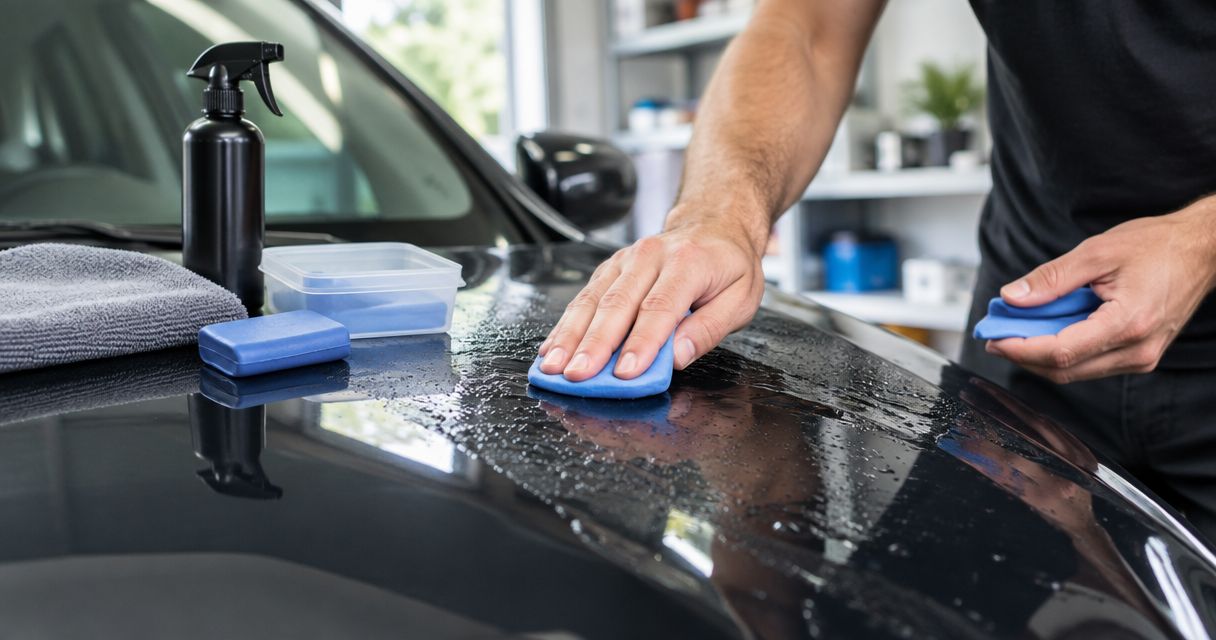
A fine-grade clay bar paired with compatible lubricant is the clearest starting point for a washed vehicle with light bonded contamination. The clay works across a lubricated surface to remove material that normal washing leaves behind. It does not polish the paint.
Choose this configuration when you already have suitable clean towels and understand how you will finish the surface. The smaller setup keeps the task clear: prepare the paint, lubricate it, treat a small area, and inspect.
Fine-grade clay kit pros:
- Fits routine decontamination without making aggressive clay the default.
- Makes lubricant compatibility a clear buying criterion.
- Lets you select towels and protection separately.
Fine-grade clay kit cons:
- Fine-grade clay still carries a risk of marring.
- The kit configuration does not necessarily include wiping towels.
- It will not correct scratches, oxidation, or etched defects.
Best for: Owners whose freshly washed paint has light roughness and who want a focused DIY setup.
For your 2026 detailing plan, judge the surface before adding more steps. If the paint feels smooth after washing, you do not need clay simply because you own a kit. If roughness remains, test a small area before treating an entire panel.
Verdict: Buy this configuration as the default for light bonded contamination.
2. FINE CLAY AND TOWELS: BEST FOR FIRST-TIME DIY USE
A beginner-oriented kit adds dedicated wiping towels to fine-grade clay and compatible lubricant. The benefit is practical: you can keep lubricant wipe-off separate from washing and wheel-cleaning tools. That separation matters more than an impressive accessory count.
Read the instructions before opening the clay. Check that the towels are clean, soft, and free of trapped debris; being included in a kit does not make a towel safe after it touches the ground.
Fine clay and towel kit pros:
- Gives a beginner a clearer handling and wipe-off setup.
- Helps separate paint-contact towels from dirtier cleaning tools.
- Reduces the number of components you need to choose independently.
Fine clay and towel kit cons:
- Towels can collect grit during use.
- An included towel does not establish the quality of the clay or lubricant.
- Extra accessories cannot compensate for poor preparation.
Best for: First-time users who need a straightforward kit and a clean workspace.
Set aside 2 clean towels as a practical starting arrangement: one for lubricant wipe-off and one kept clean for finishing checks. Add fresh towels whenever the working towel becomes dirty. This is a handling recommendation, not a guarantee that two towels will complete every vehicle.
Verdict: Buy for a first clay treatment when the instructions and lubricant compatibility are clear.
3. FINE CLAY AND PROTECTION: BEST FOR PAINT MAINTENANCE
This configuration pairs fine-grade clay and lubricant with a separate wax or sealant. It suits owners who want to remove bonded contamination and then complete a protection step. Each product still needs its own instructions.
Clay and protection do different jobs. Clay removes attached contamination; wax or sealant provides a protective finish. Neither replaces paint correction when scratches or treatment marks need attention.
Fine clay and protection kit pros:
- Gives the decontamination process a defined finishing step.
- Keeps surface preparation connected to paint protection.
- Suits maintenance work when paint correction is unnecessary.
Fine clay and protection kit cons:
- Protection will not remove marring left by clay.
- The included finish might not suit your existing coating or maintenance plan.
- Separate preparation requirements still apply.
Best for: Owners preparing suitable paint for a wax or sealant application.
For 2026 maintenance, choose the finish according to its instructions and your vehicle's existing protection. A bundled wax is not automatically the right preparation or maintenance product for a ceramic-coated vehicle.
Inspect the paint before applying protection. A glossy finishing product should not become a reason to overlook fresh marks. The finish is the proof only when the underlying surface is ready.
Verdict: Buy when the included protection matches your finishing plan; skip the bundle when it does not.
4. MEDIUM-GRADE CLAY: BEST BEFORE PLANNED PAINT CORRECTION
Medium-grade clay is a more aggressive option for stubborn bonded contamination. It belongs in a deliberate decontamination process, especially when paint correction is already planned. It is not the automatic upgrade from fine-grade clay.
If fine-grade clay leaves contamination behind, first reassess the material and preparation. Some contamination needs a suitable chemical treatment rather than harder rubbing or a more aggressive bar.
Medium-grade clay kit pros:
- Provides a stronger mechanical option for stubborn contamination.
- Fits preparation work before planned paint correction.
- Offers a distinct use case beyond routine maintenance.
Medium-grade clay kit cons:
- Carries greater concern about surface marring.
- Requires careful test-area inspection.
- Does not replace contamination-specific cleaning or polishing.
Best for: Experienced users preparing paint for correction after assessing the contamination.
Do not choose medium-grade clay because a vehicle looks dirty. Dirt visible before washing tells you little about the bonded contamination underneath. Wash, assess, and test first.
Everestservices offers auto detailing, not a clay-kit product line. For an owner unsure whether roughness needs cleaning, clay, or correction, discuss the paint condition before choosing a DIY treatment.
Verdict: Hold unless the contamination assessment supports stronger clay and you have a correction plan.
USE THE KIT WITHOUT CHASING DAMAGE
The safest 2026 choice is not just a kit type. It is a controlled sequence with clear stopping points. Follow the product instructions whenever they differ from general guidance.
Wash
Wash away loose dirt before using clay. Work on a cool surface out of direct sun, and inspect for remaining grit. Clay is not a substitute for washing.
Test
Start with 1 test patch in an inconspicuous area of suitable painted bodywork. Inspect the result before extending the treatment. Avoid treating every exterior material as though it were clear-coated paint.
Lubricate
Apply compatible lubricant according to the instructions. Keep the working area wet enough for the clay to glide without grabbing. Stop and restore lubrication if the surface starts drying.
Glide
Use light pressure on a small area. A section around 30 cm by 30 cm is a practical starting size for controlling lubrication—not a required product specification. Do not press harder to force a result.
Inspect
Wipe off as directed and examine the paint in good light. Expose a clean clay surface as contamination collects. Discard dropped clay rather than pressing trapped grit against the paint.
Protect
Complete the finishing steps appropriate to the paint and chosen protection. If treatment leaves visible marks, assess correction before applying wax or sealant. Do not confuse a smoother feel with a defect-free finish.
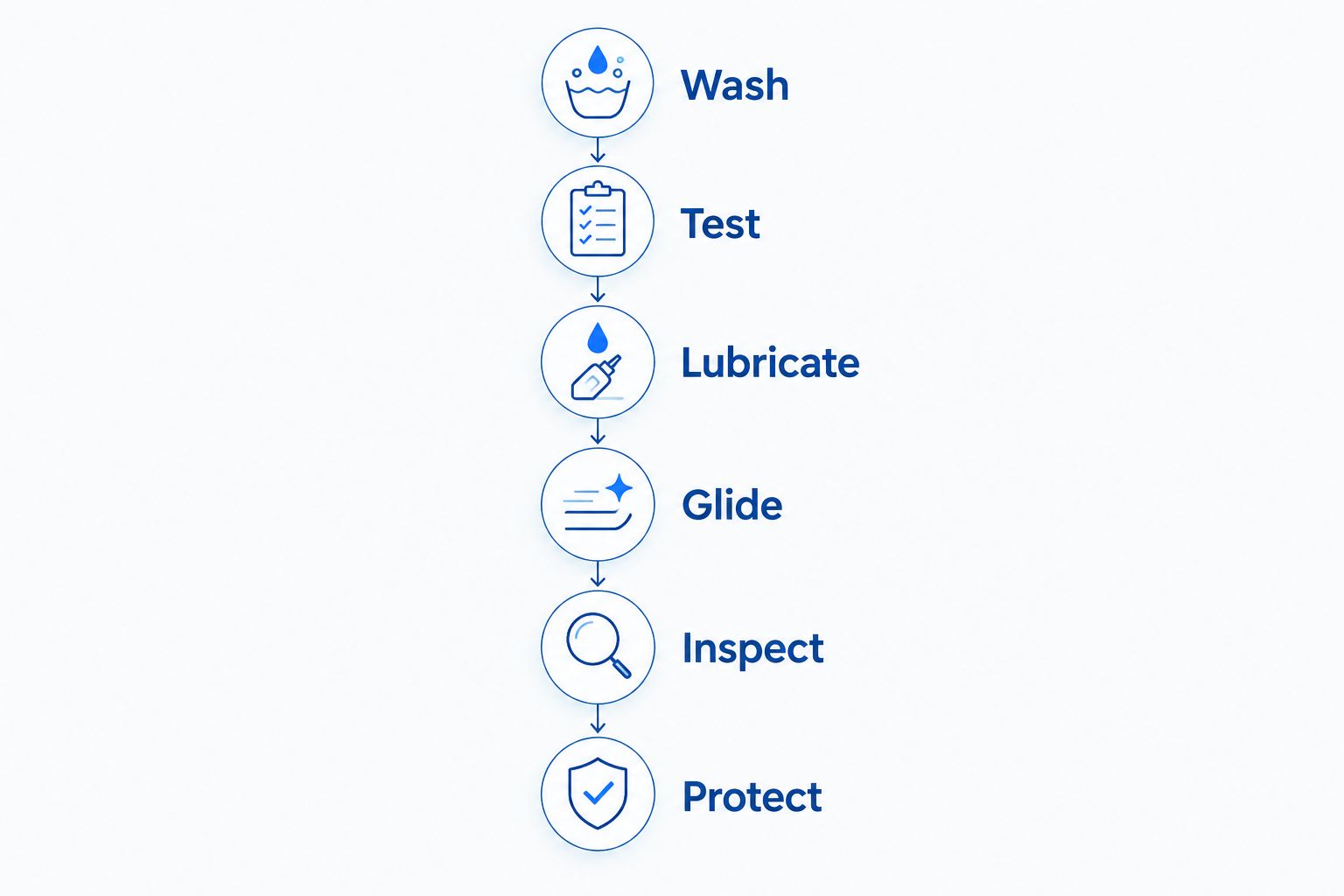
Stop when the surface grabs, the clay becomes contaminated, or inspection reveals fresh marks. More passes are not automatically better. Reassess the technique and contamination instead of repeating the same action.
HOW THESE KITS RANK
Fine-grade clay with compatible lubricant ranks first because it addresses the core task without making stronger abrasion the starting point. The beginner configuration adds handling support. The protection configuration adds a finishing plan. Medium-grade clay serves a narrower, more demanding use case.
The ranking follows clay grade, lubricant compatibility, clean handling, instructions, and finishing requirements. It does not treat accessory quantity as evidence of a better result. No kit configuration removes the need to inspect your paint.
WHICH CLAY BAR KIT SHOULD YOU CHOOSE?
Choose fine-grade clay with compatible lubricant unless your paint assessment gives you a specific reason to choose otherwise. Add dedicated towels if you need them. Add protection only when it suits the finishing process.
Everestservices auto detailing is best for Fredericton vehicle owners who want a service rather than a DIY clay treatment. Describe the roughness, visible defects, and existing protection when discussing the work. Those details are more useful than asking for clay by name.
Discuss Your Detailing Needs
Explain your vehicle's paint condition and the finish you want in Fredericton.
FAQ
What's the best clay bar kit for car detailing in 2026?
A fine-grade clay bar kit with compatible lubricant is the best default for light bonded contamination. Choose dedicated clean towels and a finishing plan rather than buying on accessory count.
Does clay remove scratches from car paint?
Clay does not remove scratches from car paint. It removes bonded surface contamination; scratches and clay-induced marks require a separate correction assessment.
Is medium-grade clay better than fine-grade clay?
Medium-grade clay is more aggressive, not universally better. Fine-grade clay is the default for light contamination, while stronger clay needs a specific reason and careful inspection.
Can I use soapy water instead of clay lubricant?
Use only a lubricant that the clay manufacturer's instructions identify as suitable. Do not assume a shampoo mixture or household soap is compatible with your clay.
Should I clay my car every time I wash it?
No. Use clay when washed paint still has bonded contamination, not as an automatic wash step. Unnecessary mechanical treatment adds avoidable risk of marring.
What should I do if I drop the clay bar?
Discard clay that falls onto a dirty surface. Embedded grit can scratch paint, and removing visible debris does not establish that the clay is clean.
Should I choose DIY clay or professional detailing in Fredericton?
Choose DIY clay when you understand the paint condition, product instructions, and finishing steps. Everestservices provides auto detailing in Fredericton for owners who prefer a service rather than carrying out the treatment themselves.
ONE LAST THING
In 2026, the most useful clay-kit upgrade is still restraint. A washed panel that already feels smooth does not become better simply because you clay it. Treat the contamination you find. Leave clean paint alone.