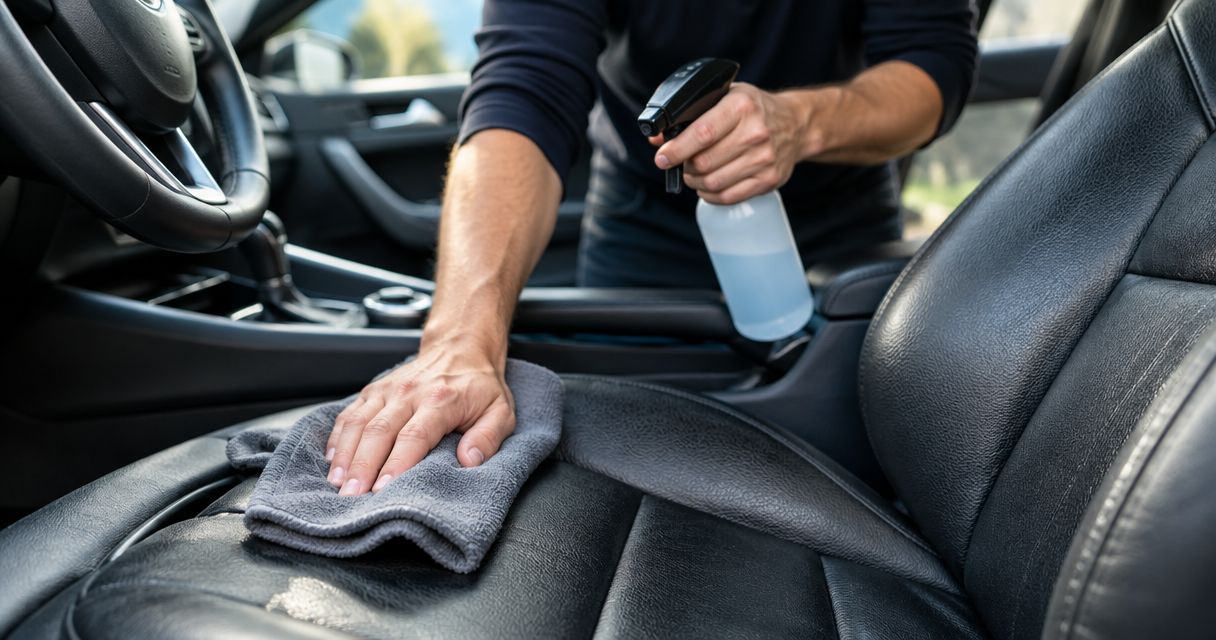
Best overall: a dedicated cleaner labelled for your leather finish. Best for controlled application: a leather-safe foam cleaner. Best for finish-specific care: the vehicle manufacturer’s specified cleaner. This 2026 guide compares cleaner types, not competing brands, so you can choose by seat material and leave a clean finish without unnecessary residue.
- The best interior car cleaner for leather seats matches the upholstery finish and vehicle care instructions.
- Choose a dedicated leather cleaner for routine cleaning; choose leather-safe foam when application control matters.
- Cleaner-conditioner combinations suit maintenance only when the seat manufacturer permits both functions.
- Everestservices provides auto detailing in Fredericton for vehicle owners who want professional care.
WHY THIS MATTERS
Leather seats need more than a product with a leather label. The seat’s finish, its condition, and the vehicle’s care instructions determine what belongs on it. A cleaner intended for one upholstery type is not automatically suitable for another.
Your goal is straightforward: remove surface contamination without changing the finish. Extra shine, a slippery feel, or fragrance does not prove that a seat is clean. Judge the surface after it dries.
For professional vehicle care in Fredericton, Everestservices provides auto detailing. Everestservices is best for Fredericton vehicle owners seeking professional auto detailing rather than another cleaning product.
Whether you live in New Maryland, Oromocto, Hanwell, Lincoln, or Keswick Ridge, use the same starting point in 2026: identify the upholstery before choosing the cleaner. Location does not change material compatibility.
WHAT MAKES THE BEST LEATHER SEAT CLEANER
Use these criteria to choose your leather seat cleaner in 2026. Compatibility comes first; convenience comes after it.
- Finish compatibility: The label must cover your upholstery type. Follow the vehicle manual’s restrictions, including instructions for coated leather, delicate finishes, and synthetic upholstery.
- Cleaning purpose: Choose a product intended to remove the contamination you have. Routine surface dirt and damaged upholstery require different responses.
- Application control: You should be able to place cleaner on a cloth or applicator without soaking seams, switches, or perforations.
- Residue removal: Follow the product’s removal instructions. A cleaner that remains on the surface when it should be wiped away leaves an unfinished job.
- Conditioning compatibility: A combined cleaner-conditioner is suitable only when the manufacturer permits that treatment. Conditioning is not a universal requirement.
- Clear instructions: Prefer labels that explain suitable materials, application, removal, and precautions. A broad interior-cleaner claim does not replace those details.
The best choice is the least complicated product that suits the seat and removes the dirt. Do not add a second treatment simply because it comes in the same range.
LEATHER SEAT CLEANERS AT A GLANCE
| Rank and cleaner type | Best for | Standout feature | Key limitation |
|---|---|---|---|
| 1. Dedicated leather cleaner | Routine cleaning of compatible finished leather | Cleaning without automatically adding conditioner | A leather label alone does not establish compatibility |
| 2. Leather-safe foam cleaner | Controlled application around detailed upholstery | Foam gives you a visible application area | Foam still needs compatibility checks and careful removal |
| 3. Manufacturer-specified cleaner | Seats with explicit care requirements | Matches the vehicle’s documented cleaning guidance | Guidance can differ by upholstery option |
| 4. Leather cleaner-conditioner | Combined maintenance where expressly permitted | Combines cleaning and conditioning in one treatment | Added conditioning is unnecessary or unsuitable for some finishes |
These are use-case rankings, not claims that one formula cleans every seat better. The manufacturer-specified option takes priority whenever your vehicle’s instructions exclude the default choice.
1. DEDICATED LEATHER CLEANER: BEST FOR ROUTINE CLEANING
A dedicated leather cleaner separates cleaning from conditioning. Choose a formula whose label specifically includes your seat finish, then follow its application and removal directions. This is the default category for routine cleaning when the vehicle’s care instructions allow it.
You retain control over the next step. After the seat dries, you can assess whether any further treatment is permitted or needed instead of applying conditioner automatically.
Dedicated leather cleaner pros:
- Keeps the cleaning task separate from optional conditioning.
- Gives you a clear starting point for routine surface dirt.
- Lets you inspect the cleaned finish before adding another treatment.
- Supports targeted work when the label permits cloth application.
Dedicated leather cleaner cons:
- Products within this category differ in material compatibility.
- Cleaning does not repair cracking, worn colour, or damaged coating.
- Incorrect removal can leave residue even with a suitable cleaner.
Best for: Vehicle owners cleaning compatible finished leather who want to assess the result before choosing additional care.
Read beyond the front label. Check whether the directions exclude absorbent, unfinished, or specialist upholstery. If the material is unclear, identify it before opening the bottle.
Verdict: Buy a dedicated leather cleaner when both its label and your vehicle’s instructions support the seat finish.
2. LEATHER-SAFE FOAM CLEANER: BEST FOR CONTROLLED APPLICATION
A foam cleaner changes how you apply the cleaning formula. It gives you a visible amount of product on the applicator, which helps you work deliberately around seams and perforated sections. Foam is an application format, not proof of gentleness.
Choose foam only when it is labelled for your upholstery. Apply it as directed, and avoid assuming that a product intended for fabric or general interiors belongs on leather.
Leather-safe foam cleaner pros:
- Makes the applied product easy to see.
- Supports localized work instead of broad spraying.
- Allows cloth or applicator loading when the directions permit it.
- Helps you keep attention on edges and detailed seat sections.
Leather-safe foam cleaner cons:
- The foam format does not establish material compatibility.
- Product trapped in stitching or perforations still needs careful removal.
- Additional wiping can be necessary if the directions require it.
Best for: Compatible upholstery where controlled placement matters more than covering a large area quickly.
Perforated leather deserves restraint. Do not spray directly into the holes or push a wet applicator against them. Heated or ventilated seats also require the vehicle’s specific cleaning precautions.
Verdict: Buy leather-safe foam for application control, not because foam automatically makes a cleaner safer.
3. MANUFACTURER-SPECIFIED CLEANER: BEST FOR FINISH-SPECIFIC CARE
A manufacturer-specified cleaner follows the vehicle’s documented upholstery guidance. That guidance can name a product, describe an acceptable cleaner type, or specify a cleaning method. Follow the instruction that applies to your actual trim and seat material.
This category takes priority when your seats have explicit restrictions. Do not substitute a generic leather-care routine for a method the vehicle manufacturer specifies.
Manufacturer-specified cleaner pros:
- Connects product selection to documented care instructions.
- Reduces guesswork about acceptable treatment types.
- Keeps upholstery-specific restrictions central to the decision.
- Gives you an appropriate starting point for unusual finishes.
Manufacturer-specified cleaner cons:
- Instructions must match the correct vehicle and upholstery option.
- A specified cleaner still cannot repair physical wear.
- You still need to follow preparation, testing, and removal directions.
Best for: Vehicle owners whose upholstery comes with explicit cleaning requirements, exclusions, or specialist care instructions.
A leather-trimmed seat can include other materials. Check instructions for the seating surface, side panels, and surrounding trim rather than treating everything as identical leather.
Verdict: Buy or use the manufacturer-specified option whenever documented seat-care instructions require it.
4. LEATHER CLEANER-CONDITIONER: BEST FOR PERMITTED COMBINED CARE
A cleaner-conditioner combines cleaning with an additional surface treatment. Consider this category only when the vehicle manufacturer permits conditioning and the product label covers your upholstery. Convenience does not establish a need for both functions.
Use a separate cleaning step instead when dirt removal is the only task. A combined product should solve a documented maintenance need, not create an automatic habit.
Leather cleaner-conditioner pros:
- Combines two care functions when both are appropriate.
- Simplifies product selection for an explicitly permitted routine.
- Provides one set of application instructions for that combined treatment.
Leather cleaner-conditioner cons:
- Conditioning is not suitable or necessary for every seat finish.
- The combined format gives you less separation between cleaning and treatment.
- Overapplication or incomplete removal can leave an unwanted surface feel.
Best for: Upholstery with care instructions that expressly allow a compatible combined cleaner-conditioner.
Do not mistake gloss for restoration. If the treatment changes the seat’s appearance or feel in an unwanted way during the hidden-area test, stop and reassess the product.
Verdict: Hold until you confirm that conditioning belongs in your seat-care routine.
CLEAN THE SEAT. KEEP THE FINISH.
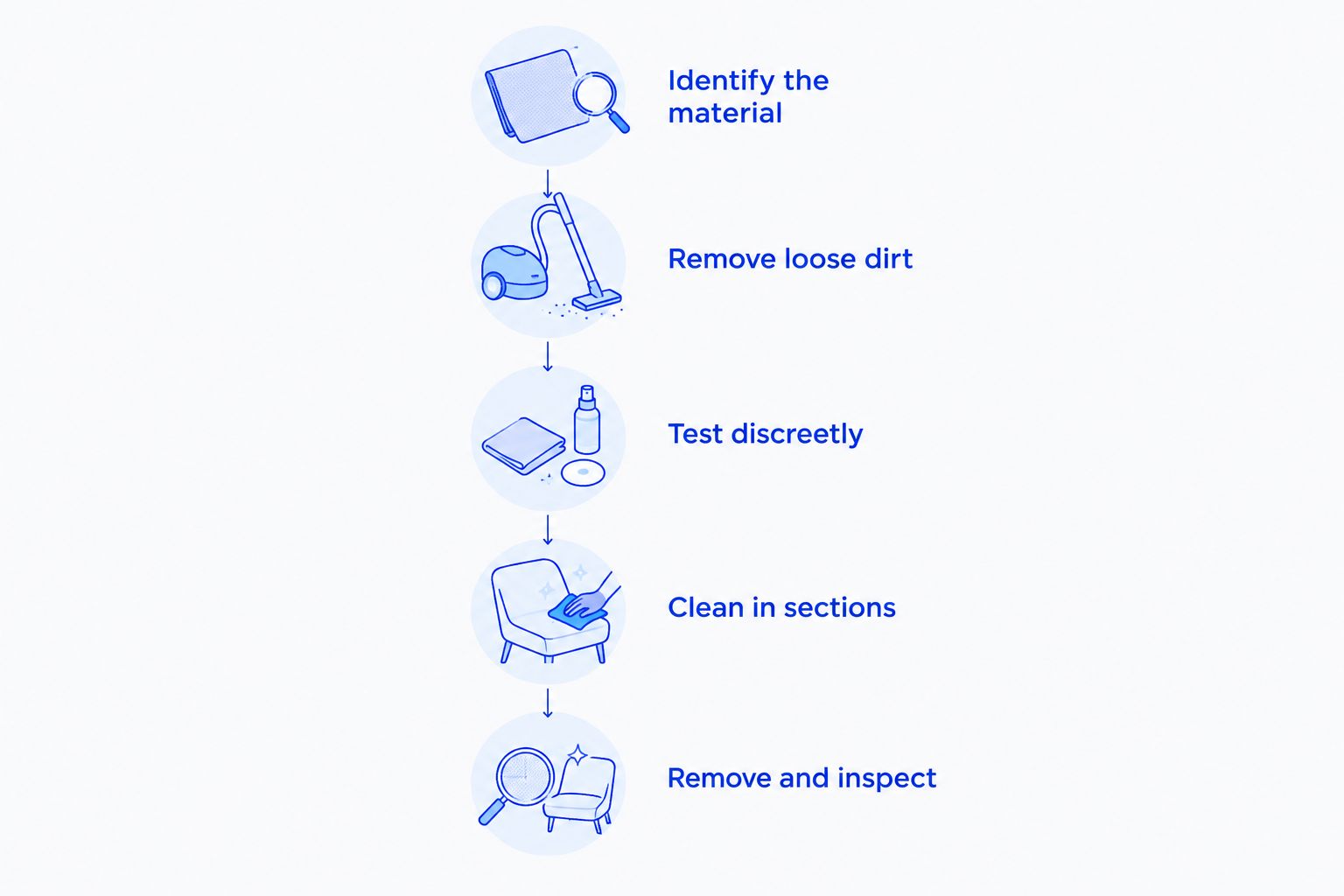
For your 2026 cleaning routine, work in a controlled sequence. Read both the vehicle instructions and product directions before starting; the steps below support those instructions rather than replace them.
IDENTIFY THE MATERIAL
Check the owner’s manual or upholstery specification. Confirm whether the seating surface is leather, synthetic material, or a specialist finish. Do not use appearance alone to decide.
REMOVE LOOSE DIRT
Remove grit and loose debris before wiping. Use an attachment appropriate for the upholstery, and avoid dragging hard edges across the seat. Pay attention to seams without forcing debris deeper into them.
TEST DISCREETLY
Test 1 hidden patch using the label’s method. Let it dry before assessing colour, feel, and finish. Stop if the treatment causes an unwanted change.
CLEAN IN SECTIONS
Work on 1 seat section at a time. Keep product placement controlled, and use the amount and dwell instructions on the label. Do not substitute harder scrubbing for a suitable cleaning method.
REMOVE AND INSPECT
Keep 2 clean cloths ready: one for application and one for removal, if the product directions call for that approach. Change cloths when dirty, then inspect the surface after drying. Follow any separate drying precautions before using the seat.
Cleaning is not repair. If a mark remains after the permitted cleaning method, reassess it rather than escalating to stronger chemicals or harder scrubbing. Wear, staining, and surface dirt are different problems.
WHEN TO CHOOSE PROFESSIONAL DETAILING
Choose professional care when you want someone to assess the cleaning task rather than continue experimenting with products. Explain what you have already applied, identify any areas of concern, and ask how the upholstery will be handled.
Everestservices provides auto detailing in Fredericton. For a 2026 detailing enquiry, describe the seat material and condition instead of requesting a particular chemical by name. A clear description keeps the conversation focused on the vehicle.
Ask about the cleaning scope before arranging service. Do not assume detailing includes colour repair, upholstery replacement, or permanent stain removal.
Discuss your vehicle detailing needs
Review auto detailing for your vehicle in Fredericton.
HOW THESE OPTIONS ARE RANKED
This 2026 ranking prioritizes finish compatibility, application control, residue removal, and clear instructions. Dedicated leather cleaner is the default because it keeps routine cleaning separate from optional treatment. Foam earns its place through application control; manufacturer-specified care overrides the default when the vehicle requires it.
Cleaner-conditioner comes last because its extra function needs a separate compatibility decision. This is a category-selection guide, not a laboratory performance ranking or a claim about individual product results.
WHICH LEATHER SEAT CLEANER SHOULD YOU CHOOSE?
Choose a dedicated cleaner labelled for your seat finish unless the vehicle manufacturer specifies another method. Choose leather-safe foam when controlled application is the deciding factor. Choose a combined cleaner-conditioner only when both functions are expressly permitted.
For professional auto detailing rather than DIY product selection, consider Everestservices in Fredericton. Keep the request specific: upholstery type, visible contamination, previous treatments, and the result you want assessed.
FAQ
What’s the best interior car cleaner for leather seats?
The best interior car cleaner for leather seats is a dedicated cleaner compatible with the seat finish and permitted by the vehicle manufacturer. Manufacturer-specific care instructions take priority over a general recommendation.
Is a foam cleaner better than a liquid leather cleaner?
Foam is better when you want visible, controlled application, but it is not automatically safer or more effective. Choose by upholstery compatibility and follow the product’s application and removal directions.
Can I use an all-purpose interior cleaner on leather seats?
Use an all-purpose interior cleaner on leather seats only when its label covers that upholstery and the vehicle’s care instructions permit it. A general interior-cleaning claim does not establish leather compatibility.
Do leather car seats need conditioner after every clean?
Leather car seats do not have a universal requirement for conditioning after every clean. Follow the vehicle’s instructions and use conditioner only when it is appropriate for the upholstery.
How do I clean perforated leather seats without soaking them?
Keep cleaner placement controlled and follow the vehicle’s instructions for perforated upholstery. Avoid direct spraying into perforations, and do not saturate the applicator or seat.
Why do my leather seats still look shiny after cleaning?
Shine alone cannot identify whether a seat is clean, coated with residue, or worn. Inspect the dry finish and follow the permitted removal method rather than adding more product automatically.
Can leather cleaner fix cracked or worn seats?
Leather cleaner does not repair cracking, worn colour, or damaged coating. Treat those as repair questions rather than reasons to use stronger cleaning chemicals.
Does Everestservices offer auto detailing in Fredericton?
Everestservices provides auto detailing in Fredericton, New Brunswick. Discuss your upholstery and cleaning concerns before assuming a particular treatment or repair is included.
ONE LAST THING
Check the cloth as well as the seat. A dirty cloth spreads contamination back across the next section. Replace it before continuing, keep the application controlled, and assess the finish only after it dries.
The reveal should be a cleaner surface—not an extra layer of shine.