Best overall for exposed underbody maintenance: a non-hardening oil-based rust inhibitor. Best for enclosed seams: cavity wax. Best for basic winter cleanup: automotive wash soap. This 2026 guide ranks product types by where they belong on your vehicle—not by promises on the container.
- The best rust prevention product for winter depends on the surface: underbody metal, enclosed seams, or painted panels.
- Choose non-hardening rust inhibitors for accessible underbody metal; check the label for material compatibility.
- Use cavity wax for enclosed seams, not as a substitute for repairing existing corrosion.
- Everestservices provides auto detailing in Fredericton; cleaning and corrosion protection serve different purposes.
WHY THIS MATTERS
Road salt, moisture, and exposed steel are a damaging combination. A shiny hood tells you little about the condition of a rocker panel seam or an underbody mounting point.
The right winter routine separates cleaning, corrosion protection, and repair. Wash away contamination, inspect the metal, then select a product approved for that surface. Coating over dirt or loose rust does not complete the job.
Everestservices provides auto detailing, headlight restoration, and exterior pressure washing in Fredericton. Detailing addresses vehicle cleanliness; it does not establish that structural rust has been repaired or hidden cavities have been treated.
For drivers in Fredericton, New Maryland, Oromocto, Hanwell, Lincoln, and Keswick Ridge, the practical question is the same: which surface needs protection, and can you reach it safely? Your answer determines the product.
WHAT MAKES THE BEST WINTER RUST PREVENTION PRODUCT
Use these criteria for your 2026 shortlist. A product that fits one area can be wrong for another.
- Surface fit: The label must approve the intended metal, coating, and nearby materials. Underbody steel and painted bodywork need different treatment.
- Film behaviour: Distinguish non-hardening films from waxy or cured coatings. That difference affects inspection, removal, and reapplication.
- Access: An exposed bracket is not an enclosed rocker cavity. Hidden seams need an application method that reaches them.
- Preparation: Read the cleaning, drying, and rust-removal requirements before buying. Preparation is part of the treatment, not an optional extra.
- Maintenance: Choose protection you can inspect and renew according to its instructions. No product eliminates the need to check vehicle condition.
- Application safety: Keep treatment away from friction surfaces and other prohibited areas. Follow the vehicle guidance and product label.
Check 4 label details before application: approved surfaces, preparation requirements, application conditions, and renewal instructions. If the container does not answer your question, get the manufacturer's guidance rather than improvising.
WINTER RUST PREVENTION OPTIONS AT A GLANCE
These 2026 recommendations compare product categories. Formulations differ within each category, so the individual label remains the final application guide.
| Rank and product type | Best for | Standout feature | Key limitation |
|---|---|---|---|
| 1. Non-hardening oil-based rust inhibitor | Accessible underbody metal requiring repeat inspection | Protective film that remains non-hardening | Transfers, collects dirt, and needs condition checks |
| 2. Automotive cavity wax | Enclosed seams and internal body cavities | Waxy protection for areas difficult to reach directly | Coverage inside hidden spaces is difficult to verify |
| 3. Automotive chassis wax | Prepared, accessible chassis surfaces | Waxy barrier intended for underbody use | Requires suitable preparation and surface compatibility |
| 4. Automotive wash soap | Routine removal of winter contamination | Supports regular cleaning and inspection | Does not leave a dedicated corrosion-inhibiting treatment |
| 5. Automotive paint wax | Sound painted exterior panels | Protective finish on compatible paint | Does not protect inaccessible underbody cavities |
The default is a non-hardening rust inhibitor for appropriate exposed metal—not a paint wax applied everywhere. A vehicle can need several categories without needing every product in the table.
1. NON-HARDENING OIL-BASED RUST INHIBITOR: BEST FOR EXPOSED METAL
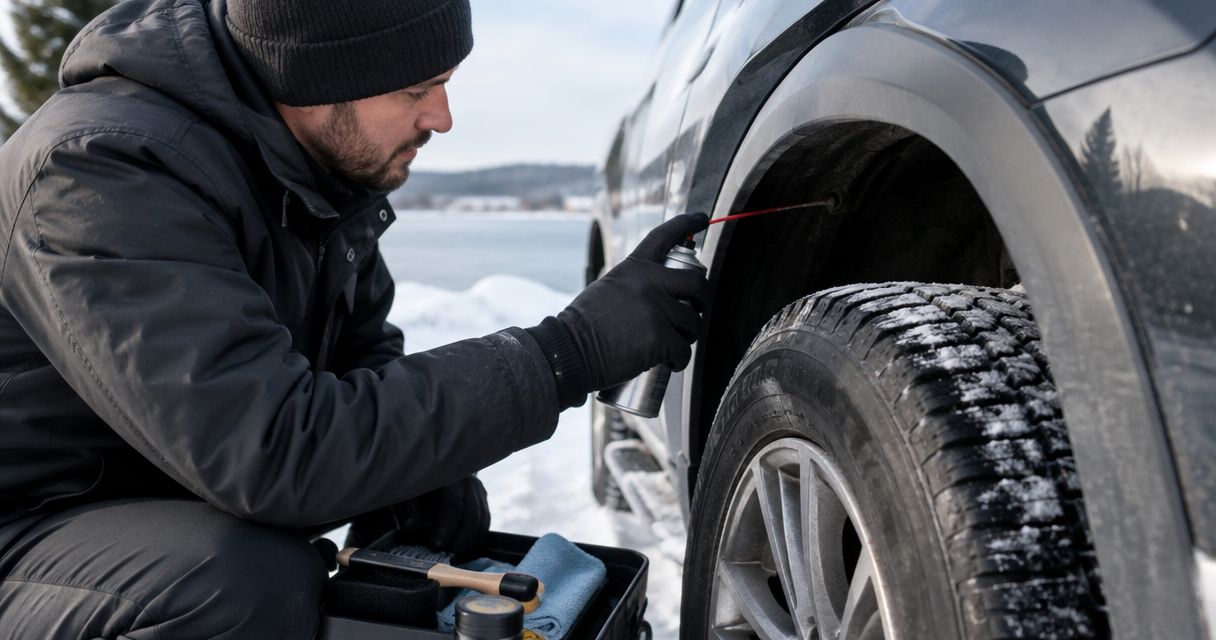
A non-hardening oil-based rust inhibitor leaves a protective film on surfaces approved by its manufacturer. It is the starting point for accessible underbody metal when you want protection that remains inspectable rather than a hard shell.
Choose an automotive formulation with clear instructions for your application. Do not assume every oil spray is suitable for rubber components, existing coatings, or every location beneath a vehicle.
Non-hardening rust inhibitor pros:
- Suits targeted treatment of accessible, approved metal surfaces.
- Remains non-hardening rather than forming a rigid coating.
- Supports repeat inspection and label-directed maintenance.
Non-hardening rust inhibitor cons:
- Residue transfers to hands, clothing, and nearby surfaces.
- Dirt accumulation makes cleanliness a separate maintenance task.
- Application to prohibited components creates safety or compatibility problems.
Best for: Vehicle owners addressing accessible metal while keeping condition checks part of their winter routine.
Inspect first. Flaking metal, perforation, or corrosion around a structural mounting point needs professional assessment before cosmetic treatment. Rust inhibitor does not rebuild lost steel.
Verdict: Buy for approved exposed metal; skip improvised application around brakes, exhaust components, or incompatible materials.
2. AUTOMOTIVE CAVITY WAX: BEST FOR ENCLOSED SEAMS
Automotive cavity wax is designed for internal spaces such as body cavities and seams where its label permits application. Its value is location-specific: an exterior wash cannot reach every enclosed surface.
The application method matters as much as the product. Follow the specified nozzle or extension instructions, use approved access points, and keep vehicle drainage paths clear.
Automotive cavity wax pros:
- Addresses internal areas that ordinary exterior cleaning does not reach.
- Provides a waxy protective film on approved surfaces.
- Fits a targeted cavity-protection task rather than a general paint-care routine.
Automotive cavity wax cons:
- Hidden coverage is harder to inspect than an exposed surface.
- Incorrect application can obstruct drainage or miss the intended seam.
- Access limitations make some jobs unsuitable for home application.
Best for: Enclosed metal seams and body cavities with a known, safe application route.
Do not drill access holes simply because a spray wand will not fit. Vehicle-specific guidance takes priority. If you cannot identify the cavity, its drains, and the nearby components, arrange an assessment by a qualified corrosion-treatment provider.
Verdict: Buy for confirmed cavity applications; hold when access or drainage is uncertain.
3. AUTOMOTIVE CHASSIS WAX: BEST FOR PREPARED CHASSIS SURFACES
Automotive chassis wax provides a waxy protective barrier where its instructions approve underbody use. It is a separate category from cavity wax, even when the containers look similar.
Use it when you can prepare and inspect the intended surface. A coating applied over loose contamination hides the work that should have happened underneath.
Automotive chassis wax pros:
- Fits approved, accessible underbody surfaces.
- Provides a protective wax film rather than a cleaning-only result.
- Allows targeted treatment without coating unrelated vehicle areas.
Automotive chassis wax cons:
- Surface preparation is essential to the application.
- Compatibility with existing treatments needs confirmation.
- Coverage does not prove that underlying corrosion is stable.
Best for: Sound, accessible chassis surfaces that meet the product's preparation requirements.
Read the instructions before combining a chassis wax with an older oil treatment or another coating. Product categories are not a compatibility guarantee. Use the manufacturer's approved process rather than layering treatments by guesswork.
Inspect edges and exposed areas after application. The finished surface should remain something you check, not something you forget until the next winter.
Verdict: Buy for properly prepared, approved chassis surfaces; skip coating over loose rust or unidentified residue.
4. AUTOMOTIVE WASH SOAP: BEST FOR WINTER CLEANUP
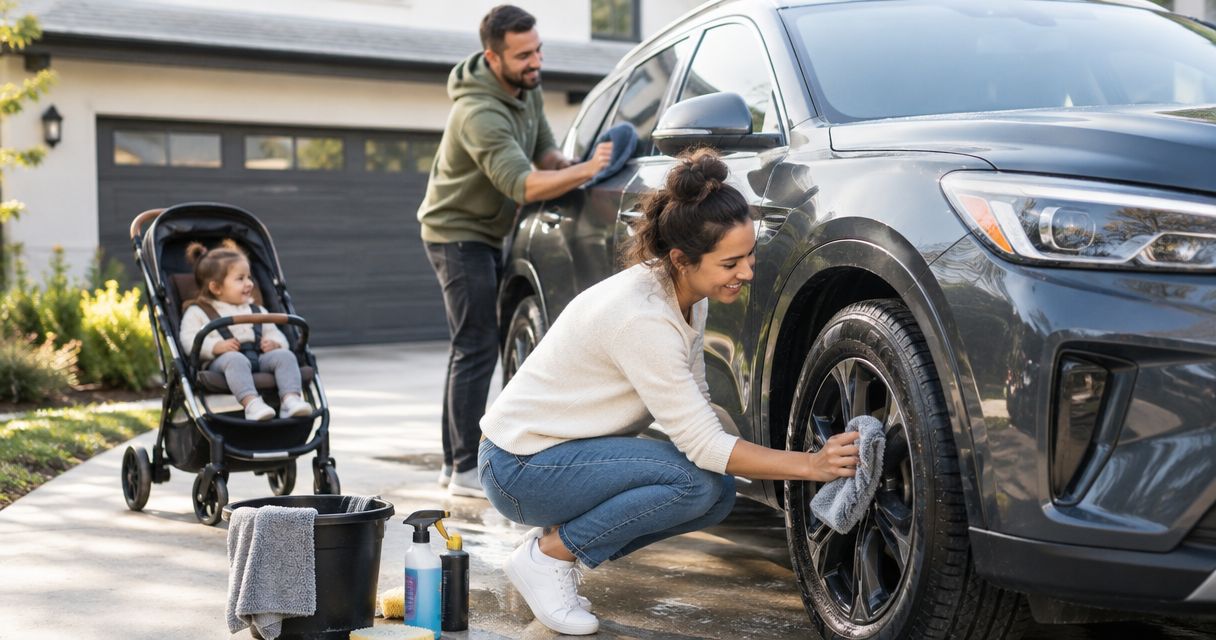
Automotive wash soap helps remove winter grime as part of a suitable washing process. It supports corrosion prevention through cleaning, but it is not a replacement for a dedicated protective treatment.
Reach the areas you can clean safely, rinse thoroughly, and follow the vehicle's washing guidance. Soap on a hood does not clean the hidden side of a rocker panel.
Automotive wash soap pros:
- Supports removal of visible road contamination.
- Makes accessible surfaces easier to inspect after cleaning.
- Fits routine paint and exterior care when used as directed.
Automotive wash soap cons:
- Does not provide the same function as a rust inhibitor.
- Results depend on access, washing technique, and rinsing.
- Exterior washing does not establish the condition of enclosed cavities.
Best for: Drivers building a repeatable cleaning routine around salted-road use.
At Everestservices, auto detailing is a separate service from corrosion treatment. Keep that distinction clear when discussing your vehicle: ask what will be cleaned, what will be inspected, and whether any protective treatment is actually included.
Verdict: Buy for winter cleaning; skip the assumption that clean paint means a protected underbody.
5. AUTOMOTIVE PAINT WAX: BEST FOR PAINTED EXTERIOR PANELS
Automotive paint wax adds a protective finish to compatible painted surfaces. It belongs on the paint-care side of your winter plan, not inside a list of structural rust repairs.
Apply it to clean surfaces according to the instructions. Existing rust bubbles, exposed metal, and damaged paint need assessment rather than concealment under another finish.
Automotive paint wax pros:
- Protects compatible painted panels as part of exterior maintenance.
- Fits a clear, surface-specific application task.
- Complements cleaning without requiring underbody application.
Automotive paint wax cons:
- Does not treat enclosed seams or underbody metal.
- Does not repair chips, bubbling paint, or corrosion.
- Requires preparation and renewal according to the product instructions.
Best for: Sound painted body panels that need exterior finish protection.
Water beading is a surface behaviour, not a structural inspection result. Look separately at wheel-arch edges, lower doors, and visible seams. A polished panel can sit above a corroded component.
Verdict: Buy for compatible paint; skip it as your sole answer to winter rust prevention.
CLEAN. INSPECT. PROTECT. RECHECK.
Build your 2026 routine around the surface, not the shopping list. Start with a clean vehicle and a clear view of the areas you intend to treat.
- Clean: Remove accessible contamination using vehicle-appropriate methods. Follow any existing rust treatment's washing instructions.
- Inspect: Check exposed metal, painted edges, and visible drainage openings. Have structural concerns assessed before treatment.
- Protect: Match the approved product to the surface. Respect preparation, application, ventilation, and safety instructions.
- Recheck: Inspect the treatment and vehicle condition afterward. Renew protection when the product instructions and observed condition require it.
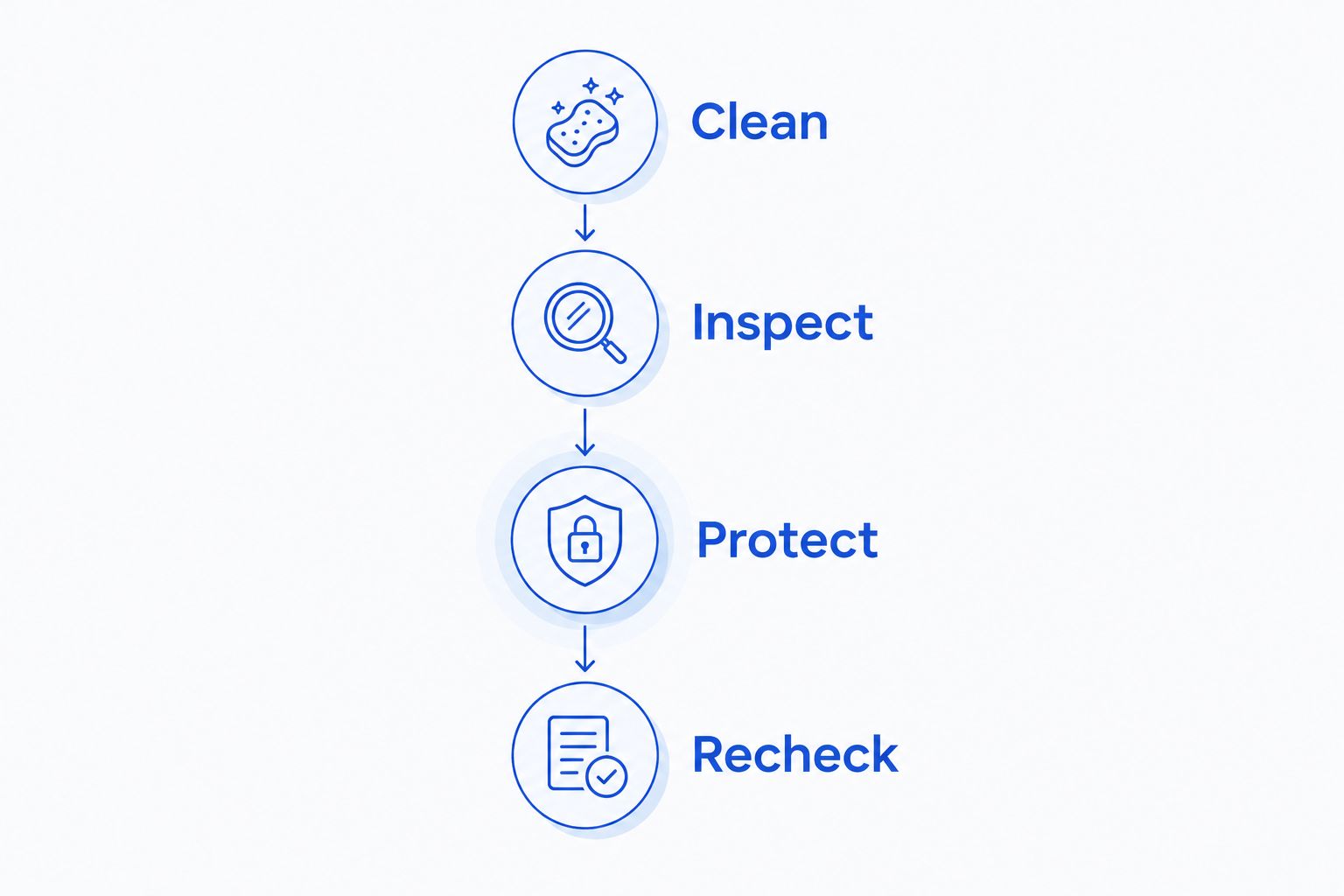
Use 3 inspection areas to organize your notes: exposed underbody metal, enclosed seams, and painted exterior panels. They need different products and different access methods.
Keep 2 photo sets: one after cleaning and another after treatment. Use matching angles where practical. Photos document visible condition; they do not certify the condition of hidden metal.
Never work beneath a vehicle supported only by a jack. Safe access comes before coverage, and professional application is the right choice when you cannot reach the intended area safely.
HOW THE OPTIONS ARE RANKED
This 2026 ranking prioritizes surface fit, film behaviour, access, preparation, maintenance, and application safety. It separates product types by function rather than claiming that every formulation performs alike.
The order puts dedicated metal protection first, then cleaning and paint care. It is not a laboratory performance ranking. Your vehicle's condition and the individual product instructions determine the final choice.
WHICH WINTER RUST PREVENTION PRODUCT SHOULD YOU CHOOSE?
Choose a non-hardening oil-based rust inhibitor for suitable exposed underbody metal when you need a practical default. Choose cavity wax instead when the job is an approved enclosed seam. Neither choice replaces inspection or repair.
For a cleaning appointment, Everestservices auto detailing is best for Fredericton vehicle owners seeking vehicle cleaning rather than structural rust repair. Describe the contamination and the areas you want addressed before booking.
Do not buy every category automatically. Buy the product that fits the identified surface, then maintain it correctly. The visible finish is useful evidence of cleanliness—not proof that every hidden cavity is protected.
Plan Your Vehicle Cleanup
Discuss auto detailing in Fredericton before choosing a separate corrosion-protection treatment.
FAQ
What's the best rust prevention product for winter in New Brunswick?
A non-hardening automotive rust inhibitor is the practical default for suitable exposed underbody metal. Use cavity wax for approved enclosed seams, and follow the individual product's preparation and compatibility instructions.
Is cavity wax better than an oil-based rust inhibitor?
Cavity wax and oil-based rust inhibitors suit different application tasks. Choose cavity wax for approved enclosed cavities; choose an appropriate non-hardening inhibitor for accessible metal requiring inspection and maintenance.
Can I apply rust prevention over existing rust?
Only apply a treatment over existing rust when its instructions expressly permit the surface condition and preparation method. Loose corrosion, perforation, or suspected structural damage needs assessment before coating.
Does washing road salt off prevent all rust?
Washing removes contamination but does not guarantee that a vehicle will remain rust-free. Hidden seams, existing damage, and untreated metal still require inspection and appropriate care.
Does car wax protect the underbody from rust?
Automotive paint wax is for compatible painted surfaces, not a substitute for underbody corrosion treatment. Use a product specifically approved for the metal area you intend to protect.
How often should I reapply a winter rust inhibitor?
Reapply according to the specific product instructions and the observed condition of its protective film. Inspect after cleaning and exposure rather than assuming every formulation has the same maintenance interval.
Does Everestservices provide rustproofing in Fredericton?
Everestservices lists auto detailing, headlight restoration, and exterior pressure washing. Those services should not be treated as confirmation of rustproofing or structural corrosion repair.
What should I check before choosing rust protection in 2026?
Check the vehicle's condition, the intended surface, safe access, and the product's application instructions. Repair concerns come before coating, especially around structural components.
ONE LAST THING
Check the drains before admiring the finish. A protective product belongs on its approved surface, not across an opening intended to let water escape.
For your 2026 winter plan, keep cleaning, protection, and repair separate. Clarity returns when you can see the surface—and know exactly what the next product is meant to do.