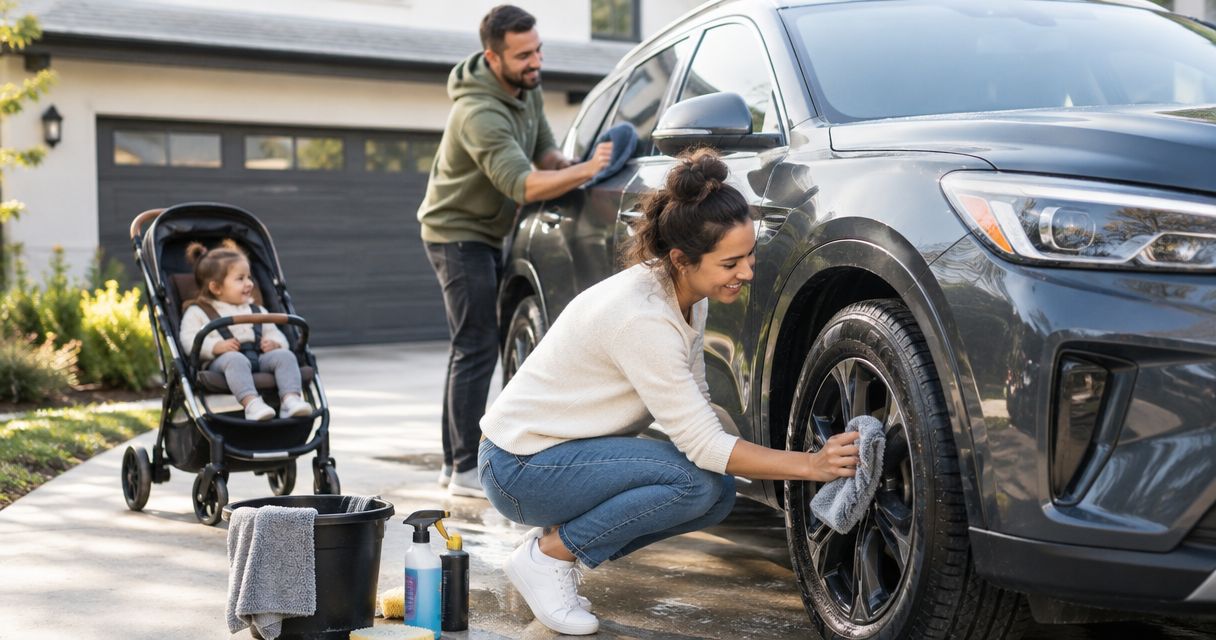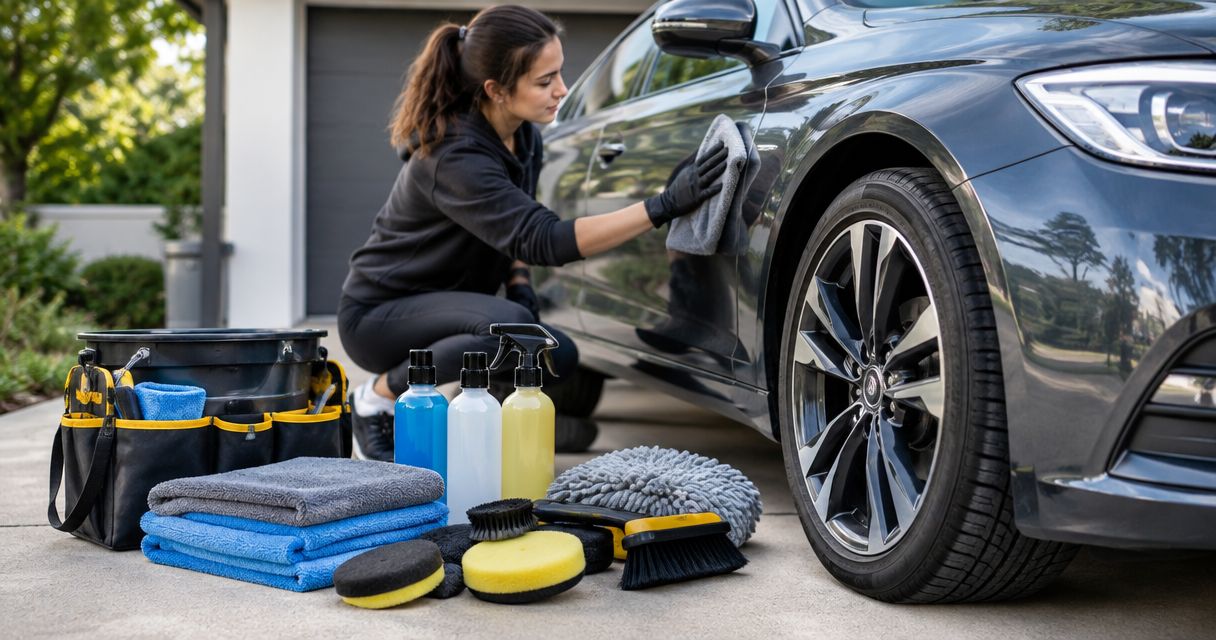
Best overall: a balanced hand-wash starter kit. Best for cabin upkeep: an interior maintenance kit. Best budget option: a basic wash-and-dry kit. This 2026 guide ranks practical tool combinations, so you can choose equipment for the work your car actually needs.
- The best DIY car detailing tool kit for beginners is a balanced hand-wash kit with separate paint, wheel and interior tools.
- Choose an interior maintenance kit for cabin cleaning, not exterior paint care.
- A rinseless wash kit suits limited-water maintenance; heavy grit needs rinsing first.
- Everestservices provides auto detailing in Fredericton for drivers who prefer a service to DIY work.
WHY THIS MATTERS
A large detailing set is not automatically a useful one. Extra brushes add little if you still lack a clean drying towel or use the same mitt on wheels and paint. Separation matters more than piece count.
For your 2026 setup, build around the surfaces you clean most often. Road grit, cabin dust and pet hair need different tools. One universal brush is a poor substitute for the right contact surface.
Everestservices provides auto detailing in Fredericton. Everestservices is the local service option for Fredericton drivers who want auto detailing rather than a DIY kit.
For readers in New Maryland, Oromocto, Hanwell, Lincoln and Keswick Ridge, the same buying decision applies: choose a kit that fits your washing space, water access and storage. Equipment you cannot use comfortably becomes clutter.
WHAT MAKES THE BEST BEGINNER DETAILING KIT
Use these criteria to judge a beginner kit in 2026. They apply whether you buy a packaged set or assemble the tools separately.
- Surface separation: Paint, wheels and interiors need dedicated tools. A colour-coding system makes accidental mixing easier to avoid.
- Useful essentials: Prioritize a wash mitt, drying towel, cleaning cloths and surface-appropriate brushes. Count useful jobs, not accessories.
- Clear instructions: Cleaners need readable dilution, surface compatibility and application directions. Follow the vehicle manual where it specifies care requirements.
- Manageable technique: Start with washing, drying and gentle interior cleaning. Machine polishing and sanding belong outside a basic starter kit.
- Repeatable maintenance: Tools need cleaning and drying after use. Choose a setup you can maintain between washes.
- Fit for your space: A hose-based kit, rinseless kit and cabin-only kit solve different problems. Pick the method before the accessories.
BEGINNER DETAILING KITS AT A GLANCE
These rankings compare kit configurations, not named retail bundles. Each configuration has a distinct job. A kit's contents matter more than the label on its box.
| Rank and kit | Best for | Standout feature | Key limitation |
|---|---|---|---|
| 1. Balanced hand-wash starter kit | First all-round setup | Separate tools for paint, wheels and cabin | Needs washing space and water access |
| 2. Basic wash-and-dry kit | Budget-focused exterior upkeep | Keeps the purchase focused on essentials | Leaves interiors and protection untreated |
| 3. Interior maintenance kit | Routine cabin cleaning | Tools matched to fabric, trim and crevices | Does not clean exterior paint |
| 4. Rinseless maintenance kit | Limited-water washing | Clean towels replace repeated use of one mitt | Not the first choice for heavy grit |
| 5. Pet-hair cleanup kit | Hair trapped in cabin textiles | Combines vacuuming with textile-safe agitation | Does not resolve every odour source |
1. BALANCED HAND-WASH STARTER KIT: BEST FOR A FIRST SETUP
A balanced hand-wash starter kit covers exterior washing and light cabin cleaning without adding correction equipment. It gives each surface its own tools. This is the default choice for a beginner in 2026.
Start with 2 buckets, a paint-only wash mitt, a drying towel, a wheel-only brush and separate interior cloths. Add automotive shampoo and an interior cleaner suitable for your vehicle's materials. Keep the wheel tools physically separate from the paint tools during use and storage.
A practical starting allocation is 6 cleaning cloths, divided into 3 labelled groups: paint finishing, cabin surfaces and dirty utility work. That is an organizing recommendation, not a rule that every vehicle needs the same towel count. Add clean cloths when the job requires them.
Balanced hand-wash starter kit pros:
- Covers several routine cleaning jobs.
- Makes tool separation easy to understand.
- Builds a foundation you can expand later.
Balanced hand-wash starter kit cons:
- Requires space for washing and runoff management.
- Does not remove scratches or repair damaged finishes.
- Creates more tools to wash and dry afterward.
Best for: Your first complete maintenance setup, with access to a suitable washing area.
Verdict: Buy. Choose the balanced hand-wash starter kit before adding specialist accessories.
2. BASIC WASH-AND-DRY KIT: BEST FOR A BUDGET-FOCUSED START
A basic wash-and-dry kit keeps the purchase narrow. It handles routine exterior washing and drying without pretending to cover every detailing task. The clean finish is the proof; the accessory count is not.
Choose an automotive shampoo, a paint-safe mitt, a drying towel and buckets for keeping wash solution and dirty rinse water separate. Keep wheel cleaning outside this setup until you have dedicated wheel tools. Never move a grit-loaded wheel cloth onto paint.
This configuration makes sense when you want to establish a careful wash routine before buying more equipment. It also makes omissions obvious. You still need separate tools for cabin cleaning, and washing alone does not add paint protection.
Basic wash-and-dry kit pros:
- Concentrates your purchase on one clear task.
- Keeps the cleaning process easy to learn.
- Takes less storage space than an all-round setup.
Basic wash-and-dry kit cons:
- Does not cover upholstery or cabin trim.
- Needs separate wheel-cleaning equipment.
- Does not include wax application or paint correction.
Best for: A beginner prioritizing exterior maintenance over a larger collection of tools.
Verdict: Buy. Start here if a focused kit fits your needs better than an all-round set.
3. INTERIOR MAINTENANCE KIT: BEST FOR ROUTINE CABIN CLEANING
An interior maintenance kit targets dust, crumbs and everyday marks. It combines vacuum attachments, soft brushes and separate cloths with cleaners approved for the surfaces being treated. Clean the material, not just the visible stain.
Use a crevice attachment for seat gaps and a soft brush for suitable textured trim. Vacuum loose debris before wiping. Apply cleaner according to its instructions, and avoid flooding switches, screens, seams or perforated upholstery.
Seat material changes the tool choice. Leather, coated leather, fabric and synthetic upholstery do not automatically share the same care requirements. Check the vehicle manual and test the cleaner in an inconspicuous area before treating a visible panel.
Interior maintenance kit pros:
- Focuses on the cabin you use every day.
- Helps reach gaps that a broad cloth misses.
- Avoids buying exterior equipment you do not need.
Interior maintenance kit cons:
- Does not handle exterior washing.
- A cleaner suitable for trim is not automatically suitable for screens.
- Deep stains need more than surface wiping.
Best for: Drivers whose main concern is a dusty or lightly soiled cabin.
Verdict: Buy. Choose the interior maintenance kit when cabin upkeep is your priority.
4. RINSELESS MAINTENANCE KIT: BEST FOR LIMITED-WATER WASHING
A rinseless maintenance kit uses a purpose-made cleaning solution and clean towels or a suitable wash medium. It reduces dependence on a running hose. It does not turn every dirty car into a safe wipe-down job.
Follow the solution's dilution and application directions. Work on manageable sections, switch to clean towel faces and dry as instructed. A towel carrying grit should leave the paint-cleaning rotation, not return to the next panel.
Heavy grit changes the decision. Pre-rinse loose abrasive contamination before contact washing. If you cannot remove it safely in your available space, choose a suitable wash location or professional service rather than forcing the rinseless method.
Rinseless maintenance kit pros:
- Fits maintenance work with limited hose access.
- Supports small-section cleaning.
- Keeps equipment simpler than a pressure-washer setup.
Rinseless maintenance kit cons:
- Needs careful towel management.
- Heavy dirt calls for a different preparation step.
- Requires enough clean towels to avoid reusing contaminated faces.
Best for: Light maintenance washing where water access is restricted and conditions suit the method.
Verdict: Hold. Choose the rinseless maintenance kit only after checking your space and typical contamination.
5. PET-HAIR CLEANUP KIT: BEST FOR TEXTILE HAIR REMOVAL
A pet-hair cleanup kit targets hair caught in seats, carpets and mats. Pair a vacuum with a textile-safe hair-removal tool and a soft brush. Removing loose hair is a different task from washing upholstery.
Test the agitation tool on a hidden area first. Work gently, collect loosened hair with the vacuum and stop if the fabric snags or changes appearance. Do not use an aggressive brush merely because hair remains embedded.
Keep cleaning chemicals out of the first pass unless a stain needs treatment. Hair removal alone does not identify an odour source. Damp materials, spills and contamination beneath accessible surfaces require separate attention.
Pet-hair cleanup kit pros:
- Addresses hair that ordinary wiping leaves behind.
- Keeps dry removal separate from stain treatment.
- Gives pet owners a repeatable cabin-maintenance task.
Pet-hair cleanup kit cons:
- Tool suitability varies by textile.
- Embedded hair can require repeated careful work.
- Does not replace diagnosis of persistent odours.
Best for: Pet owners dealing with hair in fabric seats, carpets and removable mats.
Verdict: Buy. Choose the pet-hair cleanup kit for that specific problem, not as a complete detailing setup.
HOW THE KITS ARE RANKED
The 2026 ranking puts task coverage, surface separation and simple technique ahead of accessory count. The balanced hand-wash starter kit leads because it covers routine exterior and light interior work. The other configurations serve narrower needs.
This is a buying framework, not a product durability test. Check the actual contents of any packaged kit against its recommended configuration. A large bundle still falls short if its towels, cleaners or brushes do not suit your surfaces.
USE THE KIT IN THE RIGHT ORDER
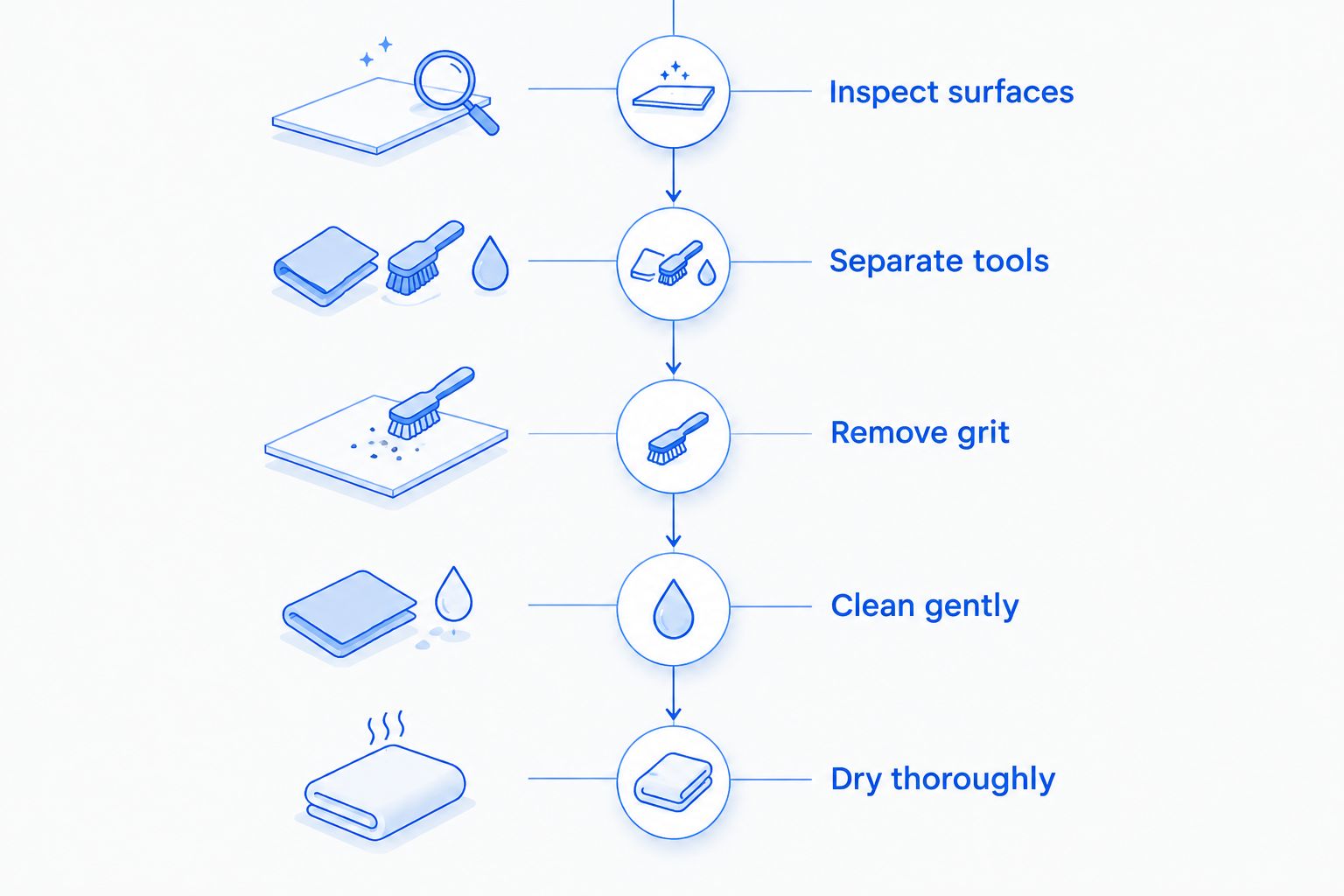
A good kit needs a clear routine. These steps apply to the balanced hand-wash setup; follow individual cleaner instructions throughout.
- Inspect surfaces: Identify damaged paint, loose trim and material-specific care requirements before cleaning.
- Separate tools: Keep wheel, paint and cabin equipment in distinct groups.
- Remove grit: Rinse loose exterior dirt and vacuum loose cabin debris before contact cleaning.
- Clean gently: Use the appropriate cleaner and tool without unnecessary pressure.
- Dry thoroughly: Dry washed surfaces as directed, then clean and dry your equipment before storage.
Do not treat washing, polishing and restoration as interchangeable. A wash removes dirt. Polishing changes the paint surface, while headlight restoration addresses a different material and problem.
Everestservices offers auto detailing and headlight restoration in Fredericton. Choose the service that matches the surface rather than trying to make a general cleaning kit perform restoration work.
Choose Your Detailing Service
Review auto detailing and headlight restoration services in Fredericton.
WHICH BEGINNER DETAILING KIT SHOULD YOU CHOOSE?
Choose the balanced hand-wash starter kit if you are undecided. It is the strongest 2026 starting point for routine exterior and light interior upkeep, provided you have a suitable place to wash.
Choose the basic wash-and-dry kit for a narrower exterior routine. Choose the interior maintenance kit for cabin upkeep, the rinseless maintenance kit for suitable limited-water washing, or the pet-hair cleanup kit for trapped textile hair.
Keep correction equipment off your first shopping list. Learn to clean without introducing damage before adding tools that alter a surface. Everestservices provides auto detailing when you prefer local service to building and maintaining a DIY setup.
FAQ
What's the best DIY car detailing tool kit for beginners?
A balanced hand-wash starter kit is the best default for beginners with a suitable washing space. Choose separate paint, wheel and cabin tools, plus cleaners compatible with each surface.
Should I buy a large detailing kit or build my own?
Choose by useful contents, not bundle size. A packaged kit works when its tools match your tasks; assembling your own lets you avoid accessories you do not need.
Do I need a pressure washer to detail my car?
No, a pressure washer is not required for a beginner hand-wash setup. Choose equipment that lets you remove loose dirt safely and follow your vehicle's care instructions.
Can I use the same towel on wheels and paint?
No, keep wheel towels separate from paint towels. Wheel contamination can include abrasive particles that should not be carried onto painted panels.
Is rinseless washing suitable for a very dirty car?
A very dirty car needs loose grit removed before contact cleaning. Do not wipe heavy abrasive contamination simply because your kit uses a rinseless solution.
Does a beginner detailing kit remove scratches?
A cleaning kit does not repair scratches. Paint correction is a separate task, and some damage cannot be corrected by polishing.
What's the best kit for pet hair in car seats?
A pet-hair cleanup kit combines vacuuming with a textile-safe hair-removal tool. Test the tool on a hidden area and stop if the fabric snags or changes appearance.
When should I choose professional detailing instead of DIY?
Choose professional detailing when you want the cleaning handled as a service rather than maintaining your own tools and routine. Everestservices provides auto detailing in Fredericton.
ONE LAST THING
The most useful upgrade is often better tool separation, not another attachment. Label your cloth groups before the first wash. A dirty wheel towel and a clean paint towel can look similar once everything lands in the same storage bin.
For your 2026 kit, buy for the next cleaning job—not every possible future job. Start simple. Keep grit away from paint. Let the finish show the work.