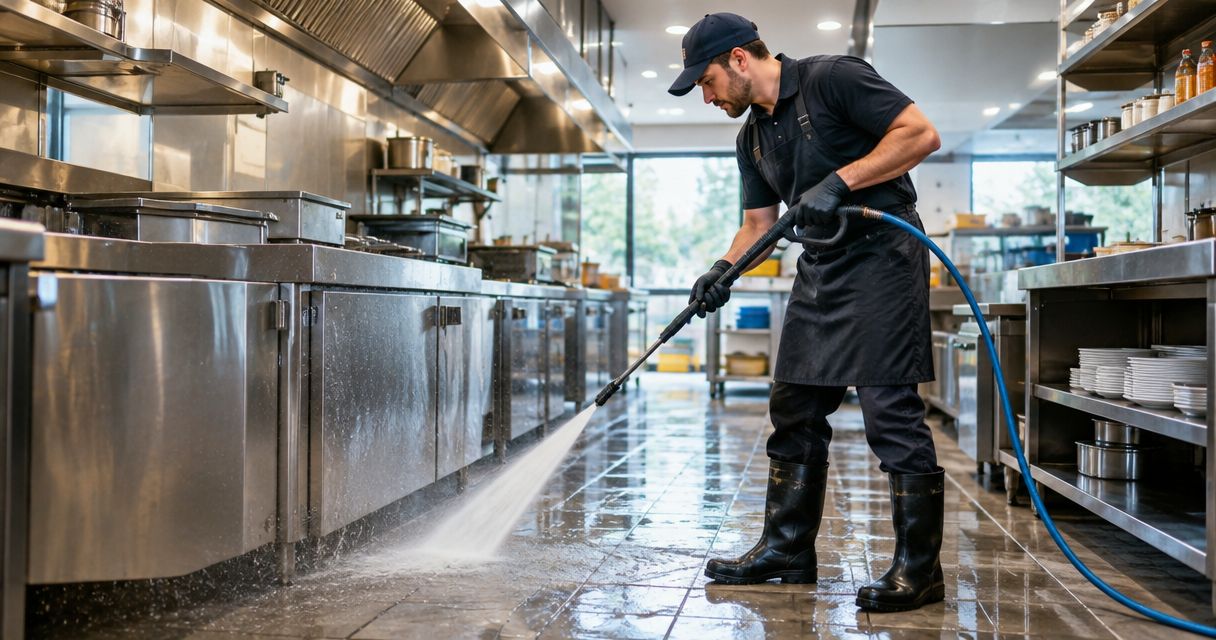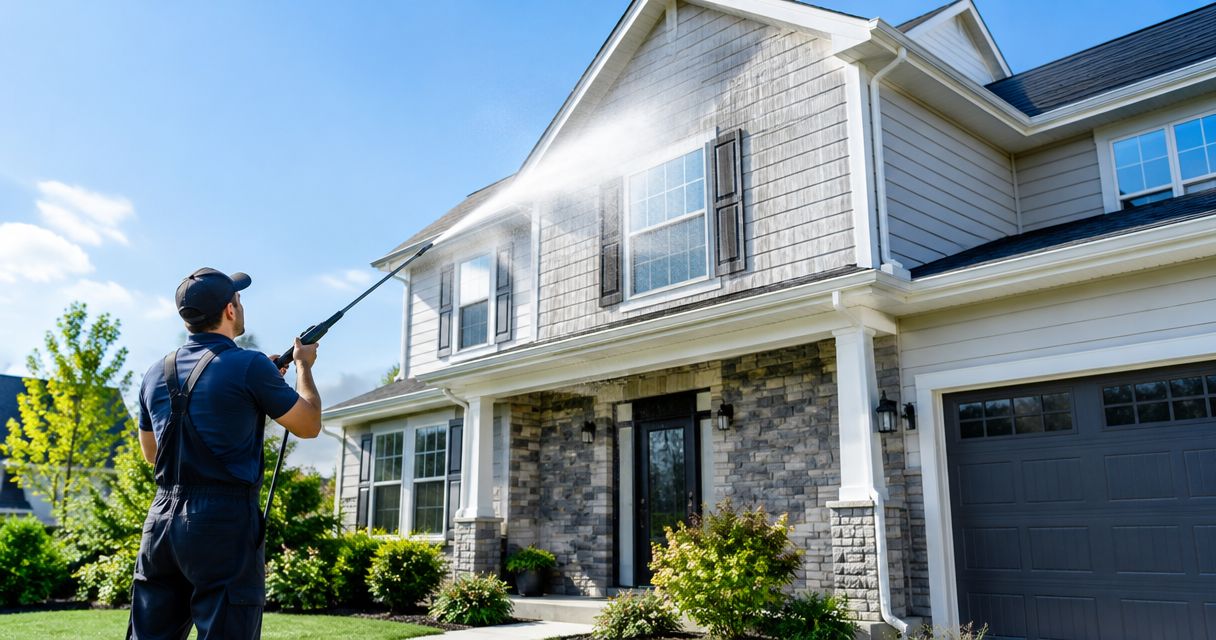
Real estate sellers’ house washing is exterior cleaning that removes surface dirt and staining with the aim of presenting a cared-for property in listing photos and showings. For a 2026 listing, match the cleaning method to the material, finish repairs first, and leave time to inspect the dry result before photography.
- House washing for real estate listings belongs before photography, after exterior repairs and surface checks.
- Mountain Everest provides exterior pressure washing for Fredericton homeowners preparing their property for sale.
- Choose siding cleaning methods by material and condition, not by the highest pressure setting.
- Inspect dry surfaces before approving listing photos; washing does not repair damaged finishes.
WHY HOUSE WASHING MATTERS FOR REAL ESTATE SELLERS
Your listing photographs show the property before a buyer visits. Dirt on siding, streaks beneath gutters, and a stained entrance become part of that first impression. Clean the surfaces buyers will see. Do not use washing to disguise defects.
Mountain Everest provides exterior pressure washing in Fredericton. It is a local option for homeowners who want cleaning handled as a service rather than another pre-listing task. Cleaning and repair remain separate jobs.
For sellers in Fredericton, New Maryland, Oromocto, Hanwell, Lincoln, and Keswick Ridge, the practical challenge is coordination. Exterior repairs, garden work, cleaning, photography, and showings need a clear order. Washing before dusty work finishes creates avoidable rework; washing after photography leaves the listing showing the old condition.
Treat your 2026 listing preparation as a sequence, not a collection of unrelated chores. Confirm what needs cleaning, what needs repair, and what must stay out of the wash scope. Then book photography around the completed result, not an assumed finish date.
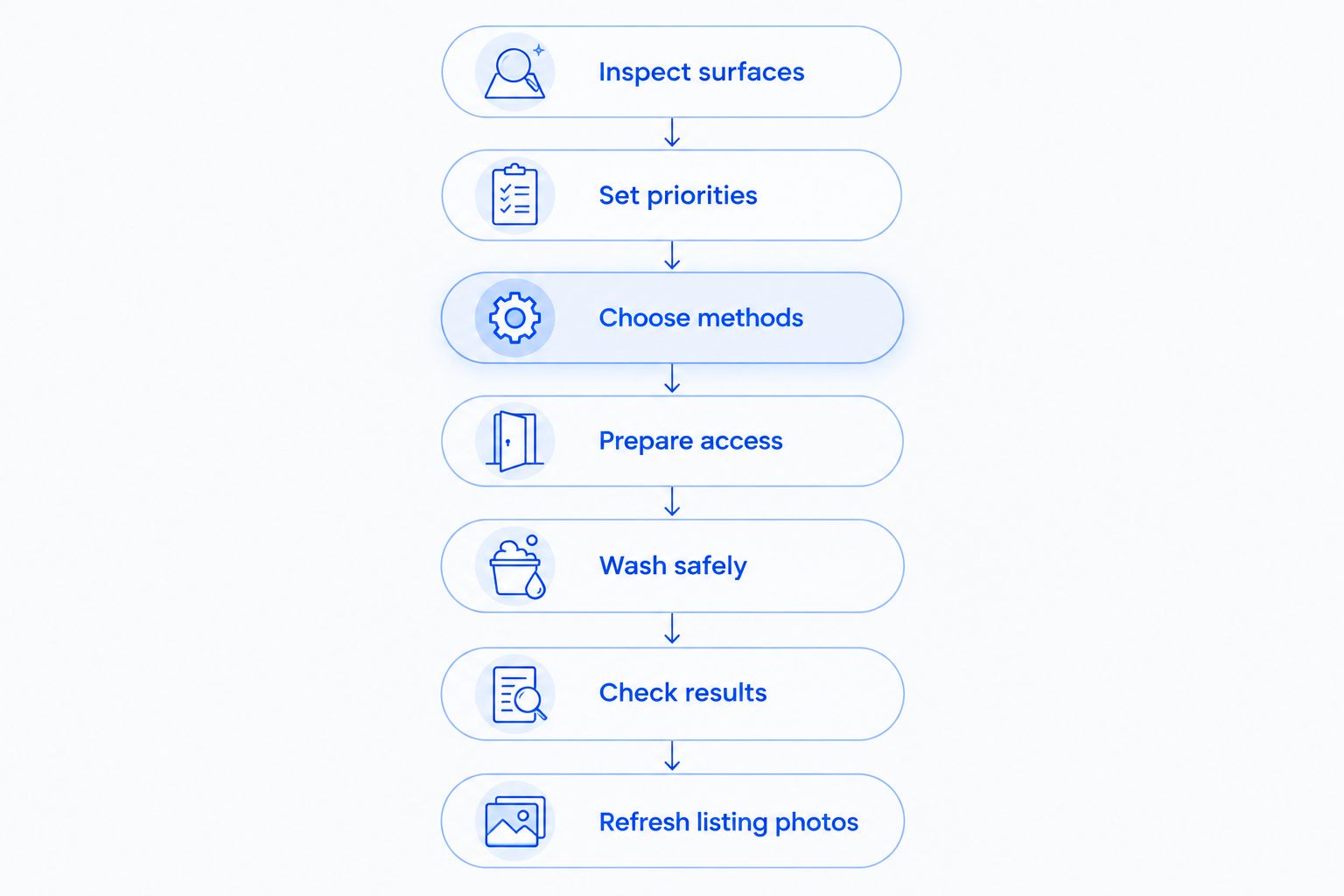
1. Inspect surfaces
Start with a ground-level walk around the house. You do not need equipment to identify loose siding, peeling paint, damaged trim, open joints, or obvious staining. Record the condition before choosing a cleaning method.
Check all 4 elevations rather than only the street-facing wall. The front photograph matters, but buyers also inspect the backyard, side entrance, deck area, and utility side. A clean front with an overlooked rear wall produces an inconsistent presentation.
Separate removable dirt from problems cleaning cannot fix. A faded finish, cracked coating, or deteriorated board belongs on a repair list. Do not assume a darker patch is a particular biological growth based on colour alone.
Use this inspection checklist:
- Photograph existing chips, cracks, loose sections, and damaged seals.
- Identify siding, trim, masonry, wood, and other exposed materials.
- Mark outlets, vents, light fixtures, and vulnerable openings.
- Note staining beneath gutters and around downspouts.
- Flag upper surfaces that cannot be reached safely from the ground.
2. Set priorities
Use your planned listing photographs as a free prioritisation tool. Stand where the photographer will capture the front elevation, entrance, and backyard. Those viewpoints reveal which dirty surfaces interrupt the overall presentation.
Build a scope around 3 photo views: front, entrance, and rear. These are planning views, not a rule limiting your photographer. They help you distinguish visible cleaning needs from tasks that do not affect the listing’s exterior presentation.
A house wash is not automatically a driveway, deck, roof, window, and gutter-cleaning package. Name each surface separately. That prevents a clean wall beside an untreated entrance from becoming a last-minute surprise.
For your 2026 plan, prioritise visible soil and safe access before optional cosmetic work. If you are working with a real estate professional, confirm which exterior views will feature in the listing.
Keep the scope specific:
- Identify the walls and trim included in the wash.
- List porch steps, paths, and other entrance surfaces separately.
- Mark surfaces that need repair before any cleaning.
- Specify whether exterior glass needs a separate finishing clean.
- Keep roofs and elevated work outside a ground-level DIY plan.
3. Choose methods
The manual starting point is simple: check the surface manufacturer’s care instructions. For a small, sound, accessible area, a compatible cleaner and gentle hand cleaning offer more control than selecting a pressure setting by guesswork.
Match the method to the surface, not the machine. Pressure, detergent compatibility, application technique, and material condition all matter. A cleaner approved for one surface is not automatically suitable for painted trim, wood, masonry, or nearby metal.
Mountain Everest exterior pressure washing is best for Fredericton homeowners seeking local service before listing photos. Ask for a surface-specific scope and an explanation of how vulnerable areas will be protected. Professional cleaning is a service path, not permission to skip the inspection.
If you are considering DIY equipment, the guide to pressure washers for house washing provides a separate starting point. Equipment selection still comes after checking the material and its condition.
Confirm these details before work begins:
- Read the siding or coating manufacturer’s cleaning guidance.
- Check cleaner labels for permitted surfaces and handling instructions.
- Test a small, inconspicuous area before treating a visible wall.
- Agree on exclusions for damaged finishes and vulnerable openings.
- Assign unsafe or inaccessible work to an appropriately equipped provider.
4. Prepare access
Preparation costs you attention before it costs you rework. Clear the working area yourself where safe. Move furniture, decorations, portable planters, and anything that blocks access to the surfaces being cleaned.
Finish sanding, patching, landscaping, and other dirt-producing jobs first. If repairs involve a fresh coating, follow its manufacturer’s instructions before exposing it to cleaning. A listing deadline does not override a coating’s care requirements.
For a 2026 listing, give the cleaning provider the photography date and describe any access restrictions. Confirm the work sequence rather than assuming every exterior task fits into the same visit. Keep household members and pets away from the active work area.
Prepare the property with these actions:
- Close windows and doors and check visibly damaged seals.
- Clear entrance paths and move loose outdoor items.
- Identify water access and discuss any restrictions.
- Point out fragile planting, outdoor equipment, and electrical fixtures.
- Tell the provider which repairs or coatings were recently completed.
5. Wash safely
A small accessible surface can be cleaned manually when its care instructions permit it. Follow the cleaner label, use compatible tools, and keep the work within safe reach. Do not turn a ladder into a pressure-washing platform.
Pressure washing requires control. Avoid directing water into vents, electrical fixtures, open joints, or beneath siding edges. If the finish changes, material comes away, or water enters an opening, stop and reassess the method.
Use the same discipline when hiring a provider: confirm the surfaces, protection measures, cleaning sequence, and stop conditions. Ask how plants and adjacent materials will be protected. Never mix cleaning chemicals or improvise concentrations to meet a photography deadline.
The core sequence is inspection, method selection, preparation, cleaning, and a dry check. Each stage protects the next.
Keep these safety boundaries clear:
- Follow the cleaner label and surface care instructions.
- Keep spray away from openings and electrical components.
- Stop if paint, coating, or surface material starts separating.
- Keep people and pets outside the active work area.
- Leave unsafe elevated work to an appropriately equipped provider.
6. Check results
Inspect after the surfaces have dried. Wet siding and paving can look different from their dry condition, so a wet finish is not enough to approve the job. Compare the result with your original inspection photographs.
Make 2 separate checks: condition and presentation. The condition check looks for newly exposed defects, remaining contamination, and any damage. The presentation check asks whether the entrance, photographed walls, and adjoining surfaces look consistently clean.
Use matching viewpoints for real before-and-after photographs. Keep the camera position and framing consistent, and avoid edits that conceal remaining defects. The finish is the proof; a dramatic angle change is not.
Close the inspection with these checks:
- Compare dry surfaces against the original condition record.
- Inspect corners, lower edges, and areas beneath fixtures.
- Check glass for residue that needs separate attention.
- Record unresolved stains without promising complete removal.
- Separate follow-up cleaning from repair work.
7. Refresh listing photos
Take a quick phone walkthrough before the scheduled photography session. It is a free way to spot moved furniture, muddy footprints, cleaning equipment, or clutter that has returned to the entrance. Correct those distractions before the photographer arrives.
For your 2026 listing, use photographs that show the property’s current condition. If exterior cleaning happens after the original shoot, discuss replacing affected images. A refreshed exterior should not remain invisible in the listing.
Keep presentation accurate. Washing does not make an older finish new, and it does not justify claims about structural condition. Describe completed work precisely rather than using broad terms that imply renovation.
Finish the preparation with these actions:
- Remove hoses, containers, tools, and temporary work items.
- Check the entrance and main pedestrian route again.
- Photograph cleaned surfaces only after the dry inspection.
- Replace outdated exterior images where appropriate.
- Keep an accurate record of what was cleaned and repaired.
COMPARE YOUR CLEANING OPTIONS
Choose an approach based on condition, access, and responsibility. The simplest suitable method wins—not the strongest spray. These options solve different problems; none replaces repairs where the surface is damaged.
| Option | Best for | Main advantage | Key limitation |
|---|---|---|---|
| Manual spot cleaning | Small, sound surfaces within safe reach | Close control over a limited area | Slow for extensive walls; cleaner compatibility still matters |
| DIY pressure washing | Homeowners with suitable equipment and surface-specific knowledge | Direct control over the work sequence | Incorrect technique can damage finishes or drive water into openings |
| Mountain Everest exterior pressure washing | Fredericton sellers seeking a local cleaning service | A service option instead of a DIY equipment task | Cleaning does not repair siding, coatings, or drainage defects |
| Repair before cleaning | Loose, cracked, peeling, or otherwise damaged surfaces | Addresses the underlying defect first | Requires a separate repair scope and coordinated scheduling |
Ask the same questions whichever route you choose: what material is being treated, what condition is it in, and what result is realistic? Confirm the boundary between cleaning and repair before approving the work.
Plan your exterior cleaning
Discuss exterior pressure washing in Fredericton before scheduling your listing photographs.
COMMON MISTAKES REAL ESTATE SELLERS MAKE
- Booking photography before the dry inspection. A completed wash is not the same as an approved finish. Leave room in the sequence for checking surfaces and resolving visible issues.
- Cleaning only the front elevation. Listing photos and showings expose more than the street view. Include the entrance, rear view, and other visible walls in the inspection.
- Treating pressure as the answer to every stain. More force does not correct fading or repair failed coatings. Identify the surface and the problem first.
- Assuming every exterior surface is included. Siding, steps, paving, decks, glass, and roofs are separate scope decisions. Put the included areas in writing.
- Presenting cleaning as renovation. A washed surface remains the same underlying material. Keep listing language and before-and-after images faithful to the work completed.
FAQ
Should I wash my house before listing it for sale?
Wash the exterior before listing when visible dirt or staining affects its presentation and the surfaces are suitable for cleaning. Inspect for damage first, finish necessary repairs, and check the dry result before photography.
When should house washing happen before real estate photos?
Schedule house washing after exterior repairs and dirt-producing work, but before listing photography. Allow time for the surfaces to dry and for a final inspection rather than relying on a fixed turnaround.
Is pressure washing the best way to clean siding before selling?
Pressure washing is not automatically the best method for every siding surface. Choose the method using the material, its condition, and the manufacturer's care instructions; gentle manual cleaning suits some small accessible areas.
Can house washing remove every exterior stain?
House washing does not remove every stain or correct damaged finishes. Identify remaining marks after the surface dries and separate further cleaning decisions from repair needs.
Does a house wash include the driveway and deck?
A house wash should not be assumed to include the driveway or deck. Confirm each surface in the agreed scope, including steps, paths, trim, glass, and any excluded areas.
Can Mountain Everest help prepare a Fredericton home's exterior?
Mountain Everest provides exterior pressure washing for homeowners in Fredericton. Discuss the surfaces, condition, and photography schedule directly, and confirm the scope before arranging other listing work.
Should I replace listing photos after exterior cleaning?
Replace affected listing photos when they no longer show the property's current exterior condition. Use dry, inspected surfaces and accurate images rather than edits that conceal unresolved defects.
ONE LAST THING
Check the approach to the front door after everything else is finished. A clean wall loses its visual consistency beside muddy steps or work equipment. Walk the route a buyer will take, remove the final distractions, and keep the presentation honest.
For your 2026 listing, give Mountain Everest the surface concerns and photography sequence—not just a request to make everything look new. A clear scope produces a clearer result.